US Economic Forecast 2026: Experts Predict Robust 3.5% GDP Growth
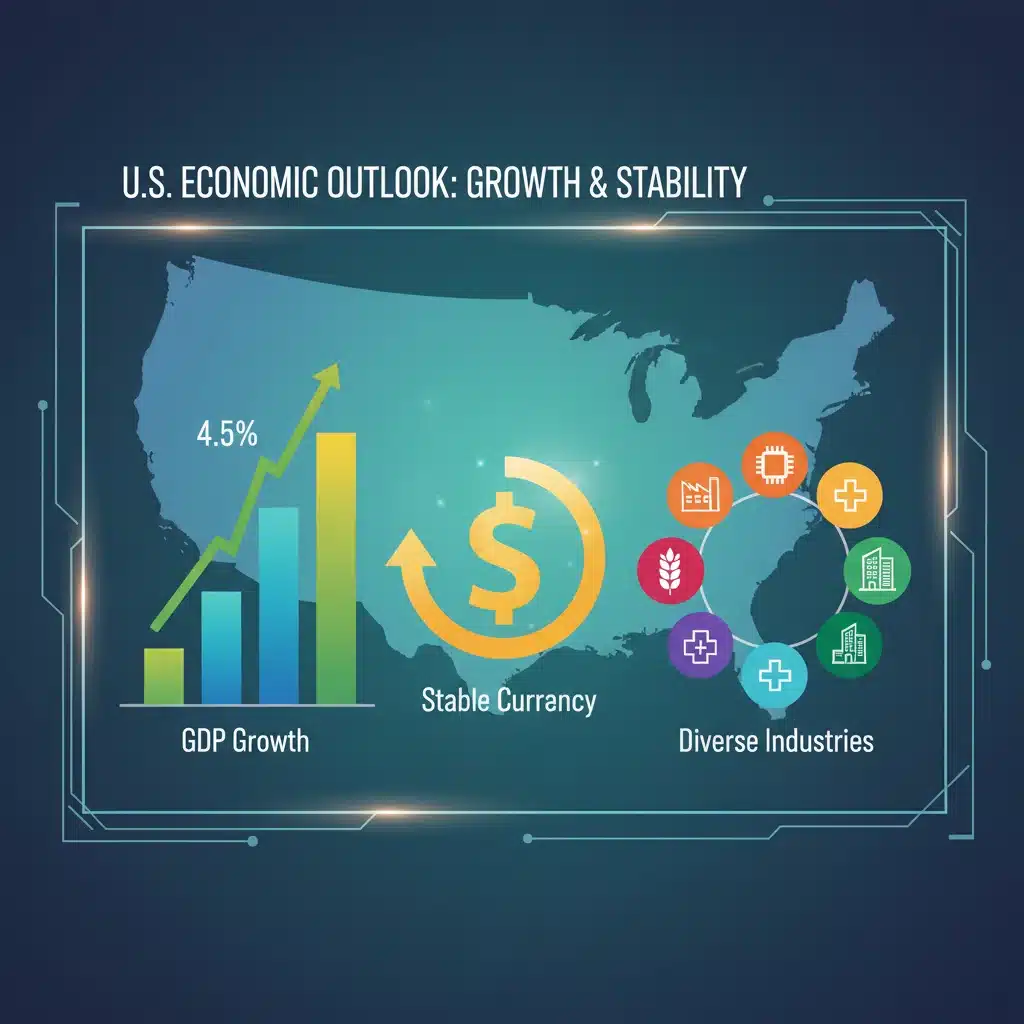
The economic landscape is a dynamic tapestry woven with countless threads of data, policy decisions, global events, and human behavior. As we cast our gaze towards the future, specifically to the year 2026, the US Economic Forecast 2026 is emerging with a distinctly optimistic hue. Experts are converging on a consensus that points towards a robust 3.5% GDP growth, a figure that, if realized, would signify a period of significant expansion and prosperity for the United States. This forecast is not merely a number; it represents a complex interplay of factors, from technological advancements and resilient consumer spending to strategic fiscal and monetary policies, all navigating an ever-evolving global environment.
Understanding the intricacies of the US Economic Forecast 2026 requires a deep dive into the underlying drivers. What forces are expected to propel such growth? What potential headwinds might challenge this optimistic outlook? And how will this growth manifest across various sectors of the economy? This comprehensive analysis will explore these questions, providing a detailed perspective on the anticipated economic trajectory of the United States. We will examine the key indicators, the expert consensus, the potential risks, and the opportunities that lie ahead, offering valuable insights for businesses, policymakers, and individuals alike.
The Foundation of Optimism: Key Drivers for the US Economic Forecast 2026
The prediction of 3.5% GDP growth for the US Economic Forecast 2026 is rooted in several fundamental economic strengths and emerging trends. These drivers are expected to provide sustained momentum, fostering an environment conducive to expansion and innovation.
Technological Advancements and Innovation
One of the most significant engines of future economic growth is undoubtedly technological innovation. The United States continues to be a global leader in research and development, particularly in areas such as artificial intelligence, biotechnology, quantum computing, and renewable energy. These advancements are not merely academic pursuits; they translate into tangible economic benefits. AI, for instance, is poised to revolutionize productivity across countless industries, automating tasks, optimizing processes, and enabling new forms of service delivery. Biotechnology holds the promise of groundbreaking medical treatments and agricultural efficiencies. Renewable energy technologies are not only addressing climate concerns but also creating new industries, jobs, and investment opportunities.
The widespread adoption of these technologies is expected to enhance labor productivity, reduce operational costs, and spur the creation of entirely new markets. This technological dividend is a crucial component of the optimistic US Economic Forecast 2026, signaling a shift towards a more efficient and innovative economy.
Resilient Consumer Spending
Consumer spending remains the bedrock of the US economy, typically accounting for a significant portion of GDP. Despite periods of volatility, American consumers have consistently demonstrated remarkable resilience. For the US Economic Forecast 2026, projections anticipate continued strong consumer demand, driven by several factors. A relatively robust labor market, characterized by low unemployment rates and rising wages, provides households with the purchasing power necessary to fuel economic activity. Furthermore, demographic shifts and evolving consumer preferences, particularly towards digital services and sustainable products, are creating new avenues for spending and investment.
Government policies, such as targeted tax credits or social safety nets, can also play a role in shoring up consumer confidence and spending, even in the face of economic uncertainties. The ability of consumers to adapt and continue spending on goods and services is a vital indicator of economic health and a key contributor to the positive outlook for 2026.
Robust Labor Market and Wage Growth
A healthy labor market is inextricably linked to consumer spending and overall economic vitality. The US Economic Forecast 2026 anticipates a continuation of a strong labor market, characterized by low unemployment and sustained wage growth. This is crucial for several reasons. Firstly, full employment ensures that a larger proportion of the population is earning income, which directly translates into higher consumer demand. Secondly, rising wages, when aligned with productivity gains, improve living standards and foster a sense of economic security, further bolstering consumer confidence.
However, the labor market also faces challenges, such as skills gaps in emerging industries and the need for continuous workforce retraining. Addressing these issues through education, vocational programs, and corporate training initiatives will be essential to maintain the strength and adaptability of the American workforce, thereby supporting the optimistic US Economic Forecast 2026.
Strategic Infrastructure Investment
Government-led infrastructure initiatives are poised to provide a significant boost to the economy. Investments in roads, bridges, public transit, broadband internet, and renewable energy grids not only create immediate jobs but also lay the groundwork for long-term productivity gains. Improved infrastructure reduces transportation costs, enhances supply chain efficiency, and facilitates greater connectivity, all of which contribute to a more competitive and dynamic economy.
These investments, often spanning several years, have a multiplier effect, stimulating demand in various sectors, from construction and manufacturing to technology and engineering. The commitment to modernizing America’s infrastructure is a forward-looking strategy that underpins the positive US Economic Forecast 2026.
Navigating the Global Landscape: External Factors and the US Economic Forecast 2026
No economy operates in a vacuum, and the United States is deeply intertwined with the global economic system. The US Economic Forecast 2026 must, therefore, account for a range of external factors, including geopolitical developments, international trade dynamics, and the economic health of key trading partners.
Geopolitical Stability and Trade Relations
Global geopolitical stability is a critical determinant of economic certainty. Conflicts, political instability in major regions, or disruptions to international supply chains can have ripple effects, impacting energy prices, trade flows, and investor confidence. For the US Economic Forecast 2026 to remain on its optimistic trajectory, a relatively stable global environment is preferred. Continued efforts towards diplomatic resolutions and the maintenance of open, fair trade relations are essential.
Trade policies, both domestic and international, will also play a crucial role. The United States’ relationships with its major trading partners, such as Canada, Mexico, China, and the European Union, will influence export markets, import costs, and the overall competitiveness of American industries. Favorable trade agreements and the reduction of trade barriers can further bolster the US Economic Forecast 2026.

Global Economic Growth and Demand
The health of the global economy directly impacts US exports and the profitability of multinational American corporations. If major economies worldwide experience robust growth, it translates into increased demand for American goods and services, benefiting export-oriented industries. Conversely, a slowdown in global growth could dampen export prospects and introduce headwinds. The US Economic Forecast 2026 is implicitly linked to the performance of key global economies.
Emerging markets, in particular, represent significant opportunities for US businesses. Their continued development and integration into the global economy can create new consumer bases and investment avenues, contributing positively to the overall US Economic Forecast 2026.
Potential Headwinds and Risks to the US Economic Forecast 2026
While the outlook for the US Economic Forecast 2026 is largely positive, it is imperative to acknowledge and assess potential risks that could temper or derail the predicted 3.5% GDP growth. Prudent economic planning involves not only anticipating favorable conditions but also preparing for adverse scenarios.
Inflationary Pressures and Interest Rate Hikes
One of the most persistent concerns for economists is the potential for persistent inflationary pressures. While central banks employ monetary policy tools to manage inflation, unforeseen supply chain disruptions, commodity price shocks (e.g., oil), or excessive demand can lead to a sustained rise in prices. If inflation remains stubbornly high, central banks might be compelled to implement more aggressive interest rate hikes, which could cool economic activity by making borrowing more expensive for businesses and consumers. This could potentially slow down investment and consumer spending, posing a significant risk to the US Economic Forecast 2026.
Geopolitical Instability and Supply Chain Disruptions
As previously mentioned, geopolitical events carry substantial economic weight. Escalating conflicts, trade wars, or major political upheavals in critical regions can disrupt global supply chains, leading to shortages, increased production costs, and reduced trade volumes. The lessons learned from recent global events underscore the fragility of interconnected supply networks. Any significant and prolonged disruption could impact manufacturing output, consumer availability of goods, and ultimately, the overall US Economic Forecast 2026.
Cybersecurity Threats and Digital Infrastructure Vulnerabilities
As the economy becomes increasingly digital, the threat of cyberattacks grows. Major data breaches, ransomware attacks on critical infrastructure, or widespread disruption of digital services could have severe economic consequences. Businesses face financial losses, reputational damage, and operational shutdowns, while consumers may lose trust in digital transactions. Investing in robust cybersecurity measures and strengthening digital infrastructure resilience is crucial to safeguarding the digital economy and ensuring the stability of the US Economic Forecast 2026.
Climate Change and Natural Disasters
The increasing frequency and intensity of extreme weather events and natural disasters pose both immediate and long-term economic challenges. These events can cause widespread damage to infrastructure, disrupt agricultural output, displace populations, and incur massive recovery costs. Industries reliant on natural resources or operating in vulnerable regions are particularly susceptible. The economic impact of climate change-related events could introduce volatility and significant unforeseen expenses, potentially impacting the US Economic Forecast 2026.
Sector-Specific Outlooks within the US Economic Forecast 2026
While the overall US Economic Forecast 2026 points to strong GDP growth, this growth will not be uniform across all sectors. Certain industries are poised for particularly strong performance, driven by specific trends and investments.
Technology Sector: Continued Dominance and Innovation
The technology sector is expected to remain a powerhouse, leading innovation and economic expansion. Areas such as artificial intelligence, cloud computing, cybersecurity, and advanced analytics will likely see sustained investment and rapid growth. Companies in these domains will continue to drive productivity gains across other industries and create new market opportunities. The demand for skilled tech professionals will also remain high, contributing to wage growth and job creation within the sector. This dominance is a cornerstone of the optimistic US Economic Forecast 2026.
Healthcare and Biotechnology: Growth Driven by Demographics and Innovation
The healthcare and biotechnology sectors are set for continued expansion, fueled by an aging population, advancements in medical research, and increasing demand for personalized medicine. Investment in drug discovery, medical devices, and digital health solutions will drive innovation and create significant economic value. Furthermore, the focus on preventative care and public health initiatives will contribute to sustained growth in these vital sectors, playing a crucial role in the US Economic Forecast 2026.
Renewable Energy and Green Technologies: A Growing Frontier
The transition to a greener economy will accelerate, with significant investments flowing into renewable energy sources (solar, wind), electric vehicles, battery storage, and sustainable manufacturing processes. Government incentives, coupled with increasing corporate and consumer demand for environmentally friendly solutions, will propel this sector forward. This growth will not only contribute to economic expansion but also create new jobs and foster technological leadership in critical areas, bolstering the US Economic Forecast 2026.

Manufacturing: Reshoring and Automation
The manufacturing sector is expected to undergo a transformation, driven by reshoring initiatives and increased adoption of automation and advanced robotics. While some traditional manufacturing jobs may be impacted by automation, the sector will see growth in high-skilled roles related to robotics, data analytics, and advanced materials. Supply chain diversification and a renewed focus on domestic production will also contribute to the sector’s resilience and growth, making it a key component of the US Economic Forecast 2026.
Services Sector: Consumer-Driven Expansion
The broad services sector, encompassing everything from retail and hospitality to finance and professional services, will continue to be a major contributor to GDP. Driven by resilient consumer spending and evolving preferences, this sector is expected to see steady growth. Digital transformation will continue to shape service delivery, with increased adoption of online platforms, personalized experiences, and efficient logistical solutions. This consumer-driven expansion is fundamental to the positive US Economic Forecast 2026.
Policy Implications for Sustained Growth in the US Economic Forecast 2026
To realize the optimistic US Economic Forecast 2026 of 3.5% GDP growth, supportive policy frameworks will be crucial. These policies will need to address both immediate economic challenges and long-term structural needs.
Fiscal Policy: Balancing Growth and Stability
Fiscal policy, encompassing government spending and taxation, will play a delicate balancing act. On one hand, continued strategic investments in infrastructure, research and development, and education can stimulate economic activity and enhance long-term productivity. On the other hand, managing national debt and ensuring fiscal sustainability will be paramount. Targeted tax incentives for businesses investing in innovation and job creation, alongside programs that support workforce development, can further bolster the US Economic Forecast 2026. The goal will be to implement policies that encourage growth without fueling excessive inflation or exacerbating fiscal imbalances.
Monetary Policy: Navigating Inflation and Employment
The Federal Reserve’s monetary policy will continue to be a critical lever. Its dual mandate of maximizing employment and maintaining price stability will guide decisions on interest rates and quantitative easing/tightening. The challenge will be to manage inflation without stifling economic growth. Clear communication and a data-driven approach will be essential to maintain market confidence and ensure that monetary policy supports the overall US Economic Forecast 2026. The Fed’s ability to adapt to evolving economic conditions will be a key factor in achieving the desired growth trajectory.
Regulatory Environment: Fostering Innovation and Competition
A balanced regulatory environment is essential for fostering innovation and competition. Regulations that protect consumers, ensure fair markets, and mitigate systemic risks are necessary. However, overly burdensome or outdated regulations can stifle entrepreneurship and investment. Policymakers will need to strike a balance, adapting regulations to new technologies and business models while maintaining a level playing field. A regulatory landscape that encourages responsible innovation will be vital for realizing the full potential of the US Economic Forecast 2026.
Human Capital Development: Investing in the Workforce
The strength of the American workforce is a paramount asset. Investments in education, vocational training, and lifelong learning programs will be critical to address skills gaps and prepare the workforce for the jobs of the future. Policies that promote STEM education, encourage apprenticeships, and facilitate reskilling and upskilling initiatives will ensure that the labor market remains dynamic and adaptable. A highly skilled and adaptable workforce is a fundamental pillar supporting the optimistic US Economic Forecast 2026.
Conclusion: A Path Towards Prosperous Growth in the US Economic Forecast 2026
The US Economic Forecast 2026, with its projection of 3.5% GDP growth, paints a picture of a dynamic and expanding economy. This optimistic outlook is underpinned by a confluence of powerful drivers: relentless technological innovation, robust consumer spending, a resilient labor market, and strategic infrastructure investments. The United States appears well-positioned to leverage these strengths to achieve significant economic expansion in the coming years.
However, this promising future is not without its challenges. Navigating the complexities of global geopolitical shifts, managing inflationary pressures, and addressing the evolving threats of cybersecurity and climate change will require astute policy decisions and adaptive strategies. The ability of policymakers, businesses, and individuals to respond effectively to these potential headwinds will ultimately determine the extent to which the 3.5% GDP growth forecast is realized.
As we move towards 2026, the focus will remain on fostering an environment that encourages innovation, supports job creation, and ensures broad-based prosperity. By continuing to invest in human capital, maintaining a competitive regulatory landscape, and engaging constructively with the global economy, the United States can solidify its position as a leading economic power. The US Economic Forecast 2026 is not just a prediction; it is a roadmap for potential, highlighting the opportunities and responsibilities that lie ahead in shaping America’s economic future.