Navigating 2026 Fed Rate Hikes: Investor’s Essential Guide
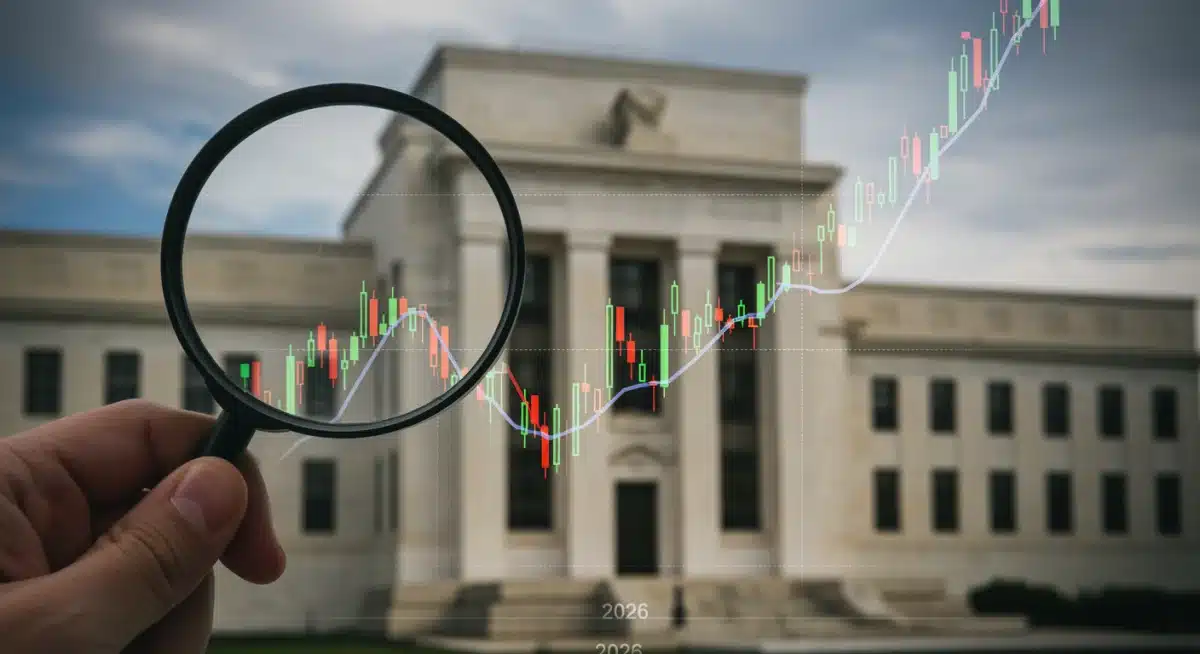
The financial landscape is ever-changing, and for investors, staying ahead of potential shifts is paramount. One of the most significant influences on global markets is the monetary policy set by the Federal Reserve. As we cast our gaze towards 2026, the prospect of Federal Reserve interest rate hikes looms large on the horizon. Understanding the potential implications of these 2026 Fed Rates and formulating proactive strategies is not just advisable, it’s essential for safeguarding and growing your wealth.
Interest rate decisions by the Federal Reserve ripple through every facet of the economy, from consumer lending and corporate borrowing to the performance of stocks, bonds, and real estate. A potential series of interest rate increases in 2026 could signal a maturing economic cycle, a response to inflationary pressures, or a recalibration of monetary policy after periods of accommodation. Whatever the underlying reasons, the effects will be widespread and demand careful consideration from every investor.
This comprehensive guide aims to equip you with the knowledge and actionable insights needed to navigate the complexities of potential 2026 Fed Rates hikes. We will delve into the historical context of Fed rate decisions, analyze the economic indicators that typically influence these choices, and explore the anticipated impact across various asset classes. More importantly, we will provide practical strategies and expert advice on how to adjust your investment portfolio to not only mitigate risks but also identify opportunities that may arise from these monetary policy adjustments.
Understanding the Federal Reserve’s Mandate and Tools
Before we project into 2026, it’s crucial to grasp the fundamental role of the Federal Reserve. The U.S. central bank operates under a dual mandate: to achieve maximum employment and maintain price stability. These objectives guide its decisions on monetary policy, primarily through the manipulation of the federal funds rate.
The Federal Funds Rate: The Linchpin of Monetary Policy
The federal funds rate is the target interest rate set by the Federal Open Market Committee (FOMC) at which commercial banks borrow and lend their excess reserves to each other overnight. While the Fed doesn’t directly control this rate, it influences it through open market operations, adjusting the supply of money in the banking system. Changes to the federal funds rate have a cascading effect:
- Short-term rates: Directly impact other short-term interest rates, such as those on savings accounts, money market funds, and adjustable-rate mortgages.
- Long-term rates: Influence longer-term rates like those on fixed-rate mortgages, corporate bonds, and government securities, though these are also affected by inflation expectations and global capital flows.
- Borrowing costs: Affects the cost of borrowing for consumers (credit cards, auto loans) and businesses (corporate loans), influencing spending and investment decisions.
- Inflation: Higher rates can curb inflation by slowing economic activity, while lower rates can stimulate it.
Other Tools in the Fed’s Arsenal
Beyond the federal funds rate, the Fed has other tools at its disposal:
- Discount Rate: The interest rate at which commercial banks can borrow directly from the Federal Reserve.
- Reserve Requirements: The amount of funds banks must hold in reserve against deposits. While rarely changed, adjustments can significantly impact lending capacity.
- Quantitative Easing/Tightening: Large-scale asset purchases (QE) or sales (QT) of government bonds and mortgage-backed securities to inject or withdraw liquidity from the financial system, influencing long-term interest rates.
Understanding how these tools are deployed provides insight into the Fed’s overall stance and helps anticipate potential moves regarding 2026 Fed Rates.
Economic Indicators Signaling Potential 2026 Fed Rate Hikes
The Federal Reserve’s decisions are data-dependent. Several key economic indicators are closely watched by the FOMC to gauge the health of the economy and determine the appropriate course for monetary policy. For investors, monitoring these indicators can offer early clues about the likelihood and timing of potential 2026 Fed Rates adjustments.
Inflation Data: The Primary Driver
Price stability is a core mandate, making inflation data paramount. The Fed’s preferred measure is the Personal Consumption Expenditures (PCE) price index, particularly the core PCE (excluding volatile food and energy prices). If inflation consistently runs above the Fed’s 2% target, especially if it appears entrenched rather than transitory, it significantly increases the probability of rate hikes.
- Consumer Price Index (CPI): While not the Fed’s preferred measure, CPI is widely reported and provides a broader look at price changes experienced by urban consumers.
- Producer Price Index (PPI): Measures inflation at the producer level, offering an early indication of potential future consumer price increases.
Labor Market Strength: Maximum Employment Objective
The other side of the dual mandate is maximum employment. A robust labor market, characterized by low unemployment and rising wages, can contribute to inflationary pressures and give the Fed room to raise rates without fear of stifling job growth.
- Unemployment Rate: A consistently low unemployment rate signals a tight labor market.
- Non-Farm Payrolls: Measures the number of jobs added or lost in the economy, excluding agricultural jobs. Strong job creation indicates economic expansion.
- Wage Growth: Rising wages can fuel consumer spending and contribute to demand-pull inflation, making it a key metric for the Fed.
- Job Openings and Labor Turnover Survey (JOLTS): Provides insights into labor demand and worker mobility.
Economic Growth: GDP and Other Measures
Overall economic activity, typically measured by Gross Domestic Product (GDP), provides context for inflation and employment data. Strong, sustained economic growth can support higher interest rates.
- GDP Growth: A healthy pace of economic expansion suggests the economy can absorb higher borrowing costs.
- Retail Sales: Indicates consumer spending, a major component of GDP.
- Manufacturing and Services PMIs: Purchasing Managers’ Indexes provide forward-looking indicators of economic activity in key sectors.
Global Economic Conditions and Geopolitical Factors
The U.S. economy does not operate in a vacuum. Global economic growth, international trade tensions, commodity prices (especially oil), and geopolitical events can all influence the Fed’s decisions. For instance, a global slowdown could temper the Fed’s hawkishness, even if domestic indicators suggest otherwise. Conversely, global inflationary pressures could necessitate higher 2026 Fed Rates.
Anticipated Impact of 2026 Fed Rate Hikes on Asset Classes
A series of interest rate hikes by the Federal Reserve in 2026 would send ripples across all major asset classes. Understanding these potential impacts is crucial for strategic portfolio adjustments.
Fixed Income (Bonds)
Bonds are typically the most directly affected by interest rate changes. When interest rates rise, the value of existing bonds with lower fixed interest payments generally falls. This inverse relationship is fundamental to bond investing.
- Government Bonds: Treasury yields tend to rise, making newly issued bonds more attractive and depressing the value of older issues.
- Corporate Bonds: Corporate bonds will also see their prices decline. Higher rates can also increase borrowing costs for corporations, potentially impacting their creditworthiness over time, especially for highly leveraged companies.
- High-Yield Bonds: These are more sensitive to economic downturns and credit risk. While their higher yields might offer some buffer, a slowing economy due to higher rates could increase default risks.
Investors in fixed income should consider shorter-duration bonds, floating-rate notes, or bond funds that actively manage duration to mitigate interest rate risk.
Equities (Stocks)
The impact on the stock market is more nuanced and can vary by sector and company.
- Growth Stocks vs. Value Stocks: Growth stocks, which derive more of their value from future earnings, tend to be more sensitive to rising interest rates because higher discount rates reduce the present value of those future earnings. Value stocks, often mature companies with stable earnings, may be less affected or even benefit if they can pass on higher costs.
- Interest-Rate Sensitive Sectors: Financials (banks, insurance companies) often benefit from rising rates as their lending margins expand. Utilities and real estate investment trusts (REITs), which often carry significant debt and are seen as bond proxies due to their dividend yields, can suffer as their borrowing costs increase and their dividend appeal diminishes compared to higher bond yields.
- Corporate Earnings: Higher borrowing costs for businesses can squeeze profit margins, potentially leading to lower earnings growth and, consequently, lower stock valuations.
- Consumer Spending: Higher rates can dampen consumer spending by increasing the cost of mortgages, auto loans, and credit card debt, impacting companies reliant on consumer demand.

Real Estate
Real estate is highly sensitive to interest rates, primarily through mortgage rates.
- Residential Real Estate: Higher mortgage rates increase the cost of homeownership, reducing affordability and potentially leading to a slowdown in housing demand and price appreciation.
- Commercial Real Estate: Higher borrowing costs for developers and investors can cool the commercial real estate market. Property values may also be affected as capitalization rates (which move inversely to interest rates) adjust upwards.
Commodities
The relationship between interest rates and commodities is complex.
- Gold: Often seen as a safe haven, gold tends to perform poorly in a rising rate environment because it doesn’t offer a yield, making interest-bearing assets more attractive. However, if rate hikes are driven by high inflation, gold can still perform as an inflation hedge.
- Oil and Industrial Metals: These are more influenced by global economic growth. If rate hikes lead to a significant economic slowdown, demand for these commodities could fall, putting downward pressure on prices.
Currencies
Higher interest rates typically make a country’s currency more attractive to foreign investors seeking higher returns on their fixed-income investments. Therefore, potential 2026 Fed Rates hikes could strengthen the U.S. dollar relative to other currencies, impacting export competitiveness and the cost of imports.
Strategies for Navigating Potential 2026 Fed Rate Hikes
Proactive planning is key to successfully navigating a rising interest rate environment. Here are several strategies investors can consider to protect and potentially grow their portfolios.
1. Re-evaluate Your Fixed Income Portfolio
- Shorten Duration: Reduce your exposure to long-term bonds, which are more sensitive to interest rate changes. Consider moving into shorter-duration bonds or bond funds.
- Floating-Rate Securities: These bonds have coupon payments that adjust periodically based on a benchmark interest rate, offering protection against rising rates.
- Treasury Inflation-Protected Securities (TIPS): While their principal adjusts with inflation, their real yield can still be impacted by rising rates. However, they offer protection against unexpected inflation spikes.
- Diversify Within Fixed Income: Don’t put all your eggs in one basket. Consider a mix of government, corporate, and municipal bonds, carefully assessing credit quality.
2. Optimize Your Equity Holdings
- Favor Value Over Growth: Historically, value stocks tend to outperform growth stocks during periods of rising interest rates. Focus on companies with strong balance sheets, consistent earnings, and reasonable valuations.
- Sector Rotation: Consider increasing exposure to sectors that traditionally perform well in rising rate environments, such as financials (banks, insurance) and certain industrials. Conversely, reduce exposure to highly indebted companies or sectors that are very sensitive to consumer spending.
- Dividend Growth Stocks: Companies with a track record of consistently increasing dividends can offer a source of income and signal financial strength, making them attractive in a volatile market.
- Focus on Quality: Prioritize companies with strong competitive advantages, pricing power, and robust free cash flow generation. These companies are better positioned to absorb higher borrowing costs and maintain profitability.
3. Reassess Real Estate Exposure
- Evaluate Debt Levels: For direct real estate investments, assess your existing mortgage rates and consider refinancing to a fixed rate if you anticipate significant rate increases.
- REITs: Be selective with Real Estate Investment Trusts. While some may struggle with higher borrowing costs, those in sectors with strong demand fundamentals or those with lower leverage might still perform well.
- Consider Alternatives: Look into private real estate funds or crowdfunding opportunities that might have different risk/return profiles than publicly traded REITs.
4. Diversify Beyond Traditional Assets
Diversification remains a cornerstone of prudent investing, especially during periods of uncertainty. Consider allocating a portion of your portfolio to:
- Commodities: As mentioned, their performance is complex, but certain commodities can act as an inflation hedge if rate hikes are a response to persistent inflation.
- Alternative Investments: Private equity, hedge funds, or infrastructure investments can offer diversification and potentially uncorrelated returns, though they typically come with higher fees and illiquidity.
- International Markets: While the U.S. Fed’s actions are significant, global markets may be in different stages of their economic cycles, offering diversification benefits. However, currency risk becomes a factor.
5. Manage Your Debt Wisely
For individual investors, managing personal debt is as crucial as managing investments in a rising rate environment:
- Fixed-Rate Debt: Prioritize paying down variable-rate debt (e.g., credit cards, adjustable-rate mortgages) before fixed-rate debt.
- Refinancing: If you have an adjustable-rate mortgage, consider refinancing to a fixed-rate mortgage now to lock in lower rates before 2026 Fed Rates potentially climb significantly.
6. Stay Informed and Flexible
The economic outlook can change rapidly. Regularly review economic data, Fed communications, and market commentary. Be prepared to adjust your strategies as new information becomes available.
Potential Scenarios for 2026 Fed Rates and Their Implications
Predicting the exact path of interest rates years in advance is impossible, but we can consider several plausible scenarios for 2026 Fed Rates and their potential implications for investors.
Scenario 1: Gradual Hikes in Response to Controlled Inflation and Strong Growth
In this scenario, the economy continues to grow at a healthy pace, and inflation remains elevated but manageable, prompting the Fed to continue a measured pace of rate increases. This would be a relatively benign environment for investors, allowing for adjustments without major shocks.
- Implications: Moderate pressure on bond prices, continued preference for value stocks, potential for a stronger dollar. Investors who have gradually rebalanced their portfolios would fare well.
Scenario 2: Aggressive Hikes Due to Persistent High Inflation
If inflation proves more persistent and widespread than anticipated, the Fed might be forced to undertake more aggressive rate hikes to bring prices under control, even at the risk of slowing economic growth significantly.
- Implications: Significant downward pressure on bond and stock prices, especially growth stocks. Increased risk of recession. Investors would need to be highly defensive, focusing on capital preservation, inflation hedges (like commodities in some cases), and very high-quality assets.
Scenario 3: Paused or Reversed Hikes Due to Economic Slowdown/Recession
Conversely, if economic growth falters or the economy tips into a recession before or during the anticipated hiking cycle, the Fed might pause or even reverse its rate increases. This could be triggered by global events, domestic shocks, or the delayed impact of earlier rate hikes.
- Implications: Bonds might rally as safe-haven demand increases and yields fall. Stocks could face initial declines due to recession fears but might recover as the Fed signals support. Growth stocks could see a resurgence if the outlook for lower rates becomes clear.
It’s important to remember that these are simplified scenarios. The actual path of 2026 Fed Rates will likely involve elements of all these, with constant adjustments based on incoming data.

The Importance of Professional Guidance
Navigating the complexities of monetary policy and its impact on your investment portfolio can be challenging, even for seasoned investors. The stakes are particularly high when anticipating significant shifts like potential 2026 Fed Rates hikes.
Engaging with a qualified financial advisor can provide invaluable benefits:
- Personalized Strategy: A good advisor will assess your individual financial goals, risk tolerance, and time horizon to create a tailored investment strategy that accounts for potential rate changes.
- Expert Analysis: They can provide in-depth analysis of economic indicators, Fed communications, and market trends, translating complex information into actionable insights for your portfolio.
- Emotional Discipline: During periods of market volatility, it’s easy to make impulsive decisions driven by fear or greed. An advisor can help you maintain a disciplined approach and stick to your long-term plan.
- Tax Efficiency: They can help structure your portfolio in a tax-efficient manner, especially when rebalancing or making adjustments.
- Diversification and Asset Allocation: Advisors are experts in constructing well-diversified portfolios that can weather different economic conditions, including rising interest rate environments.
While this guide provides a broad overview, your specific financial situation requires a customized approach. Don’t hesitate to seek professional advice to ensure your portfolio is optimally positioned for the future.
Conclusion: Proactive Planning for the Future
The prospect of Federal Reserve interest rate hikes in 2026 is a significant consideration for every investor. While the exact timing and magnitude of these adjustments remain uncertain, the potential impact across asset classes is clear. From fixed income and equities to real estate and commodities, no part of your portfolio will be immune to changes in the cost of money.
The key to success in this environment lies in proactive planning, continuous monitoring, and strategic adjustments. By understanding the Fed’s mandate, keeping a close eye on key economic indicators, and implementing prudent investment strategies, you can position your portfolio to not only withstand potential headwinds but also capitalize on emerging opportunities.
Remember, diversification, a focus on quality assets, and a clear understanding of your risk tolerance are your best allies. Stay informed, remain flexible, and consider seeking professional guidance to ensure your financial journey through 2026 and beyond is as resilient and prosperous as possible. The future of 2026 Fed Rates may bring challenges, but with careful preparation, it can also bring significant rewards for the well-prepared investor.