Federal Privacy Bills 2026: A Deep Dive into New Data Security Laws

The landscape of data privacy in the United States is on the cusp of a significant transformation. As technology continues to embed itself deeper into every facet of our lives, the imperative for robust protection of personal information becomes ever more pressing. In response to this growing need, two new federal privacy bills have been introduced, each vying to establish a comprehensive framework for data security and consumer rights. The implications of these proposed legislations are far-reaching, promising to reshape how businesses handle data and how individuals interact with online services. With a target implementation window extending to Q3 2026, understanding these <strong>federal privacy bills</strong> is not just advisable, but essential for anyone operating within or engaging with the digital economy.
For years, data privacy in the U.S. has been a patchwork of sectoral laws and state-specific regulations, leading to a complex and often confusing compliance environment. While states like California have led the charge with stringent laws such as CCPA and CPRA, the absence of a unified federal standard has created inconsistencies and challenges for businesses operating across state lines. The introduction of these two <strong>federal privacy bills</strong> signals a potential shift towards a more harmonized approach, aiming to provide clarity and comprehensive protection nationwide. This article will delve into the specifics of each bill, compare their key provisions, and discuss what their enactment could mean for data security, consumer rights, and business operations by Q3 2026.
Our objective is to provide a detailed, accessible overview for businesses, consumers, and policymakers alike. We will explore the core tenets of each bill, including their scope, definitions of personal data, consent mechanisms, individual rights, enforcement powers, and potential penalties. By dissecting these crucial elements, we aim to illuminate the pathways they propose for safeguarding personal information and fostering trust in the digital realm. The anticipation surrounding these <strong>federal privacy bills</strong> is palpable, as their passage could mark a pivotal moment in the ongoing evolution of data governance.
The Current State of U.S. Data Privacy: A Fragmented Landscape
Before diving into the specifics of the new <strong>federal privacy bills</strong>, it’s crucial to understand the existing regulatory environment. The U.S. has historically adopted a sectoral approach to data privacy, meaning different laws govern different types of data or industries. Prominent examples include the Health Insurance Portability and Accountability Act (HIPAA) for health information, the Children’s Online Privacy Protection Act (COPPA) for children’s data, and the Gramm-Leach-Bliley Act (GLBA) for financial data. While these laws offer significant protections within their specific domains, they leave vast areas of personal data unregulated at the federal level.
This fragmentation has led to a complex compliance landscape for businesses. A company operating nationwide might need to adhere to a myriad of state-specific laws in addition to federal sectoral regulations. California’s Consumer Privacy Act (CCPA), and its successor, the California Privacy Rights Act (CPRA), have set a high bar for data privacy, granting consumers extensive rights over their personal information, including the right to know, delete, and opt-out of the sale of their data. Other states, such as Virginia (Virginia Consumer Data Protection Act – VCDPA) and Colorado (Colorado Privacy Act – CPA), have followed suit, introducing their own comprehensive privacy laws. This mosaic of regulations creates operational challenges, increasing compliance costs and requiring sophisticated data governance strategies.
The absence of a single, overarching federal privacy law also creates disparities in consumer protection. Individuals in states without comprehensive privacy statutes may have fewer rights and less recourse when their data is misused or breached. This uneven playing field underscores the urgent need for a unified approach, which these new <strong>federal privacy bills</strong> aim to address. The goal is to streamline compliance for businesses while simultaneously elevating the standard of data protection for all U.S. citizens.
The current environment, while offering some protections, is often criticized for its lack of clarity, enforceability, and comprehensive scope. Many argue that it fails to adequately address the complexities of modern data processing, particularly with the rise of artificial intelligence, big data analytics, and the pervasive collection of personal information across various digital platforms. The introduction of these <strong>federal privacy bills</strong> is a direct response to these challenges, seeking to establish a foundational set of rules that can adapt to technological advancements and provide a more robust framework for data protection.
Bill A: The American Data Privacy and Protection Act (ADPPA) – A Renewed Effort
One of the most prominent <strong>federal privacy bills</strong> that has garnered significant attention is the American Data Privacy and Protection Act (ADPPA). Although it did not pass in previous legislative sessions, its reintroduction or similar iterations indicate a strong bipartisan desire to establish a national privacy standard. The ADPPA represents a significant attempt to create a comprehensive federal privacy law, drawing inspiration from existing state laws and international frameworks like GDPR.
At its core, ADPPA aims to establish a national standard for data privacy that would preempt many state-level privacy laws, thereby simplifying the compliance landscape for businesses. Key provisions of the ADPPA typically include:
- <strong>Data Minimization:</strong> Businesses would be required to limit their collection, processing, and retention of personal data to what is strictly necessary to provide requested products or services. This principle is a cornerstone of modern privacy frameworks, designed to reduce the risk associated with data breaches and misuse.
- <strong>Individual Rights:</strong> Consumers would be granted a suite of rights over their personal data, including the right to access, correct, delete, and port their data. Critically, it also includes the right to opt-out of targeted advertising and the sale of their data, similar to rights found in CCPA/CPRA.
- <strong>Universal Opt-Out Mechanisms:</strong> The bill often proposes mechanisms for consumers to universally opt-out of data processing activities, such as a browser-based signal, simplifying the process for individuals to assert their privacy preferences.
- <strong>Data Security Requirements:</strong> Companies would be mandated to implement reasonable data security practices to protect personal data from unauthorized access, use, disclosure, alteration, or destruction. This typically involves risk assessments, employee training, and incident response plans.
- <strong>Civil Rights Protections:</strong> A crucial aspect of ADPPA is its focus on preventing discriminatory uses of data. It often includes provisions to prohibit the collection, processing, or transfer of covered data in a manner that discriminates on the basis of race, color, religion, national origin, sex, or disability.
- <strong>Private Right of Action:</strong> One of the most debated features of ADPPA has been the inclusion of a private right of action, allowing individuals to sue companies directly for privacy violations. This provision is often seen as a powerful enforcement mechanism but has also been a point of contention among industry groups concerned about potential litigation burdens.
- <strong>Enforcement:</strong> Enforcement powers would typically be vested in the Federal Trade Commission (FTC) and state attorneys general.
The ADPPA’s broad scope and comprehensive approach aim to provide a robust framework for data governance, addressing many of the shortcomings of the current fragmented system. Its emphasis on data minimization and individual rights aligns with global best practices, positioning the U.S. closer to international privacy standards. However, the preemption clause and the private right of action remain significant hurdles for its passage, requiring careful negotiation and compromise among stakeholders. The ongoing discussions around these <strong>federal privacy bills</strong> highlight the complexity of balancing consumer protection with business innovation.

Bill B: The Data Protection Act (DPA) – An Alternative Approach
While the ADPPA represents one vision for federal privacy regulation, another significant piece of legislation, which we’ll refer to as the Data Protection Act (DPA) for comparative purposes, often emerges with a slightly different philosophy or set of priorities. While specific details can vary with each legislative cycle, alternative <strong>federal privacy bills</strong> typically seek to address similar issues but may differ in scope, enforcement, and the balance between consumer rights and business flexibility.
Historically, alternative proposals often focus on:
- <strong>Targeted Scope:</strong> Some bills might have a more targeted scope, perhaps focusing primarily on specific types of data (e.g., biometric data, health data not covered by HIPAA) or specific industries, rather than a sweeping, all-encompassing approach. This could lead to less preemption of state laws, allowing states to maintain or develop stronger protections in certain areas.
- <strong>Consent Mechanisms:</strong> While most comprehensive bills advocate for clear consent, the DPA might place different emphasis on explicit versus implicit consent, or provide for more nuanced consent models depending on the sensitivity of the data or the context of processing.
- <strong>Enforcement Structure:</strong> An alternative bill might propose a different enforcement mechanism. Instead of relying solely on the FTC, it could advocate for a new, dedicated federal data protection agency, similar to those found in Europe. This agency would be tasked with developing regulations, overseeing compliance, and enforcing violations, potentially offering a more specialized and robust regulatory oversight.
- <strong>Private Right of Action:</strong> The private right of action is often a major point of divergence. While ADPPA might include it, alternative <strong>federal privacy bills</strong> might omit it entirely, or limit it to specific types of egregious violations, opting instead for exclusive enforcement by federal or state agencies. This approach is often favored by businesses concerned about class-action lawsuits.
- <strong>Data Broker Regulation:</strong> Some alternative bills might place a stronger and more explicit focus on regulating data brokers, requiring them to register with a federal entity, provide transparency about their data collection practices, and offer clear opt-out mechanisms for consumers.
- <strong>Harm-Based Approach:</strong> Rather than a rights-based approach (like GDPR or CCPA), some bills might lean towards a harm-based approach, where regulations and enforcement actions are primarily triggered by demonstrable harm to consumers. This can be seen as less prescriptive but potentially harder to prove for individuals.
The DPA, or similar alternative legislations, often seeks to strike a different balance, perhaps prioritizing economic innovation and reducing regulatory burdens on businesses, while still aiming to enhance consumer privacy. The debates surrounding these <strong>federal privacy bills</strong> underscore the diverse perspectives on how best to regulate data in a rapidly evolving digital economy. Understanding these nuances is key to appreciating the potential outcomes and impacts by Q3 2026.
Key Differences and Similarities Between the Bills
A comparative analysis of these two <strong>federal privacy bills</strong> reveals both common ground and significant divergences that could shape the future of data privacy in the U.S. While both aim to strengthen data security and consumer rights, their approaches to achieving these goals differ in crucial ways.
Similarities:
- <strong>Enhanced Data Security:</strong> Both bills generally mandate improved data security practices for covered entities, requiring them to implement reasonable administrative, technical, and physical safeguards to protect personal information. This is a universally recognized need in the current digital age.
- <strong>Transparency Requirements:</strong> Both emphasize greater transparency, requiring businesses to clearly inform consumers about their data collection, use, and sharing practices through accessible privacy policies.
- <strong>Consumer Rights:</strong> While the scope and enforcement of these rights may differ, both bills typically grant consumers fundamental rights such as access to their data and the ability to correct inaccuracies. The right to delete and opt-out of data sales are also common themes, though their application might vary.
- <strong>Federal Oversight:</strong> Both bills envision a significant role for a federal agency, most commonly the FTC, in enforcing the new regulations, though the extent of their powers and resources might be debated.
Key Differences:
- <strong>Preemption of State Laws:</strong> This is perhaps the most contentious difference. ADPPA often proposes broad preemption, aiming to replace most state privacy laws with a single federal standard. The DPA, or alternative bills, might offer more limited preemption, allowing states to enact stronger protections in certain areas, particularly if the federal law is perceived as a floor rather than a ceiling. The outcome of this debate will profoundly impact the regulatory burden on businesses and the level of protection afforded to consumers.
- <strong>Private Right of Action:</strong> As discussed, ADPPA has typically included a private right of action, empowering individuals to sue companies for violations. Many alternative <strong>federal privacy bills</strong> either exclude this or severely limit it, preferring that enforcement remain solely with government agencies. This difference has significant implications for litigation risk for businesses and the direct recourse available to consumers.
- <strong>Data Minimization vs. Harm-Based Approach:><a href=”https://sahelptoday.com/federal-cybersecurity-mandates-2026″>ADPPA</a> strongly emphasizes data minimization, requiring businesses to collect and process only data that is strictly necessary. Some alternative bills might adopt a more harm-based approach, focusing regulations and enforcement on practices that demonstrably cause harm to individuals, potentially allowing for broader data collection if no immediate harm is evident.
- <strong>Definition of Covered Entities/Data:</strong> While both cover a wide range of entities and data, there might be subtle differences in thresholds for applicability (e.g., based on revenue or number of data subjects) or specific carve-outs for certain types of organizations or data.
- <strong>Dedicated Agency vs. Existing Agency:</strong> While both rely on federal oversight, some DPA-style proposals might advocate for the creation of a new, independent data protection agency, whereas ADPPA typically strengthens the FTC’s existing mandate. A new agency could offer more specialized expertise and resources but also faces challenges in establishment and funding.
Understanding these distinctions is crucial for anticipating the ultimate impact of any enacted legislation. The choice between these different approaches to <strong>federal privacy bills</strong> will shape the regulatory environment for decades to come, affecting everything from how small businesses manage customer data to how tech giants develop new services.
Impact on Businesses: Preparing for Q3 2026
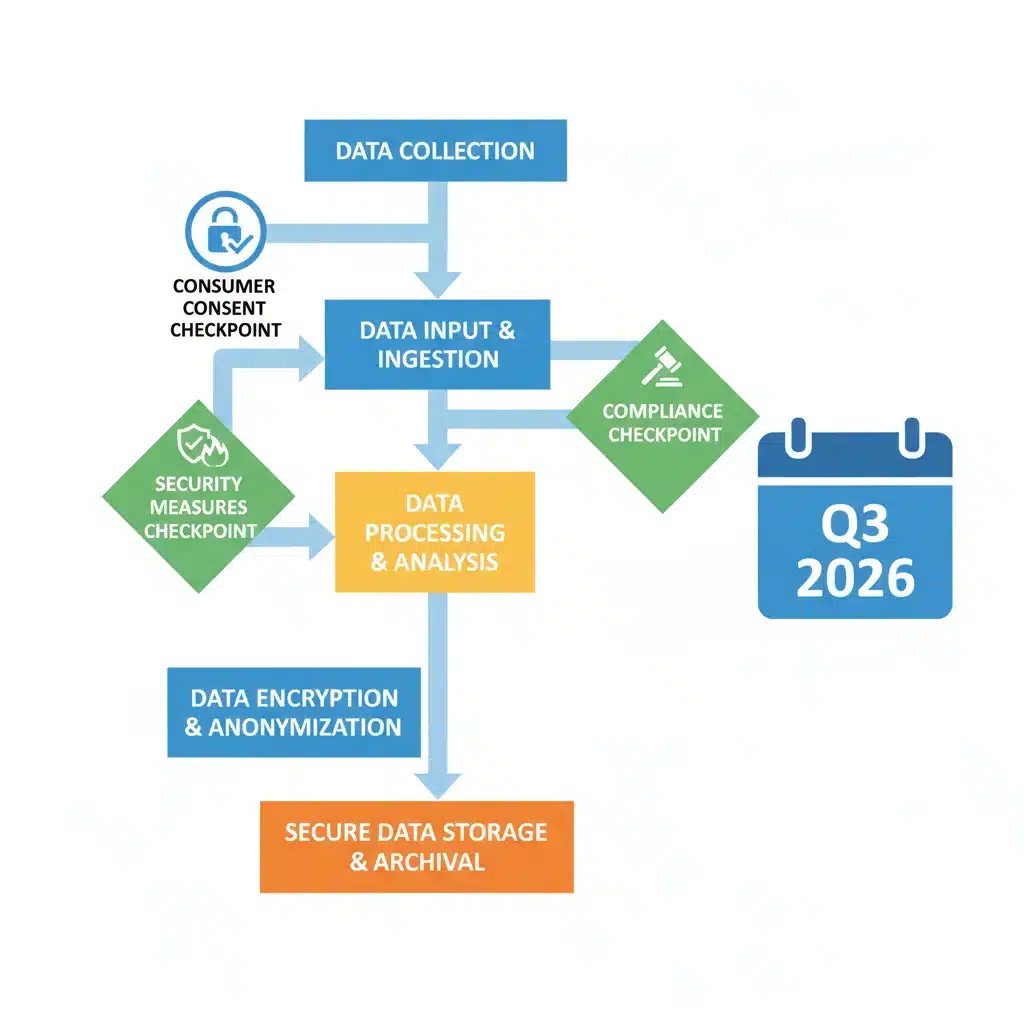
Regardless of which of the <strong>federal privacy bills</strong> ultimately gains traction and passes, businesses across all sectors will need to undertake significant preparations to ensure compliance by Q3 2026. The shift from a fragmented state-by-state approach to a national standard, or even a more harmonized federal framework, will necessitate a comprehensive review and overhaul of current data handling practices.
Key Areas of Impact and Preparation:
- <strong>Data Mapping and Inventory:</strong> Businesses will need to conduct thorough data mapping exercises to understand what personal data they collect, where it is stored, how it is processed, and with whom it is shared. This foundational step is essential for demonstrating compliance with data minimization principles and fulfilling individual rights requests.
- <strong>Updating Privacy Policies and Notices:</strong> Existing privacy policies will almost certainly need to be revised to reflect the new federal requirements, including detailed explanations of consumer rights, data processing activities, and contact information for privacy inquiries. Transparency will be paramount.
- <strong>Implementing New Consent Mechanisms:</strong> Depending on the bill, businesses may need to implement more explicit and granular consent mechanisms, particularly for sensitive data or targeted advertising. Universal opt-out signals could become a standard requirement.
- <strong>Strengthening Data Security:</strong> Both bills will undoubtedly require enhanced data security measures. This means investing in robust cybersecurity infrastructure, conducting regular risk assessments, implementing incident response plans, and providing ongoing employee training on data protection best practices.
- <strong>Developing Individual Rights Request Processes:</strong> Companies will need to establish efficient and verifiable processes for handling consumer requests related to access, correction, deletion, and data portability. This often involves dedicated portals or customer service channels.
- <strong>Vendor Management and Third-Party Contracts:</strong> Businesses will need to review and update contracts with third-party vendors and data processors to ensure they also comply with the new federal standards. Data sharing agreements will require careful scrutiny.
- <strong>Employee Training:</strong> All employees who handle personal data will need comprehensive training on the new legal requirements and the company’s updated privacy policies and procedures. A strong privacy culture is key to compliance.
- <strong>Impact Assessments:</strong> Many new privacy laws require Data Protection Impact Assessments (DPIAs) or similar assessments for high-risk processing activities. Businesses should prepare to integrate these into their project development lifecycles.
The potential for a private right of action, if included in the final legislation, adds another layer of complexity, increasing the stakes for non-compliance. Businesses will need to prioritize legal counsel and dedicated privacy professionals to navigate these changes effectively. Proactive preparation, rather than reactive responses, will be critical for avoiding penalties and maintaining consumer trust in a post-Q3 2026 privacy landscape governed by these <strong>federal privacy bills</strong>.
Impact on Consumers: Empowering Data Control
For consumers, the introduction of these <strong>federal privacy bills</strong> by Q3 2026 promises a new era of control over their personal data. Currently, the uneven distribution of privacy rights across states means that an individual’s ability to manage their digital footprint largely depends on their geographic location. A federal standard aims to democratize these rights, ensuring a baseline level of protection for all U.S. citizens.
Anticipated Consumer Benefits:
- <strong>Universal Rights:</strong> Consumers can expect to have consistent rights regarding their data, regardless of where they live. This includes the right to know what data is collected about them, the right to correct inaccuracies, and the right to request deletion of their data.
- <strong>Opt-Out of Data Sales and Targeted Advertising:</strong> A significant benefit will be the ability to easily opt-out of the sale of their personal information and targeted advertising. Many bills propose universal opt-out mechanisms, making it simpler for individuals to express their privacy preferences without having to navigate countless websites.
- <strong>Enhanced Transparency:</strong> Businesses will be required to provide clearer and more understandable privacy policies, making it easier for consumers to comprehend how their data is being used. This increased transparency fosters greater trust and informed decision-making.
- <strong>Improved Data Security:</strong> Stricter data security requirements for businesses mean that consumer data will be better protected against breaches and unauthorized access. This reduces the risk of identity theft and other forms of data-related harm.
- <strong>Recourse for Violations:</strong> Depending on the final form of the bill, consumers may have more direct avenues for recourse if their privacy rights are violated. This could range from filing complaints with a federal agency to, in some cases, pursuing legal action through a private right of action.
- <strong>Protection Against Discrimination:</strong> Provisions aimed at preventing discriminatory uses of data will help ensure that personal information is not used to disadvantage individuals based on protected characteristics.
While the benefits are substantial, consumers will also need to become more aware and proactive in exercising their new rights. Understanding the provisions of these <strong>federal privacy bills</strong> will be crucial for leveraging the protections they offer. Educational campaigns from both government and advocacy groups will likely play a vital role in informing the public about these upcoming changes.
The transition to a more federally regulated data environment by Q3 2026 represents a significant step towards empowering consumers in the digital age, giving them more agency over their personal information and fostering a more secure online experience.
Challenges and Outlook by Q3 2026
The path to enacting and implementing comprehensive <strong>federal privacy bills</strong> is fraught with challenges. While the bipartisan desire for a national standard is evident, bridging the gaps between differing legislative philosophies and stakeholder interests remains a formidable task. The target date of Q3 2026 provides a timeframe, but the complexities involved suggest that achieving consensus will require significant effort and compromise.
Legislative Challenges:
- <strong>Preemption Debate:</strong> The extent to which a federal law should preempt existing and future state privacy laws is a major sticking point. States with robust privacy laws, like California, are often reluctant to cede their authority, while businesses advocate for broad preemption to simplify compliance.
- <strong>Private Right of Action:</strong> As highlighted, the inclusion or exclusion of a private right of action is a deeply divisive issue. Consumer advocates and some legislators see it as essential for effective enforcement, while industry groups fear a wave of costly lawsuits.
- <strong>Scope and Definitions:</strong> Defining what constitutes ‘personal data,’ ‘sensitive data,’ and ‘covered entities’ in a way that is both comprehensive and adaptable to future technological changes is complex.
- <strong>Enforcement Resources:</strong> Any new federal privacy law will require substantial resources for enforcement, whether through the FTC or a new agency. Securing adequate funding and staffing will be crucial for its effectiveness.
Implementation Challenges for Businesses:
- <strong>Cost of Compliance:</strong> Implementing new data governance frameworks, updating systems, and training staff will incur significant costs, particularly for small and medium-sized enterprises (SMEs).
- <strong>Technical Complexity:</strong> Adapting existing IT infrastructure and data processing systems to meet new requirements for data minimization, consent management, and individual rights requests can be technically challenging and time-consuming.
- <strong>Interoperability:</strong> For businesses operating globally, ensuring interoperability between U.S. federal privacy laws and international regulations (like GDPR) will be an ongoing challenge.
Outlook by Q3 2026:
Despite these challenges, the momentum for a federal privacy law appears stronger than ever. The increasing frequency of data breaches, the growing public awareness of data privacy issues, and the continued innovation in data-driven technologies are all contributing factors. By Q3 2026, it is highly probable that some form of comprehensive <strong>federal privacy bills</strong> will have been enacted, or at the very least, significant progress will have been made towards its passage.
The final legislation will likely represent a carefully negotiated compromise, balancing the need for strong consumer protections with the desire to foster innovation and avoid unduly burdening businesses. Its success will depend not only on its passage but also on its clarity, enforceability, and adaptability to the evolving digital landscape. Businesses that begin preparing now will be best positioned to navigate this new regulatory environment effectively, transforming potential challenges into opportunities for building stronger trust with their customers.
The journey towards a unified federal privacy standard is a marathon, not a sprint. However, the introduction of these two <strong>federal privacy bills</strong> marks a crucial phase in this journey, setting the stage for a potentially transformative period in U.S. data governance by Q3 2026.
Conclusion: A New Era for Data Privacy
The introduction and ongoing debate surrounding these two new <strong>federal privacy bills</strong> signify a critical juncture in the evolution of data privacy in the United States. For too long, the U.S. has operated under a fragmented and often inadequate system of data protection, leaving both consumers and businesses navigating a complex and inconsistent regulatory maze. The push for a comprehensive federal standard, with a projected impact by Q3 2026, reflects a growing recognition of the need for stronger, more uniform rules in our increasingly data-driven world.
Whether the American Data Privacy and Protection Act (ADPPA) or an alternative Data Protection Act (DPA)-style bill ultimately prevails, the outcome will undoubtedly reshape how personal information is collected, processed, and secured across the nation. Businesses will face new compliance obligations, demanding significant investment in data governance, security infrastructure, and employee training. Proactive measures, including thorough data mapping, updated privacy policies, and robust individual rights request processes, will be essential for navigating this new landscape successfully.
For consumers, these <strong>federal privacy bills</strong> promise a future where they have greater control and transparency over their personal data. Universal rights, clearer consent mechanisms, and enhanced data security measures aim to empower individuals and foster greater trust in digital interactions. While the legislative process is complex and full of potential hurdles, the widespread support for a national privacy standard suggests that a significant shift is not just possible, but increasingly probable.
As we move towards Q3 2026, all stakeholders—businesses, consumers, and policymakers—must remain engaged and informed. The choices made today regarding preemption, private right of action, and enforcement mechanisms will have lasting implications for the digital economy and the fundamental right to privacy. The enactment of comprehensive <strong>federal privacy bills</strong> will mark a new era, one where data security is not just a best practice, but a fundamental legal requirement, ensuring a safer and more trustworthy digital environment for everyone.