Q1 2026 Stock Market Analysis: Performance, Sectors & Outlook

Analyzing the Q1 2026 Stock Market Performance: Sector-Specific Returns and Future Outlook
The first quarter of 2026 has concluded, and with it, a fresh set of data points for investors to dissect. The Q1 2026 stock market performance has been a topic of intense discussion among analysts, portfolio managers, and individual investors alike. This comprehensive analysis delves into the key drivers, sector-specific returns, and the overarching macroeconomic landscape that shaped the market’s trajectory during these crucial three months. Understanding these dynamics is paramount for making informed investment decisions as we navigate the remainder of the year.
The start of any new year often brings with it renewed optimism and a re-evaluation of investment strategies. Q1 2026 was no exception, presenting a complex interplay of global economic trends, geopolitical developments, and corporate earnings reports that influenced market sentiment. From inflation concerns to interest rate policies, and from technological advancements to shifts in consumer behavior, numerous factors contributed to the overall performance. This article aims to provide a detailed breakdown, offering insights into what transpired and what might lie ahead for the Q1 2026 stock market.
Global Economic Backdrop: Influencing Q1 2026 Stock Market Trends
To fully grasp the nuances of the Q1 2026 stock market, one must first consider the broader global economic environment. The quarter began with lingering concerns about global supply chains, though these showed signs of improvement compared to previous periods. Inflation, while still elevated in some regions, demonstrated a mixed picture, with certain economies seeing a deceleration while others continued to grapple with persistent price pressures. Central banks around the world maintained a cautious stance, with monetary policy decisions heavily scrutinized for their potential impact on economic growth and market liquidity.
Geopolitical events also played a significant role, introducing elements of uncertainty and volatility. Energy markets, in particular, remained sensitive to international developments, influencing commodity prices and, by extension, corporate profitability across various sectors. The interplay between major economic powers, trade relations, and regional conflicts created a dynamic and often unpredictable environment for investors. Understanding these global currents is crucial for contextualizing the specific performance of different asset classes and sectors within the Q1 2026 stock market.
Furthermore, consumer confidence and business sentiment indicators provided valuable insights into the underlying health of economies. Strong employment figures in key markets offered a degree of resilience, supporting consumer spending. However, rising living costs in many parts of the world continued to pose challenges, potentially impacting discretionary spending and corporate revenues. The resilience of the labor market was a key factor underpinning economic stability, preventing a more significant downturn in overall economic activity. This balance between inflationary pressures and labor market strength was a defining characteristic of the economic landscape during Q1 2026.
Major Indices Performance: A Snapshot of Q1 2026
The major global stock indices presented a varied picture during Q1 2026, reflecting the diverse economic conditions and sector-specific catalysts. In the United States, the S&P 500, Dow Jones Industrial Average, and Nasdaq Composite each recorded distinct movements. The S&P 500, often considered a barometer for the broader market, showed moderate gains, driven primarily by strong performances in certain growth-oriented sectors. The Dow Jones, representing a basket of industrial giants, also posted positive returns, albeit with less volatility. The Nasdaq Composite, heavily weighted towards technology and growth stocks, experienced periods of both robust growth and profit-taking, influenced by evolving interest rate expectations and innovation cycles.
Across the Atlantic, European markets, as measured by indices like the Euro Stoxx 50 and FTSE 100, demonstrated resilience. These markets benefited from improving economic sentiment and a more stable energy outlook compared to previous quarters. Asian markets, including the Nikkei 225 in Japan and the Hang Seng Index in Hong Kong, also saw mixed results, with some regions benefiting from domestic policy support and others grappling with specific economic headwinds. Emerging markets, while generally more susceptible to global economic shifts, showed pockets of strong performance, particularly in countries with favorable commodity exposures or robust domestic demand.
The performance of these major indices underscores the importance of diversification and a global perspective when analyzing the Q1 2026 stock market. No single market or region operated in isolation, and the interconnectedness of global finance meant that developments in one part of the world could quickly ripple across others. Investors who maintained a balanced portfolio across different geographies and asset classes were better positioned to navigate the quarter’s complexities and capitalize on diverse opportunities. The overall sentiment, while cautious, leaned towards a positive outlook, supported by corporate adaptability and a gradual return to more normalized economic conditions in some areas.
Sector-Specific Returns: Winners and Losers in Q1 2026
A deeper dive into sector-specific returns reveals the underlying dynamics that shaped the overall Q1 2026 stock market performance. Not all sectors performed equally, and understanding these divergences is key to identifying future investment opportunities and risks. Technology continued its dominance in many areas, particularly in sub-sectors related to artificial intelligence, cloud computing, and cybersecurity. Companies at the forefront of innovation saw significant capital inflows, driven by strong earnings reports and optimistic growth projections. However, some segments of the tech sector experienced pullbacks as investors rotated towards value plays.
Energy stocks also demonstrated robust performance, benefiting from fluctuating but generally elevated commodity prices and a renewed focus on energy security. Traditional energy producers and renewable energy companies alike saw increased investor interest, reflecting both short-term supply dynamics and long-term sustainability goals. The financial sector, while facing challenges from potential interest rate adjustments, showed resilience, with banks and insurance companies reporting solid earnings, supported by healthy credit markets and stable economic activity. This sector’s performance was closely tied to central bank policies and the overall economic outlook.
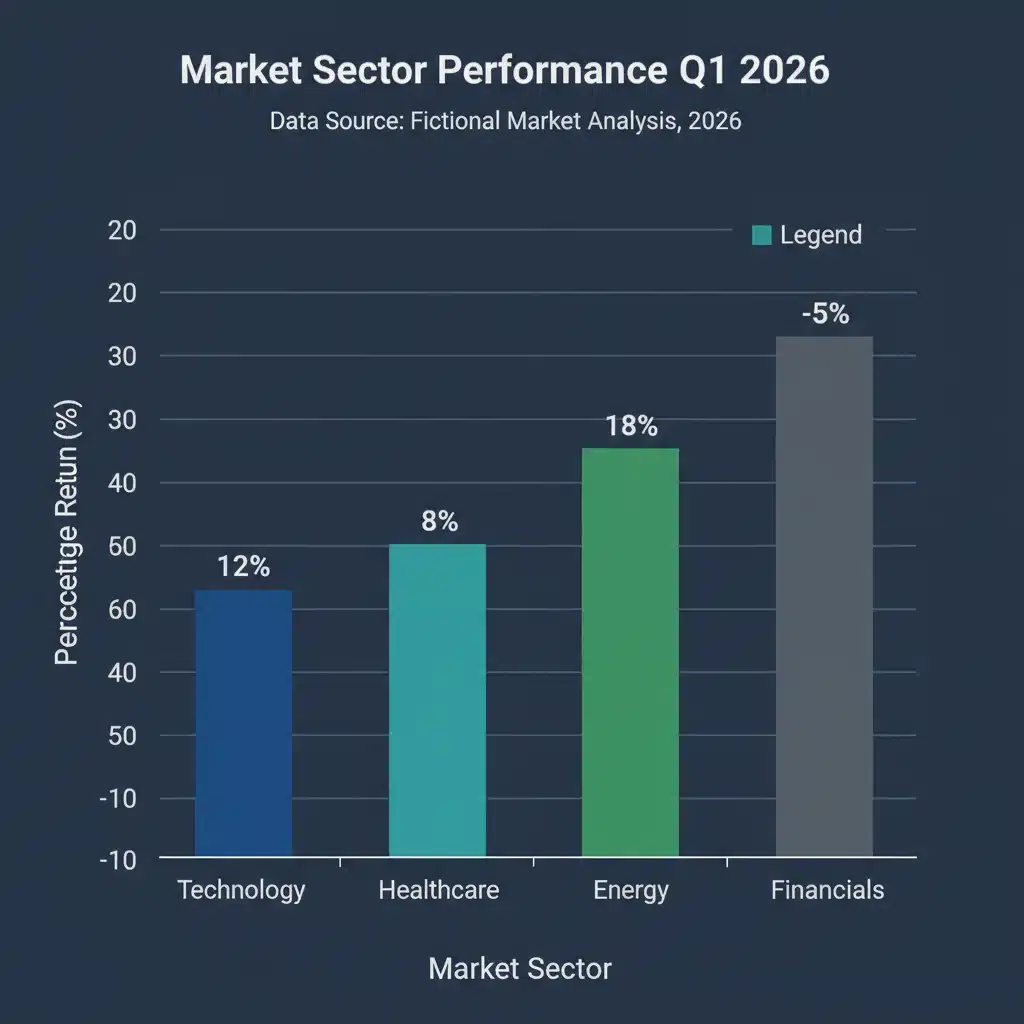
Top-Performing Sectors
- Technology: Driven by AI advancements and strong enterprise software demand.
- Energy: Benefiting from stable oil prices and geopolitical factors.
- Healthcare: Sustained demand for innovative medical solutions and pharmaceuticals.
- Industrials: Supported by infrastructure spending and manufacturing rebound.
Underperforming Sectors
- Real Estate: Faced headwinds from higher interest rates and slower commercial activity.
- Consumer Discretionary (select areas): Some segments struggled with inflationary pressures on consumer spending.
- Utilities: Often seen as defensive, these lagged during periods of market optimism.
The healthcare sector maintained its defensive appeal, with consistent demand for pharmaceuticals, medical devices, and healthcare services. Innovation in biotechnology and personalized medicine continued to attract significant investment. Industrials also showed strength, buoyed by government infrastructure spending initiatives and a gradual recovery in global manufacturing. Conversely, some segments of the consumer discretionary sector faced headwinds, as consumers grappled with higher living costs, impacting demand for non-essential goods and services. The real estate sector, particularly commercial real estate, continued to navigate a challenging environment marked by higher interest rates and evolving work patterns, leading to more subdued returns.
Key Economic Indicators and Their Impact
Several key economic indicators provided critical insights into the health of the global economy and its influence on the Q1 2026 stock market. Inflation data remained a primary concern, with central banks carefully monitoring CPI and PPI figures. While some regions saw a moderation, others experienced sticky inflation, prompting ongoing debates about the future trajectory of interest rates. Employment reports, including unemployment rates and job creation numbers, were generally robust, indicating a resilient labor market that helped underpin consumer spending and economic stability.
Gross Domestic Product (GDP) growth figures varied by country, with some economies demonstrating healthy expansion while others experienced slower growth or even contractions. Manufacturing PMIs (Purchasing Managers’ Indices) and services PMIs offered a forward-looking perspective on economic activity, with mixed signals suggesting a cautious but generally stable outlook for industrial production and service sector growth. Retail sales data provided direct insights into consumer behavior, reflecting the impact of inflation and interest rates on household spending patterns.
Corporate earnings reports were another significant driver of market sentiment. Companies that exceeded expectations or provided optimistic guidance were rewarded by investors, while those that fell short faced selling pressure. The aggregate earnings picture for Q1 2026 was generally positive, indicating corporate adaptability and resilience in navigating a complex economic landscape. These indicators, taken together, painted a picture of an economy in transition, slowly adjusting to post-pandemic realities and new geopolitical configurations, all of which had a direct bearing on the performance of the Q1 2026 stock market.
Technological Advancements and Market Innovation
The role of technological advancements cannot be overstated when discussing the Q1 2026 stock market. Innovation continued to be a powerful catalyst for growth, particularly in areas like artificial intelligence (AI), sustainable technologies, and advanced computing. AI, in particular, moved beyond theoretical discussions to practical applications, driving efficiency gains and creating new market opportunities across various industries. Companies investing heavily in AI research and development, or those successfully integrating AI into their products and services, saw substantial gains.
Beyond AI, the push towards sustainable technologies and renewable energy sources gained further momentum. Investments in solar, wind, and battery storage technologies continued to expand, driven by both environmental concerns and economic incentives. This sector not only contributed to market growth but also represented a significant shift in long-term investment priorities. Biotechnology and personalized medicine also witnessed rapid advancements, with new drug discoveries and therapeutic approaches creating excitement and attracting capital.
The digital transformation journey for businesses continued unabated, with increased adoption of cloud computing services, cybersecurity solutions, and data analytics platforms. These foundational technologies empowered companies to operate more efficiently, reach broader markets, and better understand their customers. The ripple effects of these technological innovations were felt across the entire market, influencing everything from manufacturing processes to consumer interactions, and playing a crucial role in shaping the performance of the Q1 2026 stock market.
Investment Strategies and Portfolio Adjustments for Q1 2026
Given the dynamics of the Q1 2026 stock market, investors were compelled to review and potentially adjust their strategies. The quarter highlighted the importance of a diversified portfolio, capable of withstanding sector-specific headwinds while capitalizing on growth opportunities. For many, this meant a careful balance between growth-oriented stocks, particularly in resilient technology sub-sectors, and value plays in more traditional industries that demonstrated stable earnings and attractive valuations.
Dividend-paying stocks and defensive sectors, such as utilities and consumer staples, continued to offer a degree of stability and income, appealing to risk-averse investors. However, the search for yield also led some to explore fixed-income alternatives, as bond yields became more attractive in certain markets. The focus on quality companies – those with strong balance sheets, sustainable competitive advantages, and consistent cash flows – remained a prudent approach in an environment marked by economic uncertainties.
Geographic diversification also proved beneficial, allowing investors to mitigate risks associated with specific regional economic downturns or geopolitical events. Emerging markets, while carrying higher risk, offered potentially higher returns in select cases, prompting a selective approach. The overarching theme for investment strategies in Q1 2026 was adaptability and a willingness to re-evaluate assumptions based on incoming economic data and corporate performance. Long-term investors, in particular, focused on identifying megatrends and investing in companies positioned to benefit from structural shifts in the global economy.
Future Outlook: Beyond Q1 2026
Looking beyond the first quarter, the outlook for the remainder of 2026 remains a subject of ongoing debate and analysis. The performance of the Q1 2026 stock market provides a foundation, but future trajectories will be shaped by a confluence of evolving factors. Inflationary pressures are expected to continue to moderate in some key economies, potentially allowing central banks to adopt a more flexible monetary policy stance. However, the path to sustained disinflation is unlikely to be smooth, and investors should brace for continued volatility related to economic data releases.
Geopolitical stability will also play a crucial role. Any significant escalation or de-escalation of existing conflicts, or the emergence of new tensions, could have profound impacts on commodity markets, supply chains, and investor confidence. Corporate earnings will continue to be a primary driver, with a keen eye on companies’ ability to manage costs, maintain profit margins, and adapt to changing consumer demands. The resilience of the labor market will also be critical in supporting overall economic growth and consumer spending.

Technological innovation, particularly in AI and sustainable energy, is expected to remain a powerful tailwind for certain sectors, offering compelling long-term growth opportunities. Investors should monitor these trends closely, identifying companies that are not only adapting to but also shaping the future technological landscape. The shift towards a more sustainable and digitally integrated global economy will continue to create new avenues for investment and reshape existing industries.
In conclusion, while the Q1 2026 stock market presented a complex and dynamic environment, it also offered valuable lessons and opportunities. The ability to understand the interplay of global economics, sector-specific performance, and technological advancements will be crucial for navigating the investment landscape in the coming quarters. Vigilance, adaptability, and a well-diversified strategy will be key for investors aiming to achieve their financial objectives in an ever-evolving market.