EdTech Updates: US Classrooms Evolving in 2026
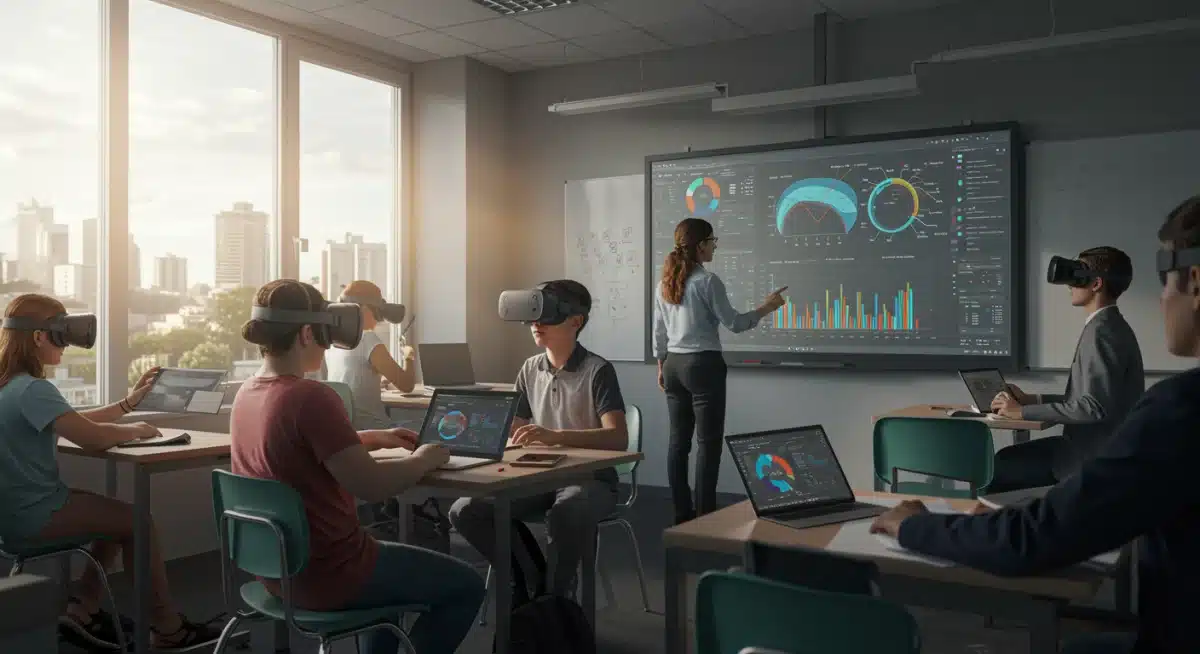
Recent educational technology updates are transforming U.S. classrooms in 2026 by integrating AI, virtual reality, and personalized learning platforms, fundamentally altering pedagogical approaches and student experiences.
The landscape of education is constantly shifting, and in 2026, the pace of change feels faster than ever. The impact of recent educational technology updates is dramatically reshaping how U.S. classrooms function, moving beyond traditional methods to embrace innovative tools that promise more engaging, personalized, and effective learning experiences. This evolution is not merely about introducing new gadgets; it’s about fundamentally rethinking pedagogy and preparing students for a rapidly advancing world.
The rise of artificial intelligence in personalized learning
Artificial Intelligence (AI) is no longer a futuristic concept but a present-day reality in many U.S. classrooms. Its integration is revolutionizing personalized learning, allowing educators to tailor content and pace to individual student needs in unprecedented ways. This shift addresses diverse learning styles and academic levels, ensuring every student can thrive.
AI-driven adaptive learning platforms
These platforms use algorithms to assess a student’s strengths and weaknesses, then deliver customized learning paths. They adapt in real-time, providing immediate feedback and adjusting difficulty levels to maintain optimal challenge. This prevents students from feeling overwhelmed or bored, fostering a more productive learning environment.
- Individualized pace: Students progress at their own speed, mastering concepts before moving on.
- Targeted interventions: AI identifies areas where students struggle, offering supplementary materials or alternative explanations.
- Engagement through relevance: Content is often customized to student interests, increasing motivation.
- Data-driven insights: Teachers receive detailed analytics on student performance, informing their instructional strategies.
The ability of AI to analyze vast amounts of data about student interactions and performance provides educators with actionable insights that were previously unimaginable. This data empowers teachers to make informed decisions about their teaching methods, curriculum adjustments, and individual student support. It transforms the role of the teacher from a sole content deliverer to a facilitator of personalized learning journeys.
Virtual and augmented reality: immersive learning experiences
Virtual Reality (VR) and Augmented Reality (AR) are bringing lessons to life, offering immersive experiences that transcend the limitations of textbooks and traditional lectures. These technologies are particularly impactful in subjects that benefit from visualization and hands-on (or virtual hands-on) exploration.
Exploring new worlds and concepts
With VR, students can embark on virtual field trips to ancient civilizations, explore the human body from within, or journey to distant galaxies, all from the comfort of their classroom. AR overlays digital information onto the real world, allowing students to interact with 3D models of objects, conduct virtual experiments, or even dissect virtual organs. These experiences deepen understanding and retention.
The tactile and visual nature of VR and AR learning can significantly boost student engagement. Imagine dissecting a frog virtually without any ethical concerns or material costs, or walking through a historical event as it unfolds. These technologies provide memorable learning moments that can solidify complex concepts in students’ minds. The potential for these tools to foster empathy and global understanding through virtual cultural exchanges is also immense.
The evolution of collaborative learning tools
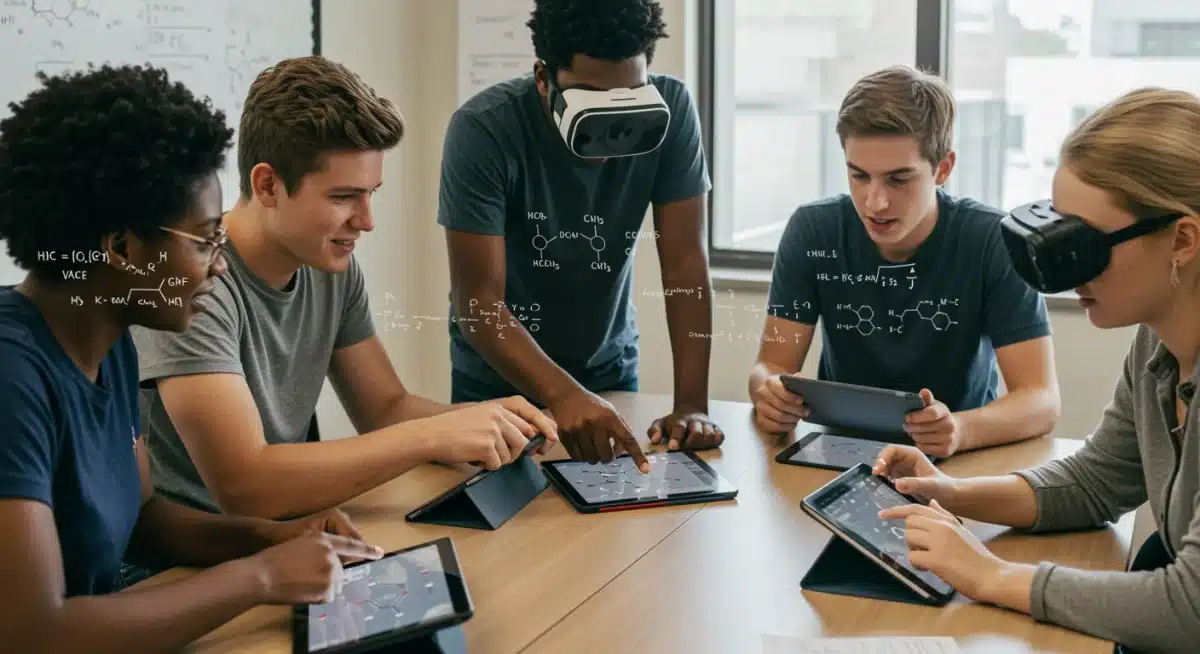
Modern educational technology has significantly enhanced collaborative learning, moving beyond simple group projects to facilitate dynamic, real-time interactions among students, regardless of their physical location. These tools are crucial for developing critical 21st-century skills such as teamwork, communication, and digital literacy.
Seamless group work and project management
Cloud-based platforms and specialized educational software now allow students to co-create documents, presentations, and multimedia projects simultaneously. Features like version control, instant messaging, and shared workspaces make collaboration efficient and transparent. Teachers can monitor progress, provide feedback in real-time, and assess individual contributions more effectively.
- Shared digital whiteboards: Students can brainstorm and sketch ideas together in a virtual space.
- Project management suites: Tools help organize tasks, deadlines, and responsibilities within groups.
- Video conferencing: Enables face-to-face discussions for remote or hybrid learning groups.
- Peer review systems: Facilitate constructive feedback among students, improving critical thinking.
These collaborative tools not only streamline group work but also prepare students for the collaborative nature of modern professional environments. They learn to navigate digital communication, manage shared resources, and resolve conflicts, all within a structured educational context. The development of digital etiquette and responsible online behavior is an important byproduct of using these platforms.
Data analytics and formative assessment
The integration of data analytics into educational technology provides teachers with powerful insights into student performance and learning patterns. This enables more effective formative assessment, allowing educators to intervene early and adjust their teaching strategies proactively.
Insightful student performance tracking
Learning management systems (LMS) and specialized assessment tools now collect vast amounts of data on how students interact with course materials, complete assignments, and perform on quizzes. This data can highlight specific areas of difficulty for individual students or identify common misconceptions across an entire class. Teachers can then use this information to provide targeted support.
Beyond simply tracking grades, these tools can analyze engagement levels, time spent on tasks, and even the types of errors students make. This granular data allows for a much more nuanced understanding of student learning processes than traditional assessment methods. By understanding not just what students know, but how they learn, educators can create more effective and responsive learning environments. It moves assessment from a summative, end-of-unit process to a continuous, formative cycle that actively supports learning.
Digital literacy and citizenship: essential 21st-century skills
As technology becomes more ubiquitous in classrooms, the development of digital literacy and responsible digital citizenship has become an indispensable part of the curriculum. Students need to not only use technology effectively but also understand its implications and navigate the online world safely and ethically.
Navigating the digital landscape responsibly
Educators are increasingly focusing on teaching students how to evaluate online information critically, understand digital footprints, protect their privacy, and engage in respectful online communication. These skills are vital not just for academic success but for thriving in an increasingly digital society. Curricula now often include lessons on cybersecurity, media literacy, and ethical AI use.
The integration of technology into daily classroom activities provides natural opportunities to teach these essential skills. Discussions around digital ethics can arise from collaborative projects, research assignments, or even social media use in educational contexts. Preparing students to be informed and responsible digital citizens is as important as teaching them to read and write. It equips them with the tools to discern truth from misinformation, engage constructively, and safeguard their digital well-being in an interconnected world.
Challenges and opportunities in implementation
While the benefits of educational technology are clear, implementing these updates across all U.S. classrooms in 2026 comes with its own set of challenges. Equitable access, adequate teacher training, and ongoing technical support are crucial for successful integration.
Ensuring equitable access and effective training
The digital divide remains a significant concern, with disparities in access to devices and high-speed internet impacting students from different socioeconomic backgrounds. Schools and districts are working to bridge this gap through various initiatives, but it requires sustained effort and investment. Furthermore, providing teachers with comprehensive training on new technologies and pedagogical approaches is paramount. Simply providing tools without adequate professional development can hinder their effective use.
- Infrastructure investment: Ensuring reliable internet and devices for all students and schools.
- Ongoing professional development: Regular training for teachers on new tools and best practices.
- Technical support: Readily available assistance for troubleshooting and maintenance of edtech.
- Curriculum alignment: Integrating technology in a way that enhances, rather than distracts from, learning objectives.
Addressing these challenges presents significant opportunities. By proactively tackling issues like equitable access and teacher preparedness, U.S. classrooms can fully harness the transformative power of educational technology. This proactive approach ensures that the advancements benefit all students, fostering an inclusive and innovative learning environment that prepares them for future success in an increasingly tech-driven world.
| Key Technology | Primary Impact on Classrooms |
|---|---|
| Artificial Intelligence | Enables highly personalized learning paths and data-driven insights for educators. |
| Virtual & Augmented Reality | Offers immersive, experiential learning, bringing complex concepts to life visually. |
| Collaborative Learning Tools | Facilitates seamless group work, communication, and project management among students. |
| Digital Literacy & Citizenship | Develops critical thinking, online safety, and ethical behavior in the digital age. |
Frequently asked questions about EdTech in 2026
AI-driven platforms assess student progress and adapt content difficulty, providing individualized learning paths. They offer targeted feedback, recommend resources, and adjust teaching pace, ensuring each student receives instruction tailored to their unique needs and learning style.
VR and AR offer immersive experiences that boost engagement and retention. Students can explore complex subjects like anatomy or history through virtual field trips and interactive 3D models, making abstract concepts tangible and memorable for deeper understanding.
These tools foster essential 21st-century skills such as teamwork, communication, and problem-solving. By working together on shared digital platforms, students learn to collaborate effectively in virtual environments, preparing them for future workplaces.
Data analytics provides teachers with real-time insights into student performance and learning patterns. This enables early intervention, helps identify areas of struggle, and allows educators to adjust their teaching strategies to better meet student needs.
Key challenges include ensuring equitable access to technology for all students, providing adequate and ongoing professional development for educators, and establishing robust technical support systems to manage and maintain the new tools effectively.
Conclusion
The impact of recent educational technology updates on U.S. classrooms in 2026 is undeniable and transformative. From the personalized learning pathways powered by AI to the immersive experiences offered by VR and AR, technology is fundamentally reshaping how students learn and how teachers teach. While challenges like equitable access and teacher training persist, the opportunities for enhanced engagement, deeper understanding, and the development of crucial 21st-century skills are immense. As these technologies continue to evolve, U.S. education is poised for a future where learning is more dynamic, inclusive, and effective than ever before, preparing students to thrive in an increasingly digital world.