2026 Social Security COLA: What a 3.2% Increase Means for Retirees

The 2026 Social Security Cost-of-Living Adjustment: What a 3.2% Increase Means for Retirees’ Budgets
For millions of Americans, Social Security benefits represent a significant, often primary, source of income during retirement. These benefits are not static; they are periodically adjusted to account for inflation, ensuring that retirees’ purchasing power doesn’t erode over time. This crucial adjustment is known as the Cost-of-Living Adjustment, or COLA. As we look ahead to 2026, projections suggest a 3.2% increase in the Social Security COLA, a figure that carries substantial implications for the financial well-being of retirees across the nation.
Understanding the Social Security COLA and its impact is more than just knowing a percentage; it’s about comprehending how this adjustment influences daily living, budgeting, and long-term financial stability. In this comprehensive guide, we will delve into the intricacies of the 2026 Social Security COLA, exploring what a 3.2% increase truly means for retirees’ budgets, how it’s calculated, and what steps beneficiaries can take to maximize their financial outlook.
The Social Security Administration (SSA) announces the official COLA in the autumn of each year, with the adjustment taking effect the following January. While the 3.2% figure for 2026 is currently a projection, it’s based on economic indicators and trends that often provide a reliable forecast. This anticipated increase reflects ongoing inflationary pressures and the need to help beneficiaries keep pace with rising costs of goods and services.
Understanding the Social Security COLA Mechanism
Before we dissect the implications of a 3.2% increase, it’s essential to grasp how the Social Security COLA is determined. The COLA is calculated based on the Consumer Price Index for Urban Wage Earners and Clerical Workers (CPI-W). Specifically, the SSA compares the average CPI-W for the third quarter of the current year (July, August, and September) with the average CPI-W for the third quarter of the last year in which a COLA was effective. The percentage increase between these two averages, rounded to the nearest tenth of a percent, becomes the COLA.
This methodology ensures that Social Security benefits are responsive to changes in the cost of living experienced by a significant portion of the working population, which indirectly reflects the cost pressures faced by retirees. The goal is to prevent inflation from eroding the real value of Social Security benefits, thereby preserving the financial security of millions of Americans.
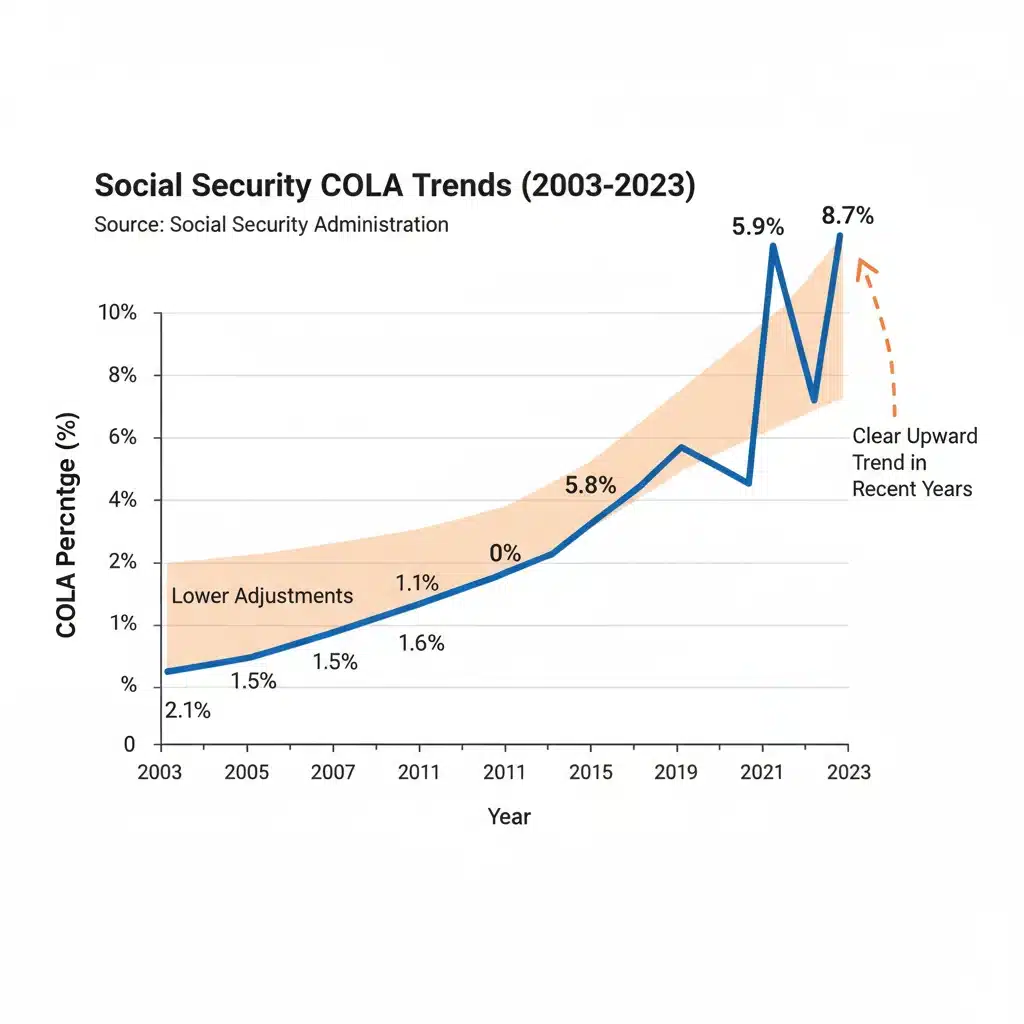
Historically, the COLA has varied significantly, reflecting different economic climates. There have been years with no COLA increase, particularly during periods of low inflation, and years with substantial increases, such as during periods of high inflation. The projected 3.2% for 2026 falls within a range that suggests a moderate but meaningful adjustment, acknowledging persistent inflationary trends without being exceptionally high.
The Direct Impact of a 3.2% Social Security COLA on Retirees’ Budgets
A 3.2% increase in the Social Security COLA might seem like a small number, but for retirees living on fixed incomes, it can translate into a significant difference in their monthly budget. Let’s break down the direct financial implications:
Increased Monthly Income
The most immediate effect is a higher monthly Social Security check. For example, if a retiree currently receives $1,800 per month, a 3.2% COLA would add approximately $57.60 to their monthly benefit, bringing it to $1,857.60. While this might not seem like a fortune, over a year, it amounts to an additional $691.20. For many, this extra income can be crucial for covering essential expenses.
Maintaining Purchasing Power
The primary purpose of the COLA is to help retirees maintain their purchasing power. When the cost of living rises, the same amount of money buys less. A 3.2% COLA aims to offset a similar level of inflation, meaning that retirees should theoretically be able to afford the same goods and services in 2026 as they could in 2025, despite rising prices. This is particularly important for everyday necessities like groceries, utilities, and transportation.
Addressing Rising Healthcare Costs
Healthcare is often one of the largest and most unpredictable expenses for retirees. While the COLA is designed to keep pace with general inflation, healthcare costs often outpace the overall inflation rate. However, a higher Social Security benefit can provide some buffer against these rising costs, even if it doesn’t fully cover them. It allows retirees more flexibility in managing their healthcare expenditures, whether it’s for prescription drugs, doctor visits, or insurance premiums.
Impact on Medicare Premiums
It’s important to note that increases in Social Security benefits can sometimes be partially offset by increases in Medicare Part B premiums. By law, if a retiree’s Social Security benefit increase is less than the increase in their Part B premium, their premium increase is limited to prevent a reduction in their net Social Security payment (the ‘hold harmless’ provision). However, for those not protected by this provision, or for Part D and supplemental plan premiums, any increase in benefits might be partially absorbed by higher healthcare costs.
Broader Economic Implications of the Social Security COLA
The Social Security COLA doesn’t just affect individual retirees; it has broader economic ramifications:
Stimulus for Local Economies
When millions of retirees receive increased benefits, a significant portion of that money is spent on goods and services within their local communities. This injection of funds can act as a mild economic stimulus, supporting local businesses and jobs. Retirees tend to spend their income on essentials, which directly benefits local economies.
Government Budget Considerations
A COLA increase also impacts the Social Security trust funds. While necessary to support beneficiaries, these adjustments represent a greater outflow of funds from the system. Policymakers continuously monitor these trends to ensure the long-term solvency of Social Security. The projected 3.2% COLA for 2026 will be factored into these long-range financial projections.
Inflationary Feedback Loop
While the COLA is a response to inflation, some economists argue about a potential feedback loop where increased benefits could contribute to further inflationary pressures. However, the impact of Social Security COLA on overall inflation is generally considered to be modest, as it primarily serves to maintain existing purchasing power rather than creating new demand waves.
Strategic Financial Planning for Retirees with the 2026 Social Security COLA
Knowing about the projected 3.2% Social Security COLA for 2026 is just the first step. Retirees can take several proactive measures to optimize their financial planning in light of this adjustment:
Re-evaluate Your Budget
With a clearer picture of your potential Social Security income, it’s an opportune time to revisit and adjust your household budget. Factor in the expected increase and assess how it impacts your ability to cover rising costs for groceries, utilities, and other essentials. This is also a good time to identify areas where you might be able to save or reallocate funds.
Review Healthcare Expenses
Given the persistent rise in healthcare costs, use the COLA increase as a trigger to review your Medicare plans, supplemental insurance, and prescription drug coverage. Compare different plans during the open enrollment period to ensure you have the most cost-effective and comprehensive coverage for your needs. The additional Social Security income can help cover any premium increases or out-of-pocket expenses.
Consider Debt Management
If you have any outstanding debts, such as credit card balances or personal loans, the extra income from the COLA could be strategically used to pay down high-interest debt. Reducing debt can significantly improve your overall financial health and free up more disposable income in the long run.
Boost Emergency Savings
Unexpected expenses can arise at any time. If your emergency fund isn’t as robust as it should be, consider directing a portion of your COLA increase into a high-yield savings account. A healthy emergency fund provides a crucial safety net and peace of mind.
Evaluate Investment Strategy (If Applicable)
For retirees with investment portfolios, a higher Social Security income might reduce the need to draw down on investments as heavily, allowing those assets more time to grow. Consult with a financial advisor to see how the COLA might fit into your broader investment and withdrawal strategy.
The Importance of Staying Informed About Social Security COLA
The Social Security COLA is a dynamic figure, and while projections offer a strong indication, the final number is subject to change based on the actual CPI-W data for the third quarter. Therefore, it’s crucial for retirees and those approaching retirement to stay informed about official announcements from the Social Security Administration.
Subscribing to SSA updates, following reputable financial news sources, and consulting with financial advisors are excellent ways to ensure you have the most up-to-date information. Being informed allows for timely adjustments to your financial plan, ensuring that you can effectively manage your budget and maintain your desired standard of living.
Beyond the Numbers: The Human Element
While we often focus on the percentages and monetary values, it’s vital to remember the human element behind the Social Security COLA. For many older adults, this adjustment isn’t just about extra dollars; it’s about dignity, stability, and the ability to live comfortably in their golden years. It represents a commitment to ensuring that those who have contributed to society throughout their working lives can maintain their quality of life in retirement.
A 3.2% increase, while perhaps not transformative for every individual, collectively provides a significant boost to the financial security of millions. It helps cover the rising costs of daily living, from the price of a gallon of milk to essential medications, allowing retirees to face the future with greater confidence.
Future Outlook and Long-Term Considerations for Social Security COLA
Looking beyond 2026, the trajectory of the Social Security COLA will continue to be influenced by inflation rates, economic growth, and demographic shifts. The system faces ongoing challenges related to its long-term solvency, and discussions about potential reforms are continuous. However, the mechanism for the COLA itself is generally well-established and designed to be responsive to cost-of-living changes.
Retirees should view the COLA as one component of a broader retirement income strategy. Relying solely on Social Security, even with annual adjustments, may not be sufficient for a comfortable retirement for everyone. A diversified approach that includes personal savings, pensions, and investments remains critical.
The Role of Personal Savings
Even with a positive Social Security COLA, personal savings play an indispensable role in supplementing retirement income. This includes 401(k)s, IRAs, and other investment vehicles. The more robust your personal savings, the less reliant you become on Social Security alone, and the more flexibility you have to absorb unexpected costs or pursue leisure activities.
Understanding Inflation’s Nuances
While the CPI-W is the official metric for COLA, retirees often experience inflation differently than the general working population. Their spending patterns might be more heavily weighted towards healthcare, housing, and certain services. Therefore, while a 3.2% COLA is beneficial, it’s wise for retirees to monitor their personal inflation rate and adjust their spending habits accordingly.
Final Thoughts on the 2026 Social Security COLA
The projected 3.2% Social Security COLA for 2026 is a welcome adjustment that underscores the ongoing commitment to protecting the purchasing power of retirees. While it’s a positive development, it’s also a reminder of the importance of proactive financial planning, staying informed, and adapting to economic changes.

For millions of Americans, this increase will provide a much-needed boost, helping to cover rising costs and offering a greater sense of financial security. By understanding how the COLA works and integrating this knowledge into their financial strategies, retirees can continue to enjoy their well-deserved retirement years with greater peace of mind and stability. As always, consulting with a qualified financial advisor can provide personalized insights and help navigate the complexities of retirement income planning.
Remember, the goal of Social Security is to provide a foundation of income. A 3.2% COLA helps strengthen that foundation, allowing retirees to focus on what truly matters: enjoying their well-deserved retirement.