Maximize Your 401(k) Contributions in 2026: A Comprehensive Guide

In the ever-evolving landscape of personal finance, securing your retirement is paramount. For many, the 401(k) remains a cornerstone of this financial planning, offering significant tax advantages and growth potential. As we look ahead to 2026, understanding how to maximize 401k 2026 contributions is not just smart planning; it’s a critical step towards achieving financial independence and a comfortable retirement. This comprehensive guide will delve into the intricacies of 401(k) contributions, offering insider strategies to ensure you’re making the most of this powerful retirement vehicle.
The allure of the 401(k) lies in its ability to grow your wealth tax-deferred (or tax-free with a Roth 401(k)) over decades, often supplemented by employer matching contributions. However, simply contributing is not enough. True maximization involves strategic planning, a deep understanding of contribution limits, and an awareness of advanced tactics that can significantly boost your retirement nest egg. Whether you’re a seasoned investor or just starting your retirement savings journey, the insights provided here will empower you to take decisive action and secure your financial future.
Understanding the Fundamentals of 401(k) Contributions
Before we dive into advanced strategies for 2026, it’s essential to have a solid grasp of the basics. A 401(k) is an employer-sponsored retirement plan that allows employees to save and invest for retirement on a tax-advantaged basis. Contributions are typically made through payroll deductions, and you have control over how your money is invested within the plan’s available options.
Traditional vs. Roth 401(k): Which is Right for You?
One of the first decisions you might face is choosing between a traditional 401(k) and a Roth 401(k), if your employer offers both. Understanding the tax implications of each is crucial for maximizing your long-term benefits.
- Traditional 401(k): Contributions are made with pre-tax dollars, meaning they reduce your taxable income in the year they are made. Your investments grow tax-deferred, and you pay taxes on your withdrawals in retirement. This option is generally beneficial if you expect to be in a lower tax bracket in retirement than you are now.
- Roth 401(k): Contributions are made with after-tax dollars, meaning they do not reduce your current taxable income. However, qualified withdrawals in retirement are completely tax-free. This option is often preferred if you expect to be in a higher tax bracket in retirement or if you want to enjoy tax-free income in your golden years.
The choice between traditional and Roth can significantly impact your overall tax burden throughout your lifetime. Consider your current income, anticipated retirement income, and future tax rate expectations when making this decision. Many financial advisors suggest a blended approach, contributing to both pre-tax and after-tax accounts to diversify tax risk.
Employer Matching Contributions: Free Money You Can’t Afford to Miss
Perhaps the most compelling reason to contribute to a 401(k) is the employer match. Many companies offer to match a certain percentage of your contributions, essentially providing free money for your retirement. For example, an employer might match 50% of your contributions up to 6% of your salary. This means if you contribute 6% of your salary, your employer adds another 3%, giving you a total of 9% being saved for retirement.
Failing to contribute at least enough to receive the full employer match is a common mistake that can cost you tens of thousands of dollars over your career. This is often the first and most fundamental step in how to maximize 401k 2026. Always contribute at least enough to get the full match – it’s an immediate, guaranteed return on your investment.
2026 401(k) Contribution Limits: What to Expect and How to Plan
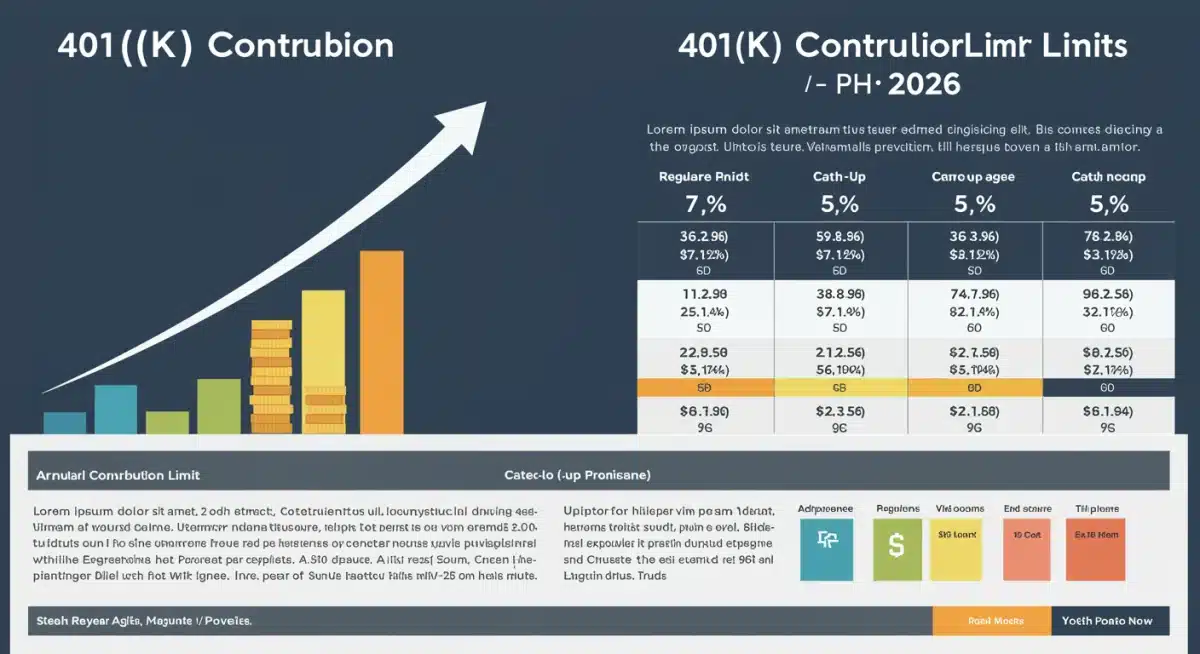
While the official 2026 401(k) contribution limits are typically announced by the IRS in late 2025, we can project based on historical trends and inflation adjustments. Understanding these limits is crucial for planning how to maximize 401k 2026. For context, the 2025 limits are projected to be around $23,000 for regular contributions and an additional $7,500 for catch-up contributions for those aged 50 and over. We anticipate a slight increase for 2026 due to inflation.
Projected Regular Contribution Limit for 2026
The regular contribution limit for 401(k) plans (including 403(b), most 457 plans, and the Thrift Savings Plan) is adjusted annually for inflation. Based on recent trends, it’s reasonable to expect the limit for 2026 to be around $23,500 to $24,000. This is the maximum amount you can contribute from your salary. This figure is a critical target for anyone aiming to maximize 401k 2026 and accelerate their retirement savings.
Projected Catch-Up Contribution Limit for 2026
For individuals aged 50 and over, the IRS allows for additional "catch-up" contributions. This provision is designed to help older workers boost their retirement savings if they started late or want to make up for lost time. The catch-up contribution limit has also seen annual adjustments. For 2026, it’s likely to be around $7,500 to $8,000. If you are 50 or older, contributing the full catch-up amount on top of the regular limit is a powerful strategy to significantly increase your retirement nest egg.
Total potential contribution for those 50 and over in 2026 could therefore be in the range of $31,000 to $32,000. This substantial amount highlights the importance of being aware of and utilizing these limits to their fullest extent. Don’t leave money on the table, especially if you’re nearing retirement.
Strategies to Maximize Your 401(k) in 2026
Simply knowing the limits isn’t enough; you need a plan to reach them. Here are actionable strategies to help you maximize 401k 2026 contributions.
1. Automate Your Contributions and Increase Annually
The easiest way to ensure you hit the maximum contribution limit is to automate your savings. Divide the annual maximum (e.g., $24,000) by the number of pay periods you have in a year (e.g., 24 bi-weekly payments or 26 bi-weekly payments) and set your payroll deduction accordingly. For example, if the limit is $24,000 and you get paid bi-weekly (26 times a year), you’d need to contribute approximately $923 per paycheck.
Furthermore, commit to increasing your contribution percentage each year, even by a small amount like 1% or 2%. This incremental increase often goes unnoticed in your take-home pay but can dramatically impact your retirement balance over time, especially when coupled with compounding returns. Many plans offer an "auto-increase" feature, which automatically bumps up your contribution percentage each year, making this strategy effortless.
2. Prioritize the Employer Match
As mentioned, the employer match is non-negotiable. If you’re not contributing enough to get the full match, you’re essentially turning down free money. Make this your absolute minimum contribution goal. Once you’ve secured the match, then you can consider other savings vehicles, but always start here to effectively maximize 401k 2026.
3. Leverage Catch-Up Contributions (If Applicable)
If you’re 50 or older, make every effort to contribute the full catch-up amount. This additional contribution can significantly accelerate your savings, particularly if you’re behind on your retirement goals. It’s a powerful tool for those entering the latter stages of their career to bridge any savings gaps.
4. Plan for Bonuses and Extra Income
If you receive annual bonuses, commissions, or other forms of extra income, consider directing a portion of these funds directly into your 401(k). Many plans allow you to specify how bonus money is treated. This can be an excellent way to make substantial contributions without impacting your regular monthly budget, helping you to quickly reach the maximum contribution for 2026.
5. Understand the "Mega Backdoor" Roth (If Your Plan Allows)
This advanced strategy is not available in all 401(k) plans, but if yours allows for after-tax 401(k) contributions and in-plan Roth conversions, it can be a game-changer. The "mega backdoor" Roth allows you to contribute beyond the regular employee contribution limit and catch-up limit, up to the overall IRS limit for defined contribution plans (which is significantly higher, potentially around $69,000 for 2026, plus catch-up). This involves contributing after-tax money to your 401(k) and then immediately converting it to a Roth 401(k). This allows a much larger amount of money to grow and be withdrawn tax-free in retirement. Consult a financial advisor to see if this strategy is viable for your specific plan and financial situation.
6. "Front-Load" Your Contributions
While most people spread their contributions evenly throughout the year, some choose to "front-load" their 401(k) by contributing more heavily at the beginning of the year. The advantage here is that your money has more time in the market to grow, potentially benefiting from an entire year of compounding. However, be cautious with this approach if your employer’s matching contributions are calculated on a per-pay-period basis and you hit the maximum early, you might miss out on matching funds later in the year. Check your plan’s specific rules regarding employer matching and contribution pacing before adopting this strategy.
7. Review and Adjust Annually
Your financial situation, income, and retirement goals can change from year to year. Make it a habit to review your 401(k) contributions and investment allocations at least once a year, preferably at the end or beginning of the year. This annual review allows you to adjust your contribution percentage to align with the new IRS limits for 2026 and ensure you’re always on track to maximize 401k 2026 and beyond.
Beyond Contributions: Optimizing Your 401(k) Investments
While maximizing contributions is crucial, the growth of your 401(k) also heavily depends on your investment choices. A well-allocated portfolio can significantly enhance your returns over the long term.
Diversification is Key
Ensure your 401(k) investments are well-diversified across different asset classes, such as stocks (domestic and international, large-cap, mid-cap, small-cap), bonds, and potentially real estate. Diversification helps to mitigate risk and can lead to more consistent returns over time. Avoid putting all your eggs in one basket.
Understand Your Risk Tolerance
Your investment strategy should align with your personal risk tolerance and time horizon. Younger investors with a longer time horizon can generally afford to take on more risk with a higher allocation to equities. As you approach retirement, you might gradually shift towards a more conservative portfolio to protect your accumulated gains. Most 401(k) plans offer target-date funds, which automatically adjust their asset allocation based on your projected retirement year, making diversification and risk management simpler.
Minimize Fees
Fees can erode your investment returns over time. Pay attention to the expense ratios of the funds within your 401(k) plan. Opt for low-cost index funds or ETFs when available, as these typically have lower fees than actively managed funds. Even a small difference in expense ratios can translate into significant savings over decades of investing.
Rebalance Regularly
Over time, market fluctuations can cause your portfolio’s asset allocation to drift from your target. Regular rebalancing (e.g., once a year) involves selling off some of your overperforming assets and buying more of your underperforming assets to bring your portfolio back to its desired allocation. This disciplined approach helps maintain your risk profile and can even enhance returns by forcing you to "buy low and sell high."
The Power of Compounding: Why Early and Consistent Contributions Matter
The concept of compound interest is often referred to as the "eighth wonder of the world." It’s the process where the earnings from your investments also earn returns, leading to exponential growth over time. This is why contributing early and consistently, and striving to maximize 401k 2026, is so incredibly powerful.
Consider two individuals: Sarah starts contributing $500 per month to her 401(k) at age 25 and stops at age 35. John starts contributing $500 per month at age 35 and continues until age 65. Assuming an average annual return of 7%, Sarah, who contributed for only 10 years, will likely have significantly more money at age 65 than John, who contributed for 30 years. This illustrates the immense power of time and compounding. Every dollar you contribute in 2026 has decades to grow, making those contributions exceptionally valuable.
Overcoming Obstacles to Maximization
While the benefits of maximizing your 401(k) are clear, several obstacles can stand in the way. Recognizing and addressing these challenges is crucial.
Budgetary Constraints
For many, the biggest hurdle is simply finding the extra money to contribute. This requires a thorough review of your budget. Look for areas where you can cut back, even temporarily. Small sacrifices today can lead to significant financial security tomorrow. Consider the "latte factor" – can you cut back on daily discretionary spending to free up funds for your 401(k)?
Competing Financial Priorities
You might have other financial goals, such as paying off high-interest debt, saving for a down payment on a house, or funding a child’s education. It’s important to prioritize. Generally, contributing enough to get your employer match should be a top priority, often even before aggressively paying down low-interest debt. After that, you can balance your 401(k) contributions with other goals. A financial advisor can help you create a holistic financial plan that addresses all your priorities.
Lack of Understanding or Engagement
Some individuals may not fully understand the benefits of the 401(k) or feel intimidated by investment decisions. Take the time to educate yourself, attend webinars offered by your plan administrator, or seek professional advice. The more knowledgeable you are, the more confident you’ll be in making decisions to maximize 401k 2026.
The Role of Financial Advisors in 401(k) Maximization
While this guide provides a wealth of information, a qualified financial advisor can offer personalized guidance tailored to your unique situation. They can help you:
- Assess your current financial health: A comprehensive review of your income, expenses, assets, and liabilities.
- Determine appropriate contribution levels: Help you set realistic and ambitious contribution goals for 2026 based on your income and lifestyle.
- Optimize investment allocation: Guide you in selecting the best investment options within your 401(k) plan based on your risk tolerance and time horizon.
- Integrate your 401(k) with other financial goals: Ensure your 401(k) strategy aligns with your broader financial plan, including other retirement accounts (IRAs, HSAs), debt management, and estate planning.
- Navigate complex strategies: Advise on advanced tactics like the "mega backdoor" Roth or strategies for those nearing retirement.
Investing in professional financial advice can often pay for itself many times over by helping you make smarter decisions and avoid costly mistakes.

Key Takeaways for Maximizing Your 401(k) in 2026
To recap, here are the essential actions you should take to maximize 401k 2026 and build a robust retirement fund:
- Know the Limits: Stay informed about the projected regular and catch-up contribution limits for 2026.
- Automate Your Savings: Set up payroll deductions to automatically contribute the maximum amount or as much as you can comfortably afford.
- Secure the Employer Match: Always contribute at least enough to receive the full employer matching contribution – it’s free money!
- Utilize Catch-Up Contributions: If you’re 50 or older, prioritize contributing the additional catch-up amount.
- Leverage Extra Income: Direct bonuses and other windfalls into your 401(k) to boost contributions without impacting your regular budget.
- Explore Advanced Strategies: Investigate options like the "mega backdoor" Roth if your plan supports it and it aligns with your financial goals.
- Optimize Investments: Diversify your portfolio, understand your risk tolerance, minimize fees, and rebalance regularly.
- Review Annually: Make it a habit to review your contributions and investment strategy at least once a year.
- Seek Professional Advice: Consider consulting a financial advisor for personalized guidance and to integrate your 401(k) into a holistic financial plan.
Conclusion: Your Path to a Secure Retirement Starts Now
The journey to a secure and comfortable retirement is a marathon, not a sprint. Every dollar you contribute to your 401(k) in 2026, especially when optimized through thoughtful strategies, is a step closer to financial freedom. By understanding the contribution limits, leveraging employer matches, and making informed investment decisions, you can significantly enhance your retirement savings.
Don’t underestimate the power of consistent effort and the magic of compounding. Start planning today, make those critical adjustments to your contributions, and commit to making 2026 the year you truly maximize 401k 2026. Your future self will thank you for it. Take control of your retirement savings now and build the financial future you envision.