Mortgage Rate Trends Early 2026: 30-Year Fixed at 6.8%
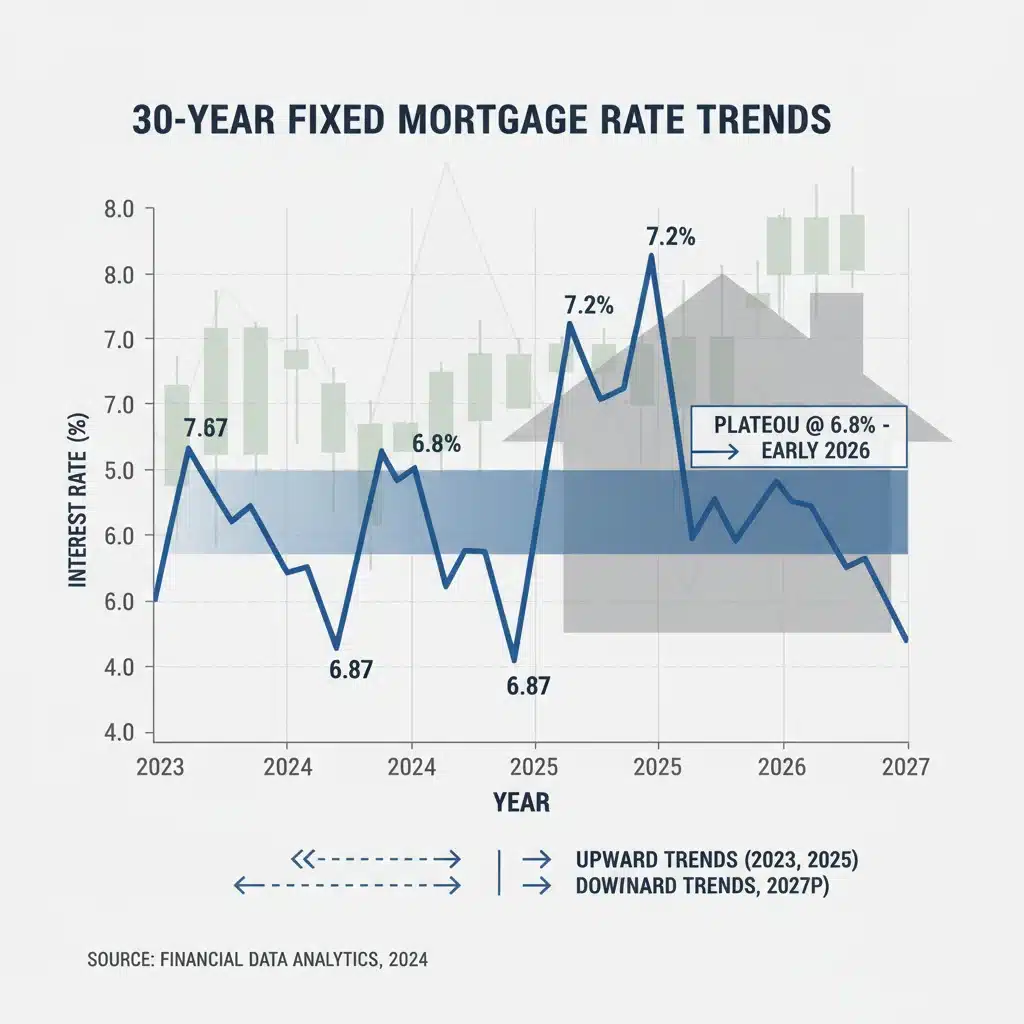
Mortgage Rate Trends in Early 2026: A Look at the Average 30-Year Fixed Rate Holding at 6.8%
As we navigate through the early months of 2026, the housing market continues to be a focal point for economists, policymakers, and potential homeowners alike. A significant indicator in this landscape is the steadfast behavior of mortgage rates. Specifically, the average 30-year fixed mortgage rate has shown a remarkable consistency, holding firm at approximately 6.8%. This stability, while perhaps higher than the ultra-low rates seen in previous years, offers a degree of predictability that can be both a blessing and a challenge for those looking to enter or move within the housing market. Understanding these mortgage rate trends is crucial for making informed financial decisions.
The stability at 6.8% is not a random occurrence but rather a reflection of a complex interplay of economic forces. Global economic conditions, domestic monetary policy, inflation expectations, and the overall health of the job market all contribute to shaping these rates. For many, a 6.8% rate might seem elevated, especially when compared to the historically low rates of the pandemic era. However, it’s important to contextualize this figure within the broader economic environment and historical averages. This article will delve into the factors influencing these mortgage rate trends, explore their implications for various stakeholders, and provide insights into what the remainder of 2026 might hold for the housing finance landscape.
Understanding the Stability: Why 6.8%?
The consistent average of 6.8% for 30-year fixed mortgage rates in early 2026 is a phenomenon that warrants closer examination. Several key economic indicators and policy decisions are contributing to this stability. Firstly, the Federal Reserve’s monetary policy plays an oversized role. While the Fed does not directly set mortgage rates, its actions regarding the federal funds rate significantly influence the broader interest rate environment, including the rates on long-term debt like mortgages. If the Fed has signaled a pause in rate hikes or even a potential, albeit distant, rate cut, this can introduce a period of calm in the bond market, which in turn translates to more stable mortgage rates.
Secondly, inflation expectations are a critical determinant. Lenders factor in anticipated inflation when setting rates, as inflation eroding the purchasing power of future repayments. If inflation is perceived to be under control and trending towards the Fed’s target, it reduces the need for lenders to demand higher rates to compensate for future value loss. The current stability at 6.8% suggests that markets have largely priced in the expected inflation trajectory for the near future, leading to less volatility in mortgage rate trends.
Thirdly, the supply and demand dynamics within the housing market itself contribute. A balanced market, where neither buyers nor sellers hold overwhelming power, can lead to more predictable mortgage rate behavior. If housing inventory remains tight but demand is also somewhat tempered by affordability concerns, it can prevent rates from soaring due to excessive demand or plummeting due to a lack of interest. The 6.8% rate reflects a market equilibrium where lenders find an acceptable return on investment while borrowers face a rate that, while not historically low, is manageable within current economic parameters.
Furthermore, global economic stability or instability can also transmit through to domestic interest rates. If major global economies are experiencing steady growth without significant shocks, it generally fosters a more predictable environment for long-term investments, including mortgage-backed securities. Conversely, geopolitical tensions or widespread economic downturns elsewhere can introduce uncertainty, pushing investors towards safer assets and potentially impacting bond yields, which then ripple into mortgage rate trends.
The labor market’s strength is another often-overlooked factor. A robust job market, characterized by low unemployment and steady wage growth, indicates a healthy economy. This confidence in economic stability allows lenders to maintain consistent rates, as they are less concerned about widespread defaults. Conversely, a weakening job market would likely lead to a decrease in consumer confidence and spending, prompting central banks to lower rates to stimulate the economy, which would then affect mortgage rate trends.
Implications for Homebuyers: Navigating the 6.8% Landscape
For prospective homebuyers, the current mortgage rate trends present a mixed bag of challenges and opportunities. A 6.8% 30-year fixed rate means higher monthly payments compared to the rates of 3-4% seen just a few years ago. This directly impacts affordability, as a significant portion of a household’s income will be allocated to mortgage servicing. Buyers need to be diligent in their financial planning, ensuring they have a clear understanding of their budget and what they can comfortably afford.
One key strategy for homebuyers in this environment is to focus on their credit score. A strong credit score can open the door to the most favorable rates available, even within the 6.8% average. Lenders use credit scores to assess risk, and a higher score signals a lower risk borrower, potentially qualifying them for rates at the lower end of the spectrum or better loan terms. It’s also vital for buyers to shop around. Different lenders may offer slightly different rates and fees, and comparing multiple offers can result in substantial savings over the life of the loan.
Another important consideration is the down payment. A larger down payment reduces the loan amount, thereby lowering the monthly mortgage payment and potentially allowing buyers to qualify for better rates. While saving for a significant down payment can be challenging, it’s a powerful tool in mitigating the impact of higher interest rates. First-time homebuyers, in particular, should explore various assistance programs available at federal, state, and local levels, which can help with down payment and closing costs.

For those who are on the fence, the stability of rates at 6.8% can also offer a degree of certainty. Unlike periods of high volatility where rates could fluctuate significantly within weeks, the current environment allows buyers more time to plan and secure financing without the constant fear of rates moving drastically against them. This predictability can reduce some of the stress associated with the home-buying process, enabling more thoughtful decision-making rather than rushed actions driven by fear of rising rates.
Furthermore, buyers should consider the long-term perspective. While 6.8% might feel high now, historical mortgage rate trends show that rates have been much higher in previous decades. It’s not uncommon for rates to fluctuate over time. If rates were to fall in the future, refinancing remains an option to secure a lower payment. Therefore, buying a home that meets current needs and budget, even at 6.8%, might still be a sound long-term investment, especially if property values continue to appreciate in desirable areas.
Buyers should also evaluate adjustable-rate mortgages (ARMs) with caution. While ARMs often offer lower initial rates than fixed-rate mortgages, their rates can adjust after an initial fixed period. In a stable or potentially rising rate environment, the risk of higher future payments might outweigh the initial savings. A thorough understanding of the terms and potential adjustments is crucial before committing to an ARM, especially with current mortgage rate trends indicating a plateau rather than a sharp decline.
Impact on Current Homeowners: Refinancing and Equity
Current homeowners are also directly affected by these mortgage rate trends. For those who secured mortgages at significantly lower rates during the pandemic-era boom, refinancing at 6.8% is likely not an attractive option. The primary motivation for refinancing is typically to lower monthly payments, reduce the loan term, or tap into home equity at a favorable rate. With rates at 6.8%, most homeowners with mortgages below this figure will find refinancing financially disadvantageous unless they have a specific need to consolidate high-interest debt or significantly alter their loan structure.
However, for homeowners who might have purchased their homes with higher rates in previous years, or those with adjustable-rate mortgages that are due to reset, the 6.8% average could present a refinancing opportunity. It’s always advisable for homeowners to periodically review their mortgage terms against current market rates. Even a marginal reduction in interest rate or a shift from an ARM to a fixed-rate mortgage can provide financial stability and peace of mind.
Home equity remains a significant asset for many. Despite higher mortgage rates, home values in many regions have continued to appreciate, allowing homeowners to build substantial equity. With rates at 6.8%, accessing this equity through a cash-out refinance might be less appealing than it was when rates were lower. However, home equity lines of credit (HELOCs) or home equity loans (second mortgages) could still be viable options for financing major expenses like home renovations, education, or debt consolidation, depending on the individual’s financial situation and the specific rates offered by lenders. The interest rates on HELOCs and home equity loans are often tied to the prime rate, which is influenced by the federal funds rate, so they tend to move in tandem with broader mortgage rate trends.
Homeowners considering selling their property also need to factor in these rates. While their existing low-rate mortgage is a benefit, potential buyers will face the current 6.8% rate. This can impact buyer demand and potentially influence selling prices. Understanding the market’s response to these rates is crucial for setting realistic expectations and pricing strategies. Sellers might need to be more flexible or consider offering incentives to attract buyers in an environment where affordability is a key concern due to prevailing mortgage rate trends.
The stability at 6.8% also provides a good opportunity for homeowners to re-evaluate their overall financial health. This includes assessing their current debt levels, emergency savings, and retirement planning. With a clearer picture of mortgage costs, homeowners can make better decisions about where to allocate their resources, ensuring long-term financial security. This might also be a time to consider making extra principal payments if financially feasible, reducing the overall interest paid over the life of the loan, especially at a 6.8% rate.
Economic Factors Shaping Future Mortgage Rate Trends
Looking ahead, several economic factors will continue to shape mortgage rate trends beyond early 2026. The Federal Reserve’s stance on inflation will remain paramount. If inflation proves more stubborn than anticipated, the Fed might be compelled to maintain higher interest rates for longer, or even consider further hikes, which would likely push mortgage rates upward. Conversely, a clear and sustained decline in inflation towards the Fed’s 2% target could pave the way for eventual rate cuts, potentially leading to a decrease in mortgage rates.
The strength of the U.S. economy, particularly the labor market, is another critical indicator. A resilient economy with strong employment figures provides the Fed with room to keep rates elevated without fear of triggering a severe recession. However, any signs of significant economic slowdown or rising unemployment could prompt the Fed to ease monetary policy, which would typically result in lower mortgage rate trends.

Global economic developments cannot be ignored. Geopolitical events, international trade policies, and the economic performance of major trading partners can all influence investor sentiment and bond yields, which are directly linked to mortgage rates. For instance, a global economic slowdown might lead to a flight to safety, increasing demand for U.S. Treasury bonds and potentially driving their yields down, thereby impacting mortgage rate trends favorably.
Government fiscal policy, including spending and taxation, also plays a role. Large government deficits can lead to increased borrowing, which can put upward pressure on interest rates as the government competes with private borrowers for capital. Conversely, fiscal responsibility and efforts to reduce the national debt could alleviate some of this pressure. The interplay between monetary and fiscal policy is complex and constantly evolving, making predictions about future mortgage rate trends challenging.
Technological advancements and their impact on productivity and economic growth also contribute to the long-term outlook. Increased productivity can lead to non-inflationary growth, allowing for lower interest rates. Conversely, if technological gains are slow, it might imply a need for higher rates to manage inflationary pressures. These underlying structural changes in the economy are often slower to manifest but have profound long-term effects on mortgage rate trends.
Finally, housing supply and demand dynamics will continue to influence rates indirectly. A persistent shortage of housing, coupled with strong demand, can keep home prices elevated. While high prices don’t directly drive interest rates, they can exacerbate affordability issues, potentially leading to policy responses that might influence the rate environment. Conversely, an oversupply could temper price growth and potentially lead to different monetary policy considerations.
Strategies for Homebuyers and Homeowners in This Environment
Given the current mortgage rate trends, both homebuyers and existing homeowners should adopt strategic approaches to navigate the market effectively. For homebuyers, pre-approval is more critical than ever. It provides a clear understanding of what you can afford, strengthens your offer in a competitive market, and locks in a rate for a certain period, protecting you from potential short-term fluctuations. Working with a reputable mortgage broker who can compare various lenders’ offerings is also invaluable.
Consider the total cost of homeownership, not just the monthly mortgage payment. This includes property taxes, homeowners insurance, potential HOA fees, and maintenance costs. A holistic view will prevent unexpected financial strain. Furthermore, explore different loan products. While the 30-year fixed rate is the most common, options like 15-year fixed mortgages, if affordable, can save a significant amount in interest over the life of the loan. However, the higher monthly payment of a 15-year mortgage needs to be carefully weighed against your budget in a 6.8% rate environment.
For homeowners, regularly reviewing your mortgage is a prudent financial practice. Even if refinancing isn’t immediately beneficial, understanding your current terms and comparing them to market rates keeps you informed. If you have an ARM, pay close attention to its adjustment period and consider your options as it approaches. Building an emergency fund is also crucial, providing a buffer against unexpected expenses or economic downturns, especially when mortgage payments are higher. Making extra principal payments, even small ones, can significantly reduce the total interest paid and shorten the loan term over time, a strategy that becomes more impactful with higher initial rates like 6.8%.
Staying informed about economic forecasts and central bank announcements is also vital. These insights can provide an early indication of potential shifts in mortgage rate trends, allowing you to react proactively rather than reactively. Subscribing to financial news, consulting with financial advisors, and utilizing online resources can help you stay ahead of the curve. The housing market is dynamic, and being well-informed is your best defense against unexpected changes.
Finally, remember that homeownership is a long-term investment. While current rates and market conditions are important, the decision to buy or sell should align with your personal financial goals and life circumstances. Don’t let short-term market fluctuations overshadow your long-term objectives. The stability of 6.8% offers a chance for deliberate planning and execution rather than impulsive decisions.
Conclusion: Navigating the Steady Waters of 6.8%
The early months of 2026 present a housing finance landscape characterized by a relatively stable average 30-year fixed mortgage rate of 6.8%. This stability, driven by a confluence of monetary policy, inflation expectations, and broader economic conditions, offers both challenges and opportunities for homebuyers and current homeowners. While higher than the historically low rates of recent memory, 6.8% provides a degree of predictability that can be leveraged with careful planning and strategic decision-making.
For prospective buyers, understanding affordability, optimizing credit scores, and exploring all available financing options are paramount. For existing homeowners, regular mortgage reviews and strategic use of home equity remain key. Both groups benefit from staying informed about the economic factors that continue to shape mortgage rate trends, including the Federal Reserve’s actions, inflation data, and global economic health.
The housing market is constantly evolving, but the current stability at 6.8% offers a moment for thoughtful consideration rather than rushed decisions. By adopting a well-informed and strategic approach, individuals can successfully navigate the current mortgage rate environment and make choices that align with their long-term financial well-being and homeownership goals. The journey through the housing market in 2026 will undoubtedly require diligence, but with a clear understanding of the prevailing mortgage rate trends, participants can proceed with confidence.