Future of Remote Learning: 3 Key Trends Shaping Education in 2026
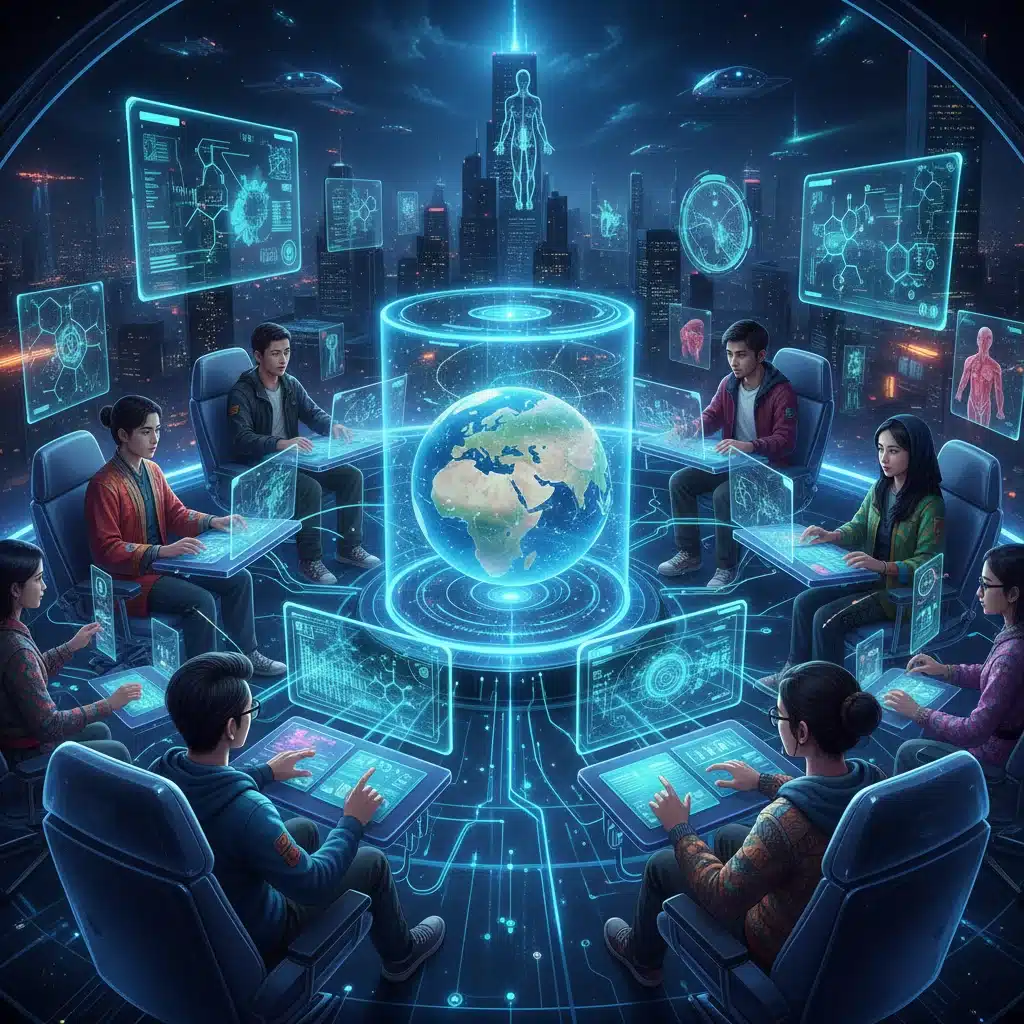
The landscape of education is undergoing a profound transformation, driven by rapid technological advancements and evolving societal needs. Remote learning, once a niche alternative, has become a cornerstone of modern pedagogy, accelerated by global events and a growing appreciation for flexible, accessible education. As we cast our gaze towards 2026, it’s clear that the future remote learning environment will be dramatically different, more sophisticated, and deeply integrated with cutting-edge technologies. This article will delve into three pivotal trends that are set to redefine remote learning, offering a glimpse into the educational paradigm of tomorrow.
The Future of Remote Learning: 3 Key Trends Shaping Education in 2026
Remote learning has evolved from a simple alternative to a powerful, dynamic mode of education. What started as basic online courses has blossomed into a sophisticated ecosystem leveraging advanced technology to deliver personalized, engaging, and globally connected learning experiences. The trajectory of this evolution suggests that by 2026, remote learning will be virtually unrecognizable compared to its earlier iterations, offering unprecedented opportunities for students and educators alike. This isn’t just about moving classrooms online; it’s about fundamentally rethinking how knowledge is acquired, shared, and applied.
The driving forces behind this transformation are multifaceted. Technological innovation, particularly in artificial intelligence, virtual reality, and high-speed global connectivity, is creating new possibilities. Simultaneously, a growing demand for flexible, lifelong learning, coupled with an increasing recognition of diverse learning styles, is pushing educators and institutions to adapt. The confluence of these factors is paving the way for a future where education is more accessible, equitable, and effective than ever before. Let’s explore the three key trends that will shape the future remote learning landscape.
Trend 1: Hyper-Personalized AI Tutors and Adaptive Learning Paths
One of the most significant shifts in the future remote learning environment will be the widespread adoption of hyper-personalized AI tutors and adaptive learning paths. While AI in education is not entirely new, its capabilities are rapidly advancing, moving beyond simple content recommendations to truly intelligent, responsive, and empathetic tutoring systems. By 2026, AI will be able to analyze a student’s learning patterns, strengths, weaknesses, engagement levels, and even emotional state in real-time, tailoring the educational experience with unprecedented precision.
The Evolution of AI in Education
Early AI applications in education focused on automated grading and basic content delivery. Today, we see AI-powered platforms that can identify knowledge gaps and suggest remedial materials. However, the next generation of AI tutors will be far more sophisticated. Imagine an AI that not only understands *what* a student knows but also *how* they learn best. Does a student thrive with visual explanations, hands-on simulations, or auditory lectures? Does their attention wane after 20 minutes, or do they prefer deep, uninterrupted work sessions? These are the nuances that future AI tutors will be programmed to recognize and respond to.
How Hyper-Personalization Works
Hyper-personalization will involve a continuous feedback loop. As a student interacts with the learning platform, the AI collects data on their performance, time spent on tasks, types of errors made, and even physiological indicators (if biometric sensors are integrated, with appropriate privacy safeguards). This data is then used to dynamically adjust the curriculum, pace, and instructional methods. For example, if an AI detects that a student is struggling with a particular mathematical concept, it might:
- Present the concept in a different format (e.g., a video instead of text).
- Offer alternative practice problems with varying levels of difficulty.
- Connect the student with supplementary resources or even a human tutor for a brief, targeted intervention.
- Provide immediate, constructive feedback that goes beyond just right or wrong, explaining the ‘why’ behind errors.
This level of individualized attention, traditionally only available in one-on-one tutoring settings, will become scalable and accessible to millions through AI. This will democratize access to high-quality, tailored instruction, addressing the diverse needs of learners across different socio-economic backgrounds and geographic locations. The goal is not to replace human teachers but to augment their capabilities, allowing them to focus on higher-order thinking, mentorship, and fostering critical social-emotional skills, while AI handles the personalized delivery of core content.
Impact on Students and Educators
For students, hyper-personalized AI tutors mean less frustration, more engagement, and a deeper understanding of subjects. Learning becomes less about rote memorization and more about genuine comprehension and application. Students will progress at their optimal pace, preventing both boredom from slow instruction and discouragement from overwhelming difficulty. This will significantly boost academic outcomes and cultivate a love for lifelong learning.
For educators, AI will act as a powerful assistant. It will free up valuable time by automating administrative tasks, grading, and even lesson planning. Teachers will gain unprecedented insights into their students’ learning journeys, allowing them to intervene effectively where human connection is most needed. They can focus on facilitating collaborative projects, fostering critical thinking, and addressing individual student well-being, transforming their role from content deliverers to mentors and facilitators. The future remote learning educator will be a master of leveraging technological tools to amplify their impact.
Trend 2: Immersive VR/AR Experiences for Enhanced Engagement
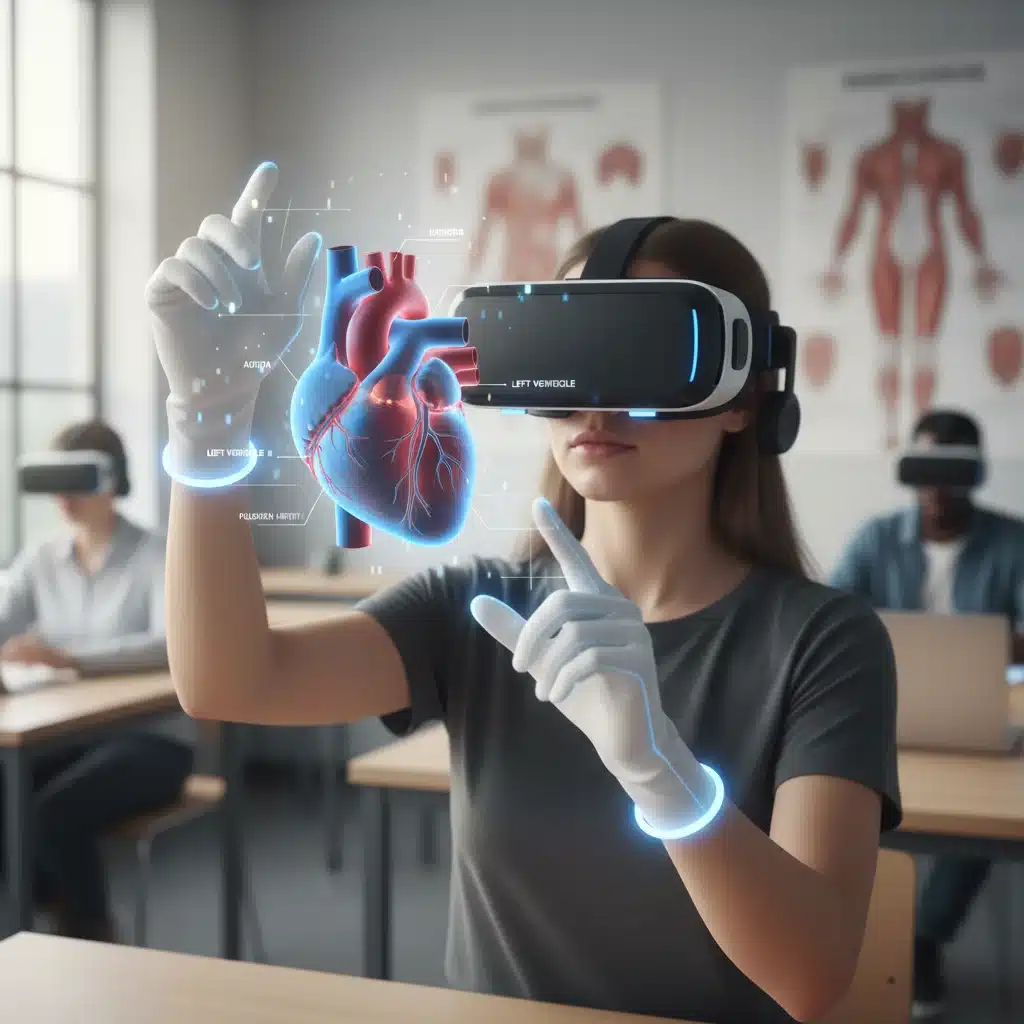
The second transformative trend in the future remote learning landscape is the widespread integration of Virtual Reality (VR) and Augmented Reality (AR) to create deeply immersive and engaging educational experiences. Beyond static videos and text, VR/AR will transport students into virtual environments, allowing them to interact with concepts and scenarios in ways previously unimaginable outside of physical laboratories or field trips.
Beyond the Screen: A New Dimension of Learning
Current remote learning often suffers from a lack of hands-on experience and spatial understanding. VR and AR directly address this limitation by creating interactive, three-dimensional learning environments. Imagine medical students practicing complex surgeries on virtual patients, history students walking through ancient Rome, or chemistry students conducting experiments in a safe, simulated lab without the need for expensive equipment or hazardous chemicals. This isn’t just about passive viewing; it’s about active participation and manipulation within a digital space.
Applications Across Disciplines
- Science and Engineering: Students can disassemble and reassemble complex machinery, explore molecular structures, or conduct virtual dissections. They can experiment with physics principles in a zero-gravity environment or design and test engineering prototypes without physical constraints.
- Humanities and Arts: Walk through historical battlefields, explore digital museums with artifacts from around the world, or collaborate on virtual art installations. Language learners can practice conversations with AI-powered avatars in culturally authentic virtual settings.
- Vocational Training: Aspiring technicians can practice repairs on virtual engines, welders can hone their skills in a simulated workshop, and hospitality students can navigate virtual hotel scenarios, all without risk and with immediate feedback.
- Soft Skills Development: VR can create realistic simulations for practicing public speaking, negotiation, or customer service in a safe, repeatable environment.
The tactile and visual nature of VR/AR learning enhances retention and comprehension by engaging multiple senses. It makes abstract concepts tangible and distant realities immediate. The gamified elements often present in VR/AR experiences also boost motivation and engagement, turning learning into an adventure rather than a chore. This is a game-changer for the future remote learning experience, making it more dynamic and memorable.
Challenges and Opportunities
While the potential is immense, challenges remain, primarily in hardware accessibility and content creation. However, the cost of VR/AR headsets is steadily decreasing, and platforms for creating educational VR/AR content are becoming more user-friendly. By 2026, we can expect more affordable, lightweight devices and a burgeoning ecosystem of educational VR/AR applications, making these immersive tools a standard component of remote learning toolkits. Institutions will invest in these technologies, recognizing their power to deliver unparalleled learning outcomes and attract students seeking cutting-edge educational experiences.
Trend 3: Global Collaborative Learning Platforms and Intercultural Exchange
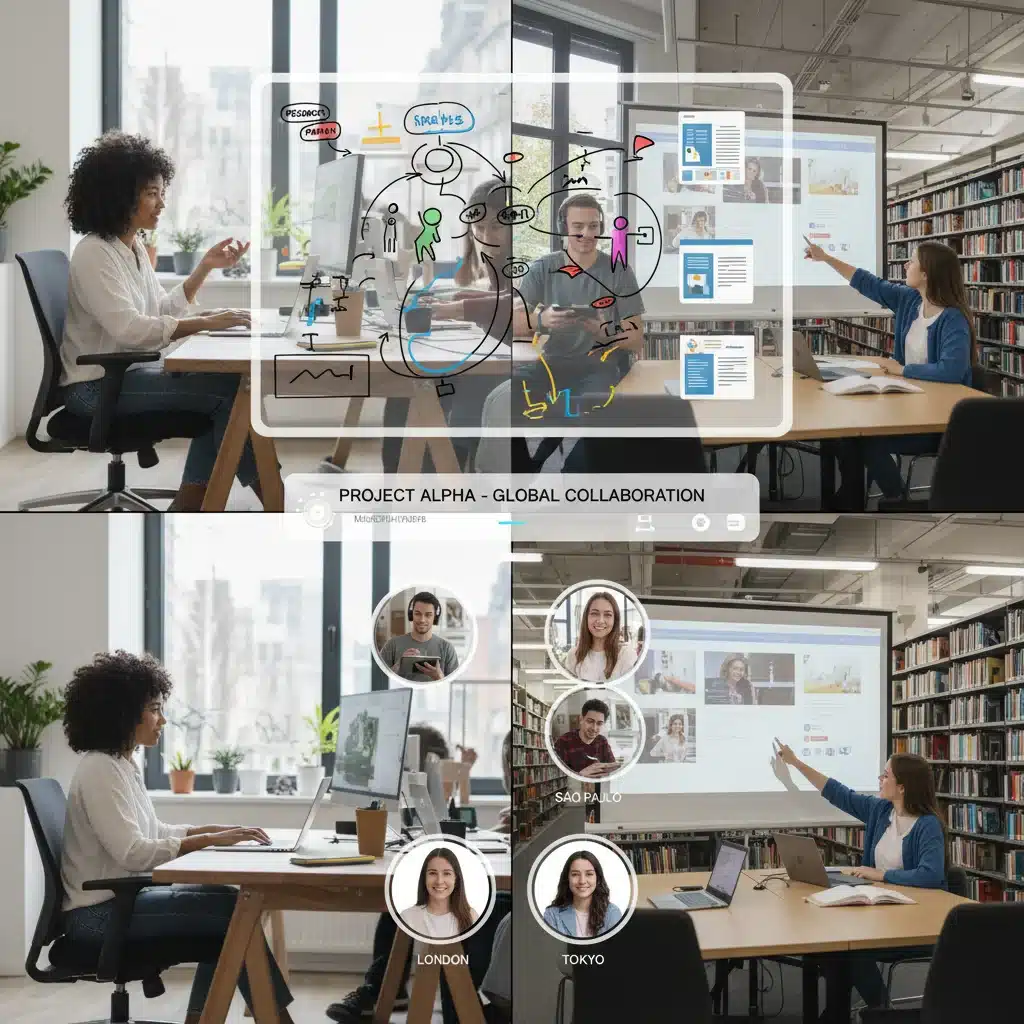
The third key trend for the future remote learning landscape is the proliferation of advanced global collaborative learning platforms that foster genuine intercultural exchange. While online collaboration tools exist today, the next generation will be far more sophisticated, breaking down geographical and linguistic barriers to create truly interconnected learning communities.
Beyond Video Calls: Deepening Global Connections
Current online collaboration often involves simple video conferencing and shared documents. The future will see platforms designed from the ground up to facilitate deep, meaningful collaboration among students from diverse backgrounds. These platforms will incorporate real-time translation services, cultural context awareness, and tools for joint project management that transcend traditional boundaries.
Features of Future Collaborative Platforms
- Advanced AI-Powered Translation: Real-time, highly accurate translation of spoken and written language, allowing students from different linguistic backgrounds to communicate effortlessly.
- Virtual Project Spaces: Shared 3D work environments where students can co-create, experiment, and present projects together, regardless of their physical location. Imagine designing a sustainable city model with peers from five different countries in a shared virtual space.
- Intercultural Competency Modules: Integrated tools and resources that help students understand and navigate cultural differences, promoting empathy and effective cross-cultural communication.
- Global Mentorship Programs: Platforms connecting students with mentors and experts from around the world, opening up opportunities for specialized guidance and networking that would be impossible in a localized educational setting.
- Blockchain for Credentialing and Ownership: Secure, transparent systems for verifying contributions to collaborative projects and issuing micro-credentials for skills gained through international teamwork.
This trend will not only enrich the learning experience but also prepare students for an increasingly globalized workforce. The ability to collaborate effectively across cultures, time zones, and communication styles will be a critical skill in the 21st century. The future remote learning environment will be a training ground for global citizenship.
Benefits for Students and Society
For students, global collaboration offers an unparalleled opportunity to broaden their perspectives, develop empathy, and build a global network. They will learn to appreciate diverse viewpoints, solve complex problems with varied approaches, and communicate effectively in a multicultural context. This exposure is invaluable for personal growth and career readiness.
For society, these platforms contribute to a more interconnected and understanding world. By fostering collaboration and dialogue across borders from an early age, remote learning can play a crucial role in breaking down stereotypes and promoting global harmony. Educational institutions that embrace these platforms will attract a more diverse student body and produce graduates who are truly global citizens, ready to tackle global challenges.
The Synergy of These Trends: A Holistic Future Remote Learning Experience
It’s important to recognize that these three trends are not isolated but rather deeply interconnected, forming a synergistic ecosystem that will define the future remote learning experience. Imagine a student learning about climate change:
- Their AI tutor identifies their interest in environmental science and recommends a personalized learning path, including specific VR simulations and global collaborative projects.
- They then enter a VR environment where they can visualize the impact of deforestation on a rainforest ecosystem, interact with virtual models of endangered species, and even simulate policy changes to see their effects.
- Following this, they join a global collaborative project with students from Brazil, Norway, and India to develop a sustainable energy solution for a developing nation, using real-time translation and shared virtual workspaces.
This integrated approach transforms passive learning into an active, immersive, and globally relevant experience. The AI continuously assesses their progress and engagement, the VR/AR provides context and hands-on interaction, and the global platform facilitates real-world application and diverse perspectives. This holistic model promises to make education more meaningful, effective, and accessible than ever before.
Challenges and Ethical Considerations
While the future of remote learning holds immense promise, it’s crucial to address potential challenges and ethical considerations. The rapid advancement of technology brings with it responsibilities that educators, policymakers, and developers must collectively uphold. Ignoring these aspects would be detrimental to the very students these innovations aim to serve.
Digital Divide and Equity
One of the most pressing concerns is the exacerbation of the digital divide. While technology aims to enhance accessibility, unequal access to high-speed internet, reliable devices, and even electrical power can create significant disparities. As remote learning becomes more sophisticated, requiring more bandwidth for VR/AR and powerful computing for AI, those without adequate resources risk being left further behind. Solutions must include government initiatives for universal broadband, subsidized device programs, and community learning hubs equipped with the necessary technology. The goal of the future remote learning should be to bridge gaps, not widen them.
Data Privacy and Security
The hyper-personalization enabled by AI relies heavily on collecting vast amounts of student data, including learning patterns, performance metrics, and potentially even biometric information. This raises significant privacy and security concerns. Robust data protection regulations, transparent data usage policies, and secure storage mechanisms will be paramount. Students and parents must have clear control over their data, understanding how it is collected, used, and protected. Ethical AI development must prioritize student well-being over commercial exploitation of data.
Teacher Training and Adaptation
The role of the educator is evolving from content deliverer to facilitator, mentor, and technologist. This requires significant investment in professional development. Teachers need to be trained not only in using new technologies but also in effectively integrating them into their pedagogy, understanding how to interpret AI insights, and guiding students through immersive and collaborative experiences. Without adequate support and training, even the most advanced tools will fail to reach their full potential. The future remote learning demands a future-ready teaching force.
Maintaining Human Connection and Social-Emotional Development
While technology enhances many aspects of learning, it must not come at the expense of human connection and social-emotional development. Remote learning environments, particularly those heavily reliant on AI and VR, must intentionally design opportunities for peer interaction, collaborative problem-solving, and direct mentorship from human educators. The development of empathy, communication skills, and emotional intelligence remains crucial, and technology should support, not replace, these vital human elements of education.
Ethical AI Development
The algorithms powering AI tutors must be developed with an acute awareness of bias. If AI models are trained on biased data, they risk perpetuating or even amplifying existing inequalities. Ensuring fairness, transparency, and accountability in AI development is critical to prevent discriminatory outcomes in educational settings. Regular audits and diverse development teams will be essential to mitigate these risks and ensure that AI serves all students equally in the future remote learning landscape.
Conclusion: A Bright Horizon for Education
The future remote learning, as shaped by hyper-personalized AI tutors, immersive VR/AR experiences, and global collaborative platforms, promises a revolution in education. By 2026, we can anticipate a learning environment that is more adaptive, engaging, accessible, and globally connected than ever before. This transformation holds the potential to unlock individual potential, foster global understanding, and prepare a generation equipped with the skills and knowledge to navigate a complex, interconnected world.
However, realizing this future requires proactive planning, ethical considerations, and a commitment to equity. Investing in infrastructure, developing robust privacy frameworks, providing comprehensive teacher training, and ensuring human connection remain central will be paramount. As technology continues its relentless march forward, the educational community has a unique opportunity to harness these innovations to create a truly empowering and transformative learning journey for every student. The horizon for remote learning is not just bright; it’s boundless, offering a new era of educational possibilities.