COBRA Benefits 2026: Navigating Continued Health Coverage for Up to 18 Months

In an ever-evolving healthcare landscape, understanding your options for continued health coverage is paramount. The Consolidated Omnibus Budget Reconciliation Act (COBRA) stands as a critical safety net for many Americans facing job transitions or other qualifying life events. As we approach 2026, it’s essential to be aware of any recent updates and nuances that could impact your ability to maintain health insurance for yourself and your family. This comprehensive guide will delve into the intricacies of COBRA Benefits 2026, providing you with the knowledge needed to navigate this vital aspect of healthcare.
The ability to continue health coverage after leaving a job or experiencing a reduction in work hours offers immense peace of mind. Without COBRA, individuals and families could face significant gaps in their healthcare, leading to financial strain and limited access to necessary medical services. Therefore, staying informed about the latest provisions and requirements is not just a recommendation; it’s a necessity. We will explore who is eligible, what benefits are covered, the duration of coverage, and, crucially, any new developments specific to 2026 that might affect your decisions.
Understanding COBRA can be complex, often fraught with legal jargon and specific timelines. Our aim is to demystify this process, offering clear, actionable insights into how COBRA Benefits 2026 can serve your needs. Whether you’re anticipating a job change, have recently experienced one, or are simply planning for future contingencies, this article will equip you with the essential information to make informed choices about your continued health coverage.
What is COBRA and Why is it Important for 2026?
COBRA is a federal law that allows employees and their families to continue their group health benefits provided by their employer for a limited period after certain qualifying events. These events typically include voluntary or involuntary job loss, reduction in hours worked, transition between jobs, death of the covered employee, divorce or legal separation, and a child ceasing to be a dependent. The primary goal of COBRA is to bridge the gap in health insurance coverage, preventing individuals from becoming uninsured during significant life changes.
The importance of COBRA cannot be overstated, especially in a dynamic economic environment. Losing employer-sponsored health insurance can be a terrifying prospect, particularly if you or a family member has ongoing medical needs. COBRA provides a temporary solution, ensuring that you maintain access to the same level of care you had previously. While it is often more expensive than employer-sponsored plans because you bear the full cost plus an administrative fee, it offers continuity of care and protects against unexpected medical emergencies.
For 2026, the fundamental principles of COBRA remain largely consistent, but it’s crucial to be aware of any legislative adjustments or regulatory interpretations that may emerge. While major overhauls to COBRA are less frequent, minor amendments or new guidance from regulatory bodies like the Department of Labor (DOL) or the Internal Revenue Service (IRS) can have significant implications. Staying updated on these potential changes ensures that you can fully leverage your COBRA Benefits 2026 without encountering unexpected hurdles.
Key Aspects of COBRA to Remember:
- Temporary Coverage: COBRA is designed to be a temporary solution, typically lasting 18 months, though it can extend to 29 or even 36 months under specific circumstances.
- Same Benefits: You generally receive the same health coverage as active employees, including medical, dental, vision, and prescription drug benefits.
- Cost Responsibility: You are responsible for paying the full premium, which can include up to 102% of the cost of the plan (the employer’s share, your share, and a 2% administrative fee).
- Qualifying Events: Coverage is triggered by specific events such as termination of employment (for reasons other than gross misconduct), reduction in hours, death of the employee, divorce, or a child losing dependent status.
Eligibility for COBRA Benefits in 2026
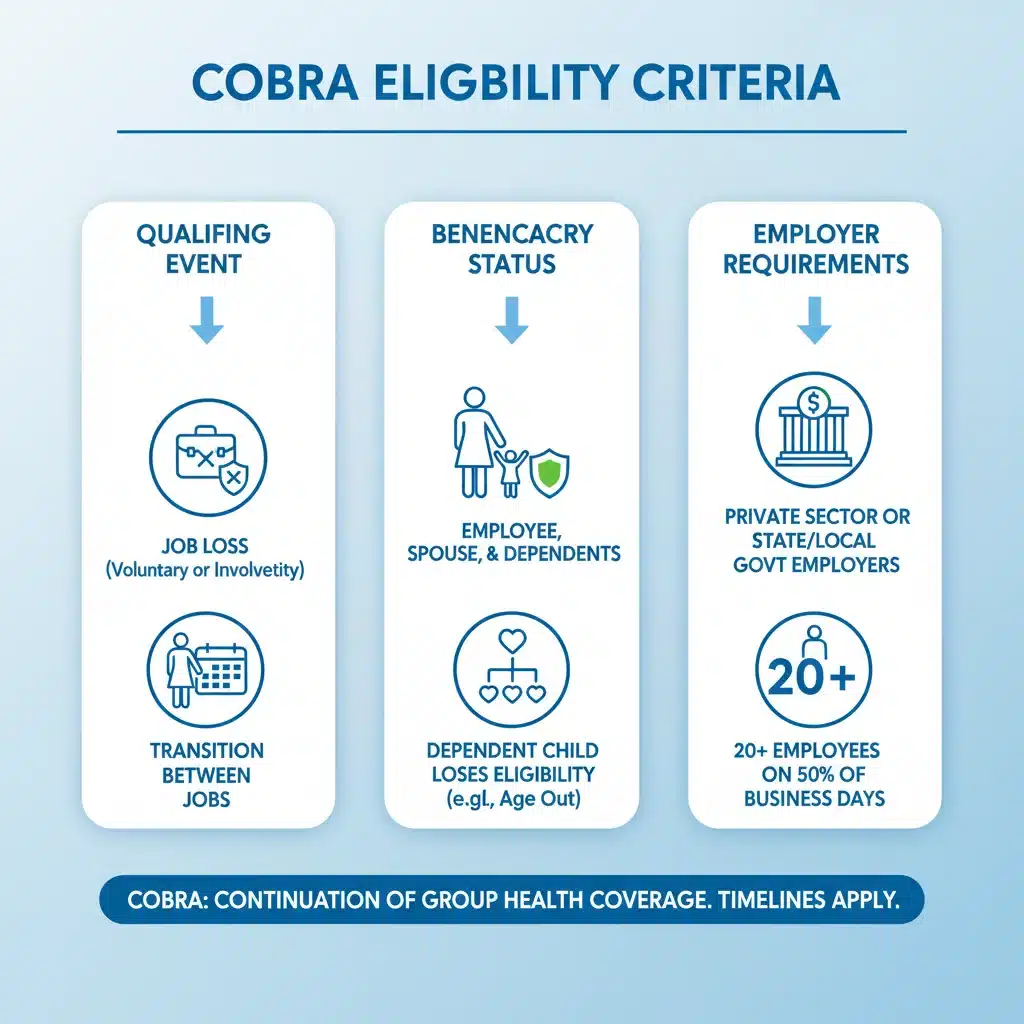
Determining your eligibility for COBRA Benefits 2026 is the first critical step in understanding your options. COBRA applies to group health plans maintained by private-sector employers with 20 or more employees on more than 50% of their typical business days in the previous calendar year. It also applies to state and local government plans. Federal government employees are covered by a similar law, but not COBRA itself.
To be eligible, two primary conditions must be met:
- The Group Health Plan Must Be Covered by COBRA: As mentioned, this typically means employers with 20 or more employees. Small employers (fewer than 20 employees) are generally exempt from federal COBRA requirements, though some states have ‘mini-COBRA’ laws that offer similar protections for employees of smaller companies.
- You Must Be a ‘Qualified Beneficiary’ and Experience a ‘Qualifying Event’:
- Qualified Beneficiary: This includes the covered employee, their spouse, and dependent children who were covered under the group health plan on the day before the qualifying event occurred.
- Qualifying Event: These are specific events that cause an individual to lose health coverage. Common qualifying events for employees include voluntary or involuntary termination of employment (unless for gross misconduct) and reduction in hours of employment. For spouses and dependent children, additional qualifying events include the death of the covered employee, divorce or legal separation from the covered employee, and a child ceasing to be a dependent under the plan’s rules.
It’s important to note that the timing of these events and your actions following them are crucial. Employers are required to provide specific notices about COBRA rights, and you have a limited window to elect coverage. Missing these deadlines can result in the forfeiture of your COBRA rights. Therefore, understanding the notification process and your responsibilities is as important as understanding the eligibility criteria.
Duration of COBRA Coverage in 2026
The duration of COBRA Benefits 2026 is not indefinite; it is designed to be a temporary bridge. The standard maximum period for COBRA coverage is 18 months, which applies to qualifying events such as termination of employment or reduction in hours. However, there are circumstances under which this period can be extended.
Extensions to the 18-Month Period:
- Second Qualifying Event (Up to 36 Months): If a second qualifying event occurs during the 18-month period of COBRA coverage (e.g., divorce or death of the former employee while the spouse is on COBRA), the spouse and dependent children may be eligible for an extension of coverage up to a maximum of 36 months from the original qualifying event.
- Disability Extension (Up to 29 Months): If a qualified beneficiary is determined by the Social Security Administration (SSA) to be disabled within the first 60 days of COBRA coverage, and the plan administrator is notified of this determination within 60 days of the SSA’s decision and before the end of the 18-month period, the 18-month coverage period can be extended to 29 months. This extension applies to all qualified beneficiaries covered under the same qualifying event, not just the disabled individual. An increased premium (up to 150% of the cost) may apply during the extended 11-month period.
It’s vital to remember that these extensions are not automatic. They require proper notification to the plan administrator within specific timeframes. Failure to provide timely notice can result in the loss of these extended coverage rights. As you plan for COBRA Benefits 2026, carefully review the potential for these extensions, especially if you anticipate any of these specific circumstances.
While COBRA provides crucial temporary coverage, it is essential to explore other long-term health insurance options, such as those available through the Health Insurance Marketplace (healthcare.gov), which may offer more affordable or permanent solutions once your COBRA eligibility expires.
Cost of COBRA Coverage in 2026
One of the most significant considerations when electing COBRA Benefits 2026 is the cost. Unlike employer-sponsored health insurance where your employer typically subsidizes a substantial portion of the premium, with COBRA, you are generally responsible for paying the entire premium yourself. This includes both the portion you previously paid as an employee and the portion your employer contributed, plus an administrative fee.
The maximum amount a plan can charge for COBRA coverage is 102% of the total cost of the plan. This 102% includes the full premium (employer and employee share) plus a 2% administrative fee. For the disability extension, the premium can increase to 150% of the cost during the additional 11 months of coverage.
Factors Influencing COBRA Costs:
- Plan Type and Benefits: More comprehensive plans or those with a wider network of providers will generally have higher premiums.
- Location: Healthcare costs vary by region, which can influence premium rates.
- Number of Covered Individuals: Covering just yourself will be less expensive than covering your entire family.
- Employer’s Negotiated Rates: The cost is based on the group rates your former employer negotiated with their insurance provider.
It’s important to obtain a clear breakdown of the COBRA premium costs from your plan administrator or former employer. Compare these costs with other available options, such as plans on the Health Insurance Marketplace. Often, you might find more affordable plans on the Marketplace, especially if you qualify for subsidies based on your income. The loss of employer-sponsored coverage is a qualifying event that allows you to enroll in a Marketplace plan outside of the annual open enrollment period.
While COBRA can be expensive, it offers continuity of care, which can be invaluable, especially if you or a family member has ongoing medical treatments or prescriptions. The decision to elect COBRA should be a careful balance between cost, continuity of care, and alternative coverage options available to you in 2026.

How to Elect COBRA and Important Deadlines for 2026
The process of electing COBRA Benefits 2026 involves several steps and strict deadlines that must be adhered to. Missing these deadlines can result in losing your right to continue coverage. Understanding the notification process and your responsibilities is crucial.
Key Steps and Deadlines:
- Employer’s Initial Notice (General Notice): Your employer is required to provide you with a general COBRA notice when you first become covered by their group health plan. This notice describes COBRA rights in general terms.
- Employer’s Qualifying Event Notice: After a qualifying event (e.g., termination of employment), your employer must notify the plan administrator within 30 days of the event. For certain events like divorce or a child losing dependent status, the qualified beneficiary (you, your spouse, or child) is responsible for notifying the plan administrator within 60 days of the event.
- Plan Administrator’s Election Notice: Once the plan administrator receives notice of a qualifying event, they must provide you with an election notice within 14 days. This notice details your rights, the cost of coverage, and how to elect COBRA.
- Your Election Period: You have a minimum of 60 days from the date you receive the election notice (or the date your coverage would terminate, whichever is later) to decide whether to elect COBRA coverage. This 60-day period is a critical window.
- Payment for Coverage: If you elect COBRA, you have an initial grace period of 45 days from the date of your election to make your first premium payment. Subsequent premium payments typically have a 30-day grace period.
It is highly advisable to keep all COBRA-related correspondence, including notices, payment receipts, and any communication with your former employer or plan administrator. If you have any questions or concerns about the process, contact your plan administrator immediately. Do not delay, as delays can lead to irreversible loss of coverage.
Remember that even if you elect COBRA, you can simultaneously explore other health insurance options. If you find a more affordable or suitable plan, you can drop your COBRA Benefits 2026 at any time. The key is to ensure continuous coverage to avoid gaps that could lead to significant financial risk in case of illness or injury.
Alternatives to COBRA in 2026
While COBRA Benefits 2026 offers a valuable option for continued health coverage, it’s often an expensive one. Fortunately, several alternatives exist that may be more suitable or affordable depending on your individual circumstances. It’s crucial to explore these options thoroughly before making a decision.
1. Health Insurance Marketplace (Affordable Care Act – ACA):
- Special Enrollment Period: Losing employer-sponsored health coverage is considered a ‘qualifying life event,’ which triggers a Special Enrollment Period (SEP) on the Health Insurance Marketplace (healthcare.gov). This allows you to enroll in a new plan outside of the annual Open Enrollment Period. You typically have 60 days before or 60 days after the loss of coverage to enroll.
- Subsidies and Tax Credits: Depending on your income, you may be eligible for premium tax credits (subsidies) that can significantly reduce the cost of your monthly premiums. You might also qualify for cost-sharing reductions, which lower your out-of-pocket expenses like deductibles, co-payments, and co-insurance.
- Comprehensive Coverage: Plans on the Marketplace cover essential health benefits, and pre-existing conditions are covered.
2. Spouse’s Employer-Sponsored Plan:
- If your spouse has an employer-sponsored health plan, your loss of coverage is usually a qualifying event that allows them to add you (and any dependent children) to their plan, even outside of their employer’s open enrollment period. This can often be a more affordable option than COBRA.
3. Medicaid:
- If your income falls below a certain threshold, you might be eligible for Medicaid, a joint federal and state program that provides health coverage to low-income individuals and families. Eligibility requirements vary by state, especially whether the state has expanded its Medicaid program under the ACA.
4. Children’s Health Insurance Program (CHIP):
- If you have children, they may be eligible for CHIP, which provides low-cost health coverage to children in families who earn too much to qualify for Medicaid but cannot afford private insurance.
5. Short-Term Health Insurance (with caution):
- These plans offer temporary coverage and are generally much cheaper than COBRA or ACA plans. However, they are not regulated by the ACA, meaning they don’t have to cover essential health benefits, can deny coverage for pre-existing conditions, and have limits on coverage. They are typically not recommended as a primary long-term solution.
Before making a decision, it is highly recommended to compare the costs, benefits, and coverage limitations of all available options. Consider your current health needs, financial situation, and how long you anticipate needing temporary coverage. For many, the Health Insurance Marketplace offers a robust and often more affordable alternative to COBRA Benefits 2026.
Common Misconceptions About COBRA
Despite its long-standing presence in healthcare law, COBRA is often misunderstood. Clarifying these common misconceptions is vital for individuals making informed decisions about their health coverage in 2026.
Misconception 1: COBRA is Free or Subsidized.
Reality: As discussed, COBRA is rarely free or subsidized by your former employer. You are responsible for the full premium, plus an administrative fee (up to 102% of the cost). The only exceptions are specific federal subsidies that have been implemented in the past during economic crises (e.g., during the COVID-19 pandemic), but these are not a permanent feature of COBRA and are unlikely to be in effect in 2026 unless new legislation is passed.
Misconception 2: COBRA is the Only Option for Continued Coverage.
Reality: While COBRA is an important option, it is certainly not the only one. The Health Insurance Marketplace (ACA plans), spousal employer plans, Medicaid, and CHIP are all viable alternatives that often provide more affordable or longer-term solutions. It’s crucial to compare all options to find the best fit for your situation.
Misconception 3: You Automatically Get COBRA Coverage.
Reality: COBRA coverage is not automatic. You must actively elect it within a specific timeframe (usually 60 days from receiving the election notice). Failure to elect coverage or make timely premium payments will result in the loss of your COBRA rights.
Misconception 4: COBRA Lasts Indefinitely.
Reality: COBRA is a temporary bridge. The standard maximum duration is 18 months, with possibilities for extensions to 29 or 36 months under very specific circumstances (disability or a second qualifying event). It is not a permanent solution for health insurance.
Misconception 5: COBRA Coverage is Different from My Old Plan.
Reality: One of the key advantages of COBRA is that it generally provides the exact same health coverage as you had when you were employed. This means the same network of doctors, hospitals, deductibles, co-pays, and benefits. The only difference is who pays the premium.
Misconception 6: My Employer Can Deny My COBRA Rights.
Reality: If your employer meets the criteria (20+ employees, not gross misconduct for termination) and you are a qualified beneficiary experiencing a qualifying event, they cannot deny your COBRA rights. COBRA is a federal law, and employers are legally obligated to offer it. If you believe your rights have been violated, you can contact the Department of Labor (DOL).
Dispelling these myths about COBRA Benefits 2026 empowers you to make well-informed decisions, ensuring you secure the most appropriate and cost-effective health coverage for your needs.
Navigating the Future: Planning Your Health Coverage Beyond COBRA in 2026
While COBRA Benefits 2026 provides a critical temporary safety net, it is essential to think beyond its limited duration. Eighteen months, or even 36 months, can pass quickly, and you don’t want to find yourself without a plan as your COBRA coverage approaches its end. Proactive planning is key to ensuring continuous health coverage and avoiding potential gaps that could expose you to significant financial risk.
Strategies for Post-COBRA Coverage:
- Early Exploration of Marketplace Plans: Begin researching plans on the Health Insurance Marketplace well before your COBRA coverage is set to expire. The end of COBRA is considered a qualifying life event, triggering another Special Enrollment Period. Understanding your options, potential subsidies, and plan structures early can alleviate stress and allow for a smooth transition.
- Monitor Job Search Progress: If your COBRA enrollment is due to job loss, actively incorporate health benefits into your job search criteria. Understand the health plans offered by potential employers and how they align with your needs.
- Consider Spousal/Partner Coverage: If you have a spouse or partner, explore the possibility of joining their employer-sponsored plan. The termination of your COBRA coverage is often a qualifying event that allows for enrollment outside of their employer’s open enrollment period.
- Review State-Specific Programs: Beyond federal COBRA and the ACA Marketplace, some states offer additional programs or subsidies that could assist with health coverage costs. Research your state’s Department of Health or insurance commissioner’s office for more information.
- Consult a Benefits Specialist: If your situation is particularly complex, consider consulting with a benefits specialist or a licensed health insurance broker. They can provide personalized advice, help you compare plans, and guide you through the enrollment process for various options, including those beyond COBRA Benefits 2026.
- Stay Informed on Healthcare Legislation: The healthcare landscape is subject to change. Keep an eye on news from the Department of Labor, the IRS, and legislative bodies for any new laws or regulations that could impact health insurance options in the coming years.
The goal is to transition seamlessly from COBRA to a long-term, sustainable health insurance solution that meets your medical needs and financial capacity. Proactive planning ensures that the temporary nature of COBRA Benefits 2026 does not lead to a period of being uninsured, safeguarding your health and financial well-being.
Conclusion: Making Informed Decisions About COBRA in 2026
Navigating the complexities of health insurance, particularly during times of transition, can be daunting. However, armed with accurate and up-to-date information, you can make confident decisions about your health coverage. COBRA Benefits 2026 continues to serve as a vital lifeline for many, offering a crucial bridge for individuals and families who lose their employer-sponsored health insurance.
As we’ve explored, understanding the eligibility criteria, the duration of coverage, and the associated costs is paramount. While COBRA provides the comfort of maintaining your existing health plan, its often higher cost necessitates a thorough evaluation of all available alternatives. The Health Insurance Marketplace, spousal employer plans, Medicaid, and CHIP all present potentially more affordable or long-term solutions that should be carefully considered.
Remember the critical deadlines for electing COBRA and making premium payments. Keep meticulous records of all communications and documents related to your health coverage. Most importantly, do not hesitate to seek clarification from your plan administrator or consult with a healthcare benefits expert if you have any uncertainties.
In 2026, as in any year, proactive planning is your best defense against unexpected healthcare gaps. By understanding your rights and responsibilities under COBRA and diligently exploring all your options, you can ensure continuous access to the medical care you and your family need. Your health is your most valuable asset; protect it with informed choices about your continued health coverage.