AI in Classroom Instruction: Essential Guide for Educators 2026
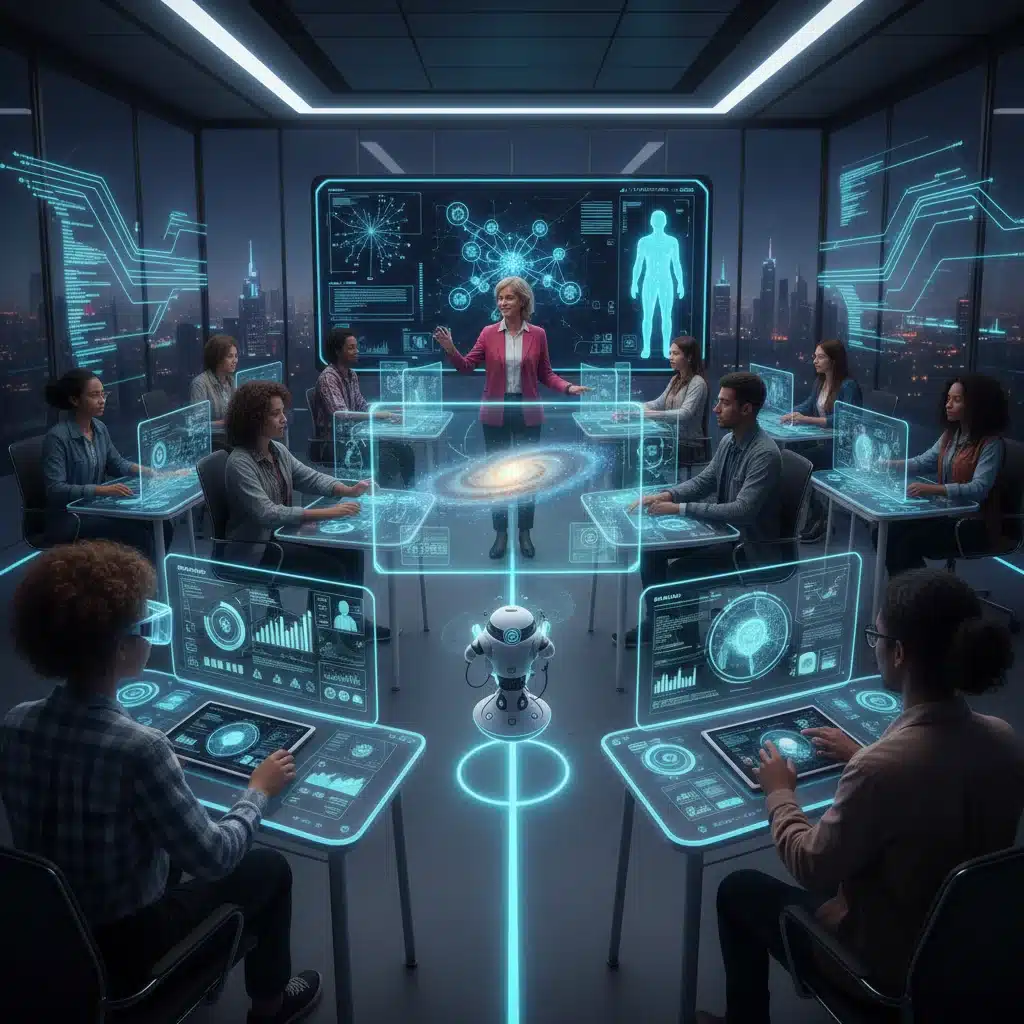
The Impact of AI on Classroom Instruction: What Educators Need to Know in 2026
The landscape of education is undergoing a profound transformation, driven by the relentless march of artificial intelligence. By 2026, the integration of AI classroom instruction will not merely be an emerging trend but a fundamental pillar of effective teaching and learning. Educators worldwide are grappling with the implications of this technological revolution, seeking to understand how AI can be leveraged to enhance pedagogical practices, personalize learning experiences, and streamline administrative tasks. This comprehensive guide aims to equip educators with the essential knowledge, practical strategies, and ethical considerations necessary to navigate the evolving world of AI in education, ensuring they are well-prepared for the opportunities and challenges that lie ahead.
The promise of AI in the classroom extends far beyond simply automating tasks. It offers the potential to revolutionize how students learn, how teachers teach, and how educational institutions operate. From intelligent tutoring systems that adapt to individual student needs to sophisticated analytics tools that provide unprecedented insights into learning patterns, AI is poised to redefine the very essence of classroom instruction. However, realizing this potential requires a clear understanding of AI’s capabilities, its limitations, and the ethical frameworks that must guide its implementation. As we look towards 2026, educators must move beyond mere awareness to active engagement, becoming architects of an AI-enhanced learning environment that prioritizes equity, accessibility, and human-centered pedagogy.
Understanding the Core of AI in Education
Before delving into specific applications, it’s crucial to establish a foundational understanding of what AI entails within an educational context. Artificial intelligence, in its simplest form, refers to the simulation of human intelligence in machines that are programmed to think like humans and mimic their actions. In education, this translates into systems capable of learning, problem-solving, understanding language, and even recognizing emotions. The spectrum of AI in education ranges from basic automation tools to highly sophisticated adaptive learning platforms.
Key AI Technologies Shaping Classroom Instruction
- Machine Learning (ML): At the heart of most AI applications, ML algorithms allow systems to learn from data without explicit programming. In education, this means AI can analyze student performance data to identify patterns, predict future outcomes, and recommend tailored interventions.
- Natural Language Processing (NLP): NLP enables computers to understand, interpret, and generate human language. This is crucial for AI-powered chatbots, intelligent writing assistants, and tools that can summarize complex texts or translate content for multilingual learners.
- Computer Vision: While less common in direct instructional roles, computer vision can be used for things like proctoring online exams, analyzing student engagement through facial expressions (with ethical considerations), or even assisting with virtual lab simulations.
- Robotics: Educational robots are increasingly being used to teach coding, STEM concepts, and even social-emotional skills, providing hands-on learning experiences.
\
The integration of these technologies into AI classroom instruction is not about replacing educators but empowering them. AI can take on repetitive or data-intensive tasks, freeing up teachers to focus on higher-order thinking, creative problem-solving, and fostering deeper connections with their students. This symbiotic relationship between human intelligence and artificial intelligence is key to unlocking the full potential of educational technology in the coming years.
Personalized Learning Paths: The AI Advantage
One of the most significant promises of AI classroom instruction is its ability to deliver truly personalized learning experiences. Traditional classrooms, with their one-size-fits-all approach, often struggle to cater to the diverse needs, paces, and learning styles of individual students. AI systems, however, are inherently designed to adapt.
How AI Personalizes Education:
- Adaptive Learning Platforms: These platforms use AI algorithms to continuously assess a student’s knowledge, skills, and progress. Based on this assessment, they dynamically adjust the content, pace, and difficulty of lessons, ensuring that each student receives instruction that is optimally challenging and supportive. This means a student struggling with a concept can receive additional practice and alternative explanations, while a student who has mastered a topic can be presented with more advanced material.
- Intelligent Tutoring Systems (ITS): ITS go a step further than adaptive platforms by mimicking the role of a human tutor. They can engage in dialogue with students, provide hints, explain concepts, and offer targeted feedback. The effectiveness of ITS lies in their ability to understand not just what a student knows, but also why they might be making certain errors.
- Content Curation and Recommendation: AI can analyze a student’s interests and learning history to recommend relevant educational resources, articles, videos, and even projects, making learning more engaging and self-directed.
\
\
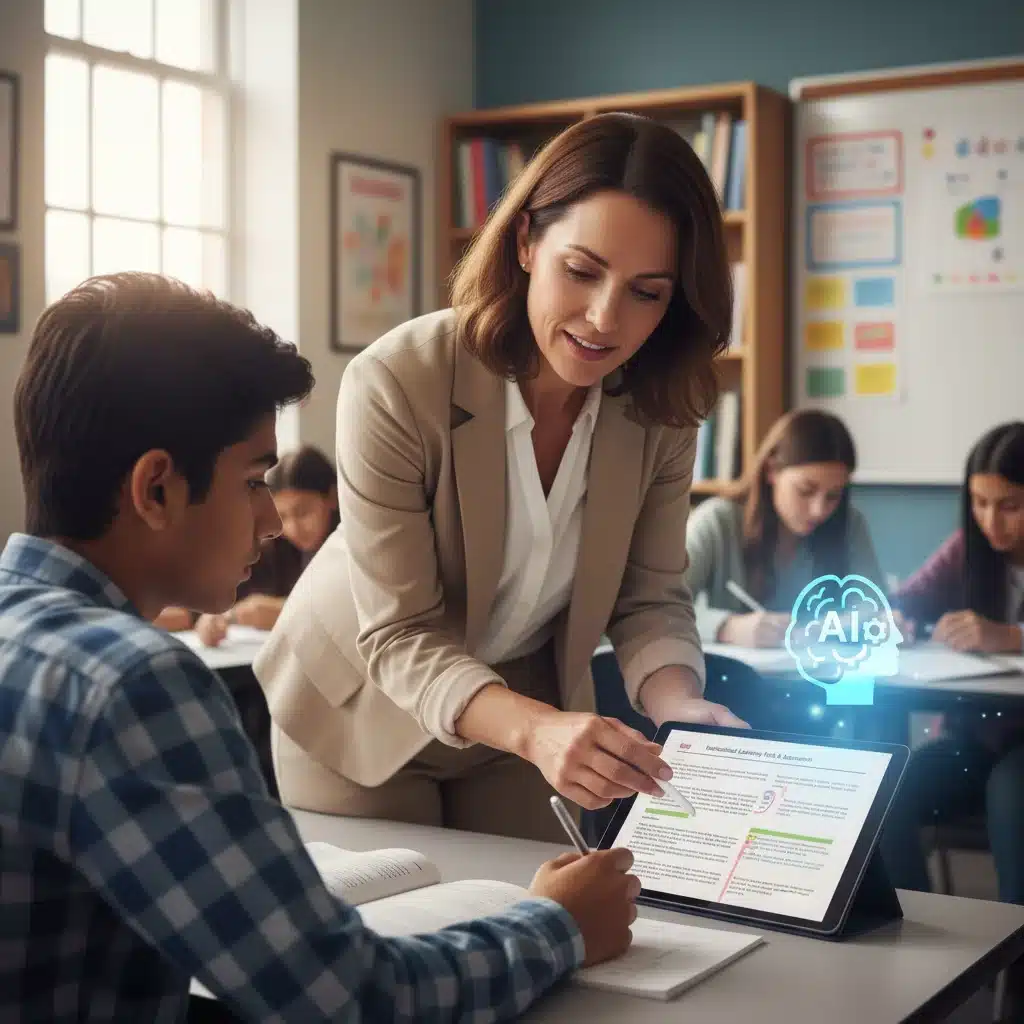
The implications for educators are profound. Instead of spending countless hours differentiating instruction manually, teachers can leverage AI to create bespoke learning journeys for each student. This frees them to focus on mentoring, facilitating collaborative projects, and addressing social-emotional needs – aspects of education that require human empathy and nuanced understanding. By 2026, personalized learning powered by AI classroom instruction will be a standard expectation, not a luxury.
Automating Administrative Tasks and Assessment
Beyond direct instruction, AI offers significant opportunities to alleviate the administrative burden on educators, allowing them to dedicate more time to teaching and student interaction. From grading to scheduling, AI tools are becoming increasingly sophisticated in handling tasks that traditionally consume a substantial portion of a teacher’s day.
AI’s Role in Streamlining Educator Workflows:
- Automated Grading and Feedback: AI can efficiently grade multiple-choice questions, fill-in-the-blank exercises, and even provide preliminary feedback on essays and coding assignments. While human oversight remains crucial for complex, subjective assessments, AI can significantly reduce the initial workload, allowing teachers to focus on qualitative feedback.
- Data Analysis and Reporting: AI-powered analytics can process vast amounts of student data to identify trends, pinpoint areas where students are struggling collectively, and generate comprehensive progress reports for parents and administrators. This offers invaluable insights that can inform instructional strategies and curriculum adjustments.
- Plagiarism Detection: Sophisticated AI tools are highly effective at detecting plagiarism, helping to maintain academic integrity and teach students about proper citation and originality.
- Scheduling and Resource Management: AI can optimize class schedules, allocate resources more efficiently, and even assist with managing extracurricular activities, reducing logistical complexities for school staff.
\
\
\
The efficiency gains from AI in administrative tasks will be transformative by 2026. Educators will find themselves with more time and energy to invest in the human aspects of teaching – fostering creativity, critical thinking, and social-emotional development. This shift underscores that AI classroom instruction is not about replacing teachers, but about augmenting their capabilities and enhancing their impact.
Ethical Considerations and Challenges for Educators
While the potential benefits of AI classroom instruction are immense, it is imperative to approach its integration with a keen awareness of the ethical considerations and potential challenges. Ensuring equitable, responsible, and beneficial use of AI in education requires careful planning and ongoing vigilance from educators, policymakers, and technology developers.
Key Ethical Concerns:
- Data Privacy and Security: AI systems rely heavily on student data. Protecting this sensitive information from breaches and misuse is paramount. Educators must be aware of data governance policies and choose AI tools that adhere to strict privacy standards (e.g., GDPR, FERPA).
- Algorithmic Bias: AI algorithms are trained on data, and if that data reflects existing societal biases, the AI can perpetuate or even amplify those biases. This could lead to unfair outcomes for certain student groups, such as biased assessment or curriculum recommendations. Educators must critically evaluate AI tools for potential biases and advocate for equitable design.
- Equity and Access: The digital divide remains a significant challenge. Ensuring that all students, regardless of socioeconomic status or geographical location, have equitable access to AI-powered learning tools is crucial. Without thoughtful implementation, AI could exacerbate existing inequalities.
- Over-reliance and Deskilling: There’s a risk that both students and educators might become overly reliant on AI, potentially leading to a decrease in critical thinking skills, problem-solving abilities, or even fundamental teaching competencies. Striking the right balance between AI assistance and human effort is vital.
- Transparency and Explainability: The ‘black box’ nature of some AI algorithms can make it difficult to understand how decisions are made. In an educational context, it’s important for AI to be as transparent as possible, allowing educators to understand the rationale behind recommendations or assessments.
\
\
\
\

By 2026, educators will need to be not just users of AI, but also ethical arbiters, advocating for responsible AI development and deployment. This requires ongoing professional development, critical thinking about technology, and a commitment to prioritizing student well-being above all else. Discussions around the ethics of AI classroom instruction should be a continuous part of professional learning communities.
Strategies for Educators in an AI-Enhanced Classroom (2026)
Successfully integrating AI classroom instruction by 2026 demands a proactive and strategic approach from educators. It’s not enough to simply adopt new tools; teachers must evolve their pedagogical practices to harness AI’s full potential while mitigating its risks.
Key Strategies for Educators:
1. Embrace Lifelong Learning and Professional Development:
- Stay Informed: Regularly engage with research, articles, and webinars on AI in education. Understand the latest advancements and best practices.
- Skill Up: Seek out professional development opportunities focused on AI literacy, data interpretation, and the effective integration of AI tools into lesson plans.
- Experiment and Reflect: Be willing to experiment with new AI tools in a controlled environment, reflecting on their effectiveness and adjusting strategies as needed.
\
\
2. Redefine Your Role as a Facilitator and Mentor:
- Shift from Content Deliverer to Guide: With AI handling some content delivery and basic instruction, educators can focus on facilitating deeper learning, critical thinking, and creative problem-solving.
- Foster Human Connection: Leverage the time saved by AI to build stronger relationships with students, address their social-emotional needs, and create a supportive classroom community.
- Teach AI Literacy: Empower students to understand how AI works, its capabilities, and its limitations. Teach them to be critical consumers and ethical users of AI tools.
\
\
3. Prioritize Critical Thinking and Creativity:
- Design AI-Resilient Assignments: Create assignments that require uniquely human skills – critical analysis, synthesis, creative problem-solving, and ethical reasoning – rather than tasks easily completed by AI.
- Integrate AI as a Tool for Creation: Teach students to use AI as a collaborative partner for brainstorming ideas, drafting content, or generating different perspectives, rather than simply outsourcing their work.
- Promote Inquiry-Based Learning: Encourage students to ask complex questions, explore open-ended problems, and engage in projects that require original thought and investigation, often using AI as a research or analysis assistant.
\
\
4. Advocate for Ethical and Equitable AI Implementation:
- Question and Evaluate: Critically assess AI tools for bias, privacy implications, and pedagogical effectiveness before adoption.
- Collaborate with Stakeholders: Work with school administrators, IT departments, and parents to develop clear policies and guidelines for AI use in the classroom.
- Champion Digital Equity: Advocate for resources and initiatives that ensure all students have equal access to AI tools and the necessary digital infrastructure.
\
\
5. Embrace Data-Informed Decision Making:
- Interpret AI Analytics: Learn to understand and interpret the insights provided by AI analytics on student performance and engagement.
- Inform Instruction: Use these data-driven insights to refine teaching strategies, identify areas for intervention, and tailor support for individual students or groups.
- Balance Data with Intuition: Remember that AI data is a tool, not the sole determinant of educational decisions. Combine AI insights with your professional judgment and understanding of individual students.
\
\
The Future of AI in Classroom Instruction: Looking Beyond 2026
While our focus is on 2026, the evolution of AI classroom instruction will continue far beyond. We can anticipate even more sophisticated AI agents that act as highly specialized teaching assistants, advanced virtual reality (VR) and augmented reality (AR) environments powered by AI for immersive learning, and AI that can even help teachers design entire curricula based on real-time student performance and future workforce needs.
The convergence of AI with other emerging technologies will create learning environments that are more dynamic, responsive, and engaging than ever before. However, the core principles will remain: AI should serve to enhance human potential, not diminish it. It should foster critical thinking, creativity, and collaboration, not replace them. And most importantly, it must be implemented with a deep commitment to equity, ethics, and the holistic development of every student.
Educators in 2026 and beyond will be pioneers, shaping the future of learning in ways we are only just beginning to imagine. Their role will be more critical than ever, shifting from knowledge gatekeepers to guides, mentors, and ethical navigators in an increasingly intelligent educational landscape. The journey of integrating AI classroom instruction is continuous, exciting, and ultimately, deeply rewarding for those committed to unlocking every student’s full potential.
Conclusion
The advent of artificial intelligence marks a pivotal moment in the history of education. By 2026, AI classroom instruction will be an integral part of the learning ecosystem, offering unprecedented opportunities for personalization, efficiency, and enhanced pedagogical effectiveness. For educators, this future is not one to be feared but embraced with informed enthusiasm.
Understanding the core technologies, leveraging AI for personalized learning and administrative relief, and critically addressing ethical challenges are paramount. By adopting a mindset of continuous learning, redefining their roles as facilitators, prioritizing critical human skills, and advocating for responsible AI use, educators can ensure that AI serves as a powerful ally in their mission to inspire and educate the next generation. The future of learning is intelligent, and it is in the hands of informed and empowered educators to shape it for the better.