Digital SAT vs. Digital ACT: 2026 College Application Guide
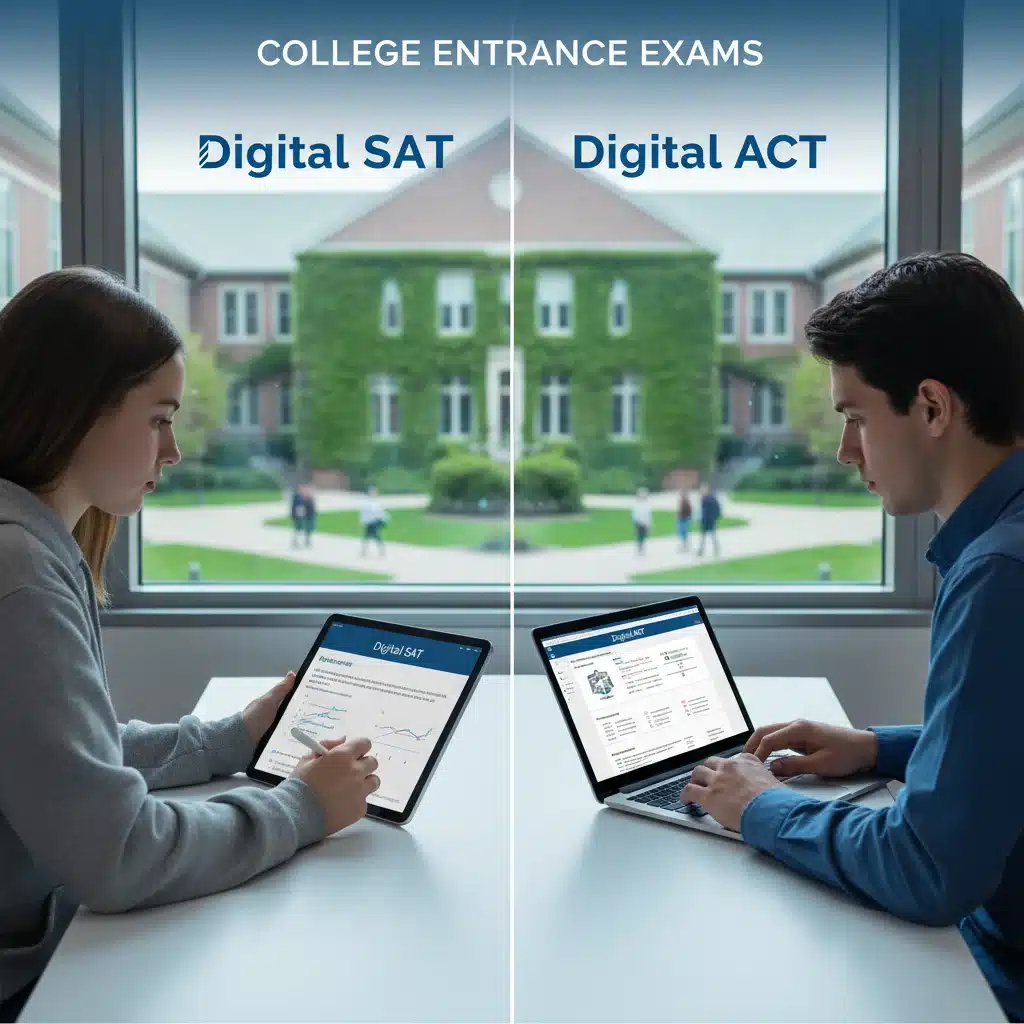
Choosing the right standardized test is a pivotal decision for any high school student aspiring to attend college. For those eyeing the 2026 college application cycle, this decision takes on a new layer of complexity with the advent of the fully digital SAT and the ongoing evolution of the digital ACT. No longer are students confined to bubbling in answers on paper; the testing landscape has shifted dramatically, offering new benefits and challenges. Understanding the nuances of the Digital SAT ACT 2026 formats is paramount to making an informed choice that aligns with your strengths and college aspirations.
This comprehensive guide will delve deep into the restructured formats of both the Digital SAT and the Digital ACT. We’ll dissect their content, explore their unique scoring methodologies, and provide actionable insights into how to prepare effectively for each. Our goal is to equip you with all the necessary information to confidently compare the new SAT/ACT digital formats and determine which test is truly right for your 2026 college application.
The Evolution of Standardized Testing: Digital SAT and ACT in 2026
Standardized testing has been a cornerstone of college admissions for decades, but the digital transformation marks the most significant shift in recent memory. Both the College Board (SAT) and ACT, Inc. have responded to calls for more accessible, efficient, and relevant testing experiences. For students applying in 2026, this means encountering tests that are fundamentally different from those taken by previous generations.
The Digital SAT: A New Era of Adaptive Testing
The Digital SAT, fully implemented internationally in 2023 and domestically in 2024, is a significant departure from its paper-and-pencil predecessor. The most notable change is its adaptive format. This means the test adapts to a student’s performance, adjusting the difficulty of subsequent questions based on their answers. This innovation aims to provide a more precise measure of a student’s abilities in a shorter amount of time.
Key Features of the Digital SAT:
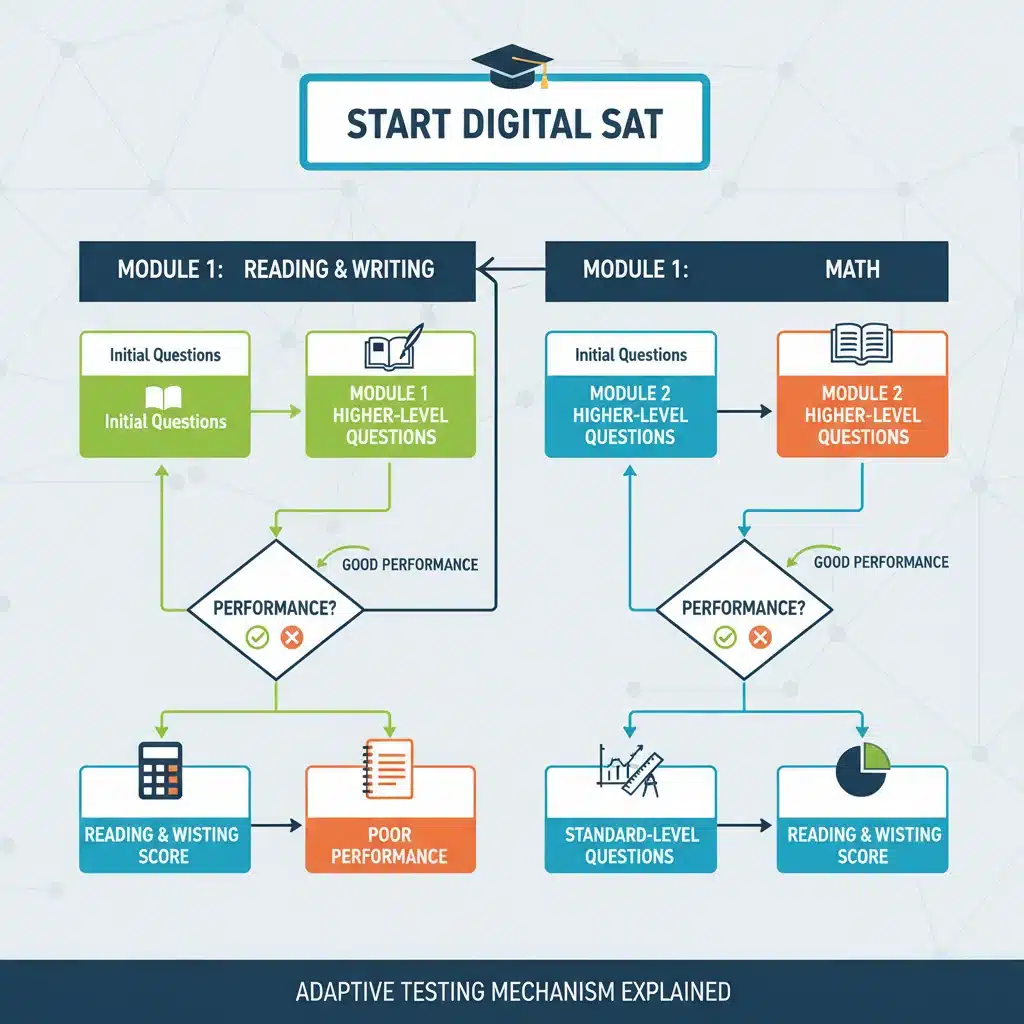
- Adaptive Design: The test is divided into two sections: Reading & Writing and Math. Each section has two modules. The second module’s difficulty is determined by performance on the first module.
- Shorter Test Duration: The Digital SAT is approximately two hours and 14 minutes long, significantly shorter than the previous paper-based version.
- Integrated Reading and Writing: The separate Reading and Writing sections have been merged into a single ‘Reading and Writing’ section, featuring shorter passages and one question per passage.
- Calculator Permitted Throughout Math: Unlike the old SAT, a calculator is allowed for the entire Math section, and a built-in graphing calculator is available within the testing platform.
- Digital-First Experience: Students take the test on a laptop or tablet, either provided by the testing center or their own personal device (with College Board software installed).
- Faster Score Delivery: Scores are typically available in days, not weeks.
The Digital ACT: A Modernized Approach
While the ACT has offered a digital format for several years, its adoption has been more gradual, primarily for state and district testing. However, for 2026 applicants, understanding the digital ACT’s availability and format is crucial. The digital ACT largely retains the content and structure of the paper-based test but delivers it in a computer-based environment.
Key Features of the Digital ACT:
- Linear Format: Unlike the adaptive SAT, the digital ACT is linear. All students receive the same set of questions in each section, and the difficulty does not adjust based on performance.
- Same Content Areas: It covers English, Math, Reading, and Science, with an optional Writing (essay) section, mirroring the paper test.
- Similar Timing: The total testing time (excluding breaks and instructions) remains around 2 hours and 55 minutes (plus 40 minutes for the optional essay), comparable to the paper version.
- Digital Interface: Students take the test on a computer, utilizing tools like flagging questions, eliminating answer choices, and a built-in calculator for the Math section.
- Section-Specific Calculators: A calculator is allowed only for the Math section.
- Faster Scoring: Digital ACT scores are generally released more quickly than paper scores.
Comparing the New SAT/ACT Digital Formats: A Detailed Breakdown
Now that we’ve outlined the basics, let’s dive into a direct comparison to help you understand the core differences between the Digital SAT ACT 2026 options.
Content and Structure
Digital SAT Content:
- Reading and Writing (54 questions, 64 minutes): This section integrates grammar, rhetoric, and comprehension. Passages are shorter (225-150 words), and each passage is followed by a single question. Topics are diverse, including literature, history/social studies, humanities, and science.
- Math (44 questions, 70 minutes): Focuses on Algebra, Advanced Math, Problem-Solving and Data Analysis, and Geometry & Trigonometry. Calculations are central, and the adaptive nature means the second module will challenge students based on their initial performance.
Digital ACT Content:
- English (75 questions, 45 minutes): Tests grammar, punctuation, sentence structure, rhetorical skills, and organization.
- Math (60 questions, 60 minutes): Covers Pre-Algebra, Elementary Algebra, Intermediate Algebra, Coordinate Geometry, Plane Geometry, and Trigonometry.
- Reading (40 questions, 35 minutes): Features four long passages (prose fiction, social science, humanities, natural science) with 10 questions per passage, requiring strong reading comprehension and inference skills.
- Science (40 questions, 35 minutes): Unique to the ACT, this section assesses scientific reasoning and data interpretation skills across various scientific disciplines, often involving charts, graphs, and experimental descriptions.
- Optional Writing (Essay): A single prompt requiring analysis of perspectives on a complex issue.
Timing and Pacing
The time allocation for each test is a significant differentiator. The Digital SAT is designed to be a more concise experience, while the Digital ACT maintains a longer, more traditional pace.
- Digital SAT: Approximately 2 hours and 14 minutes (plus breaks). This shorter duration can be less fatiguing for some students. The adaptive nature means time management within modules is crucial.
- Digital ACT: Approximately 2 hours and 55 minutes (plus breaks, 3 hours 35 minutes with essay). The longer duration requires sustained focus. Pacing within each section is vital, as there’s a fixed number of questions to answer in a set time.
Scoring
- Digital SAT: Scored on a scale of 400-1600. The Reading & Writing section is scored from 200-800, and the Math section from 200-800. The adaptive nature means that answering more difficult questions correctly in the second module contributes to a higher score.
- Digital ACT: Scored on a composite scale of 1-36. Each of the four sections (English, Math, Reading, Science) is scored individually from 1-36, and the composite score is the average of these four scores. The optional Writing section is scored separately.
Adaptive vs. Linear Testing
This is arguably the most fundamental difference impacting how students approach each test.
Digital SAT (Adaptive):
The adaptive format of the Digital SAT means that your performance on the first module in each section determines the difficulty of the second module. If you perform well on Module 1, you’ll get a harder Module 2, which allows you to achieve a higher score. Conversely, if you struggle on Module 1, you’ll receive an easier Module 2, limiting your maximum potential score. This has several implications:
- Precision: The College Board argues this format provides a more precise measurement of a student’s ability.
- No Skipping Back: Once you complete a module, you cannot go back to change answers. This requires careful attention to each question.
- Strategic Pacing: It’s critical to do well on the first module to unlock access to the higher scoring potential of the harder second module.
Digital ACT (Linear):
The digital ACT, like its paper counterpart, is a linear test. This means:
- Consistency: All test-takers get the same questions within a given test form.
- Flexibility: You can skip questions and return to them within a section, allowing for more flexible time management if you get stuck.
- Endurance: The linear nature means maintaining focus and energy for a longer, consistent period.
Which Test is Right for Your 2026 College Application?
Deciding between the Digital SAT and the Digital ACT for your 2026 college applications requires self-reflection and strategic consideration. There’s no universal ‘better’ test; the ideal choice depends on your individual strengths, weaknesses, and preferred testing style.
Consider Your Strengths:
- Strong in English Grammar and Reading Comprehension (Long Passages) + Science? Choose ACT. If you excel at identifying grammatical errors, analyzing lengthy texts, and interpreting scientific data and experiments, the ACT’s distinct sections might play to your advantage.
- Strong in Math (especially Algebra) and Integrated Reading/Writing (Shorter Passages)? Choose SAT. If you’re comfortable with a broader range of math concepts (with a calculator always available) and prefer shorter, more direct reading and writing tasks, the Digital SAT might be a better fit.
Pacing and Time Management:
- Prefer a Shorter, Adaptive Test? Choose Digital SAT. The Digital SAT’s shorter duration and adaptive nature might appeal to students who prefer a more condensed testing experience and can perform consistently under pressure, knowing that early performance significantly impacts later modules.
- Prefer a Longer, Linear Test with More Flexibility? Choose Digital ACT. If you need more time to work through problems, prefer to skip and return to questions, and can maintain focus for a longer period, the Digital ACT’s linear format might be more comfortable.
Content Preferences:
- Science Section: The ACT’s Science section is a unique component. If you enjoy interpreting data, graphs, and scientific scenarios, this could be a major advantage. If science reasoning isn’t your strong suit, the SAT might be preferable as it doesn’t have a dedicated science section.
- Math Section: Both tests cover similar math topics through Algebra II, but the SAT allows a calculator throughout and has a built-in graphing calculator. The ACT’s math section can be more formula-heavy and covers a slightly wider range of geometry and trigonometry, with a calculator only for that section.
- Reading/Writing: The Digital SAT’s integrated, shorter passages might be less daunting for some compared to the ACT’s longer, dense reading passages.
Test Drive Both:
The absolute best way to decide is to take a full-length practice test for both the Digital SAT and the Digital ACT. Many official practice tests are available online. This will give you a real feel for the format, timing, and question types of each test, allowing you to identify which one feels more natural and where you can achieve your best score.
Preparing for the Digital SAT and Digital ACT: Strategies for Success
Regardless of which test you choose, effective preparation is key. The digital format introduces new elements that require specific study strategies.
General Digital Test Preparation Tips:
- Familiarize Yourself with the Interface: Practice using the digital tools provided by both tests (built-in calculator, flagging, answer elimination, highlighting, etc.). The College Board offers a "Bluebook" app for the Digital SAT, and the ACT has official online practice tests.
- Practice on a Screen: Get accustomed to reading passages and solving problems on a computer screen. This can reduce eye strain and improve focus during the actual test.
- Time Management: Even though the Digital SAT is shorter, efficient time management within each module is crucial due to its adaptive nature. For the Digital ACT, practice maintaining a consistent pace across all sections.
- Tech Check: If using your own device, ensure it meets the technical requirements and is fully charged. Have a reliable internet connection for practice.
Digital SAT Specific Preparation:
- Master Module 1: Since your performance on the first module dictates the difficulty of the second, focus on accuracy and efficiency in Module 1 for both Reading & Writing and Math.
- Targeted Practice for Shorter Passages: The integrated Reading & Writing section requires quick comprehension and direct analysis of shorter texts. Practice identifying the main idea, purpose, and grammatical errors efficiently.
- Calculator Proficiency: Become highly skilled with the built-in Desmos graphing calculator, as it’s available for the entire Math section.
- Question Types: Understand the specific question types that appear more frequently in the adaptive format, such as rhetoric-focused questions in Reading & Writing.
Digital ACT Specific Preparation:
- Endurance Building: The longer, linear format requires stamina. Practice full-length tests to build your concentration for the duration.
- Science Section Focus: Dedicate significant time to practicing the Science section. It’s not about scientific knowledge but about interpreting data, experimental design, and conflicting viewpoints.
- Pacing per Section: Develop a strict pacing strategy for each section of the ACT, especially English and Reading, which have many questions in a short amount of time.
- Review Math Formulas: While a calculator is allowed, a strong grasp of formulas for geometry and trigonometry is essential.

The Role of Standardized Tests in 2026 College Admissions
The importance of standardized tests in college admissions continues to evolve. While many institutions have adopted test-optional policies, submitting strong SAT or ACT scores can still significantly enhance your application, especially for competitive programs or merit-based scholarships. For 2026 applicants, understanding the landscape of test requirements is as important as choosing the right test.
Test-Optional vs. Test-Required vs. Test-Flexible:
- Test-Optional: The most common policy, allowing applicants to decide whether to submit scores. If you have strong scores, submit them. If not, you can choose not to.
- Test-Required: Some highly selective universities or specific programs still mandate scores. Always check individual university requirements.
- Test-Flexible: A less common policy where students can submit other credentials (e.g., AP scores, IB scores) in lieu of SAT/ACT scores.
When to Take the Test:
Most students take the SAT or ACT in their junior year, often in the spring, allowing for retakes in the fall of their senior year if needed. With the faster score delivery of the digital tests, you might have slightly more flexibility, but early planning is always recommended.
Score Choice and Superscoring:
- Score Choice (SAT): Allows you to send only the scores from the tests you want colleges to see.
- Superscoring (SAT & ACT): Many colleges "superscore," meaning they’ll take your highest section scores across multiple test dates to create a new, higher composite score. This policy encourages retakes.
Always verify the specific policies of each college you’re applying to, as they can vary widely.
Conclusion: Navigating Your Path to 2026 College Applications
The transition to digital formats for both the SAT and ACT represents a significant shift for students aiming for 2026 college admissions. The Digital SAT ACT 2026 landscape offers a more modern, efficient, and in some cases, adaptive testing experience.
Your journey begins with understanding the core differences: the Digital SAT’s adaptive, shorter format with integrated Reading & Writing and an always-available calculator, versus the Digital ACT’s linear, longer structure with distinct English, Math, Reading, and Science sections. Consider your academic strengths, your preferred pacing, and your comfort with different question types.
The most effective strategy involves taking practice tests for both exams to gain firsthand experience. This will clarify which test format aligns better with your natural abilities and allows you to perform your best. Once you’ve made your choice, dedicate yourself to targeted preparation, leveraging the digital tools and resources available.
Remember, standardized tests are just one piece of your college application. Strong academic performance, compelling essays, meaningful extracurricular activities, and thoughtful recommendations are equally, if not more, important. However, a strategic approach to the Digital SAT or Digital ACT can significantly bolster your profile and open doors to your dream universities. By making an informed decision and preparing diligently, you can confidently navigate the new digital testing environment and strengthen your 2026 college application.