Federal Reserve Announcement: Interest Rate Outlook and Its Impact on Mortgages for the Next 12 Months
The financial landscape is ever-shifting, and few entities wield as much influence over its contours as the Federal Reserve. Their announcements, particularly regarding interest rates, send ripples through every sector of the economy, none more so than the housing market. For current homeowners and prospective homebuyers alike, understanding the Federal Reserve’s stance on interest rates is paramount. This comprehensive analysis will dissect the latest Federal Reserve announcement, explore the prevailing interest rate outlook, and project its profound impact on mortgages over the next 12 months. Our focus will be on deciphering what these changes mean for your financial planning, home affordability, and investment strategies, especially concerning Fed Rate Mortgages.
The Federal Reserve, often referred to simply as ‘the Fed,’ is the central banking system of the United States. Its primary responsibilities include conducting monetary policy, supervising and regulating banking institutions, maintaining the stability of the financial system, and providing financial services to depository institutions, the U.S. government, and foreign official institutions. Among these, its role in monetary policy – specifically, setting the federal funds rate – is what most directly impacts consumers and the housing market. The federal funds rate is the target interest rate set by the Federal Open Market Committee (FOMC) at its meetings. This target rate influences other interest rates throughout the economy, including those for mortgages, car loans, and credit cards. When the Fed raises the federal funds rate, it becomes more expensive for banks to borrow money, a cost they then pass on to consumers in the form of higher lending rates. Conversely, a cut in the federal funds rate typically leads to lower lending rates.
Understanding the Recent Federal Reserve Announcement
The most recent Federal Reserve announcement has been eagerly anticipated by economists, investors, and the general public. The Fed’s decisions are not made in a vacuum; they are a response to a complex interplay of economic indicators, including inflation, employment rates, and overall economic growth. In its latest communication, the Federal Reserve outlined its assessment of the current economic climate and its forward guidance on monetary policy. This often involves a statement from the FOMC, projections from its members regarding economic growth, inflation, and unemployment, and a press conference by the Fed Chair. Key takeaways from recent announcements typically revolve around whether the Fed plans to hold, raise, or lower the federal funds rate. Each of these stances carries significant implications for Fed Rate Mortgages.
For instance, if the Fed indicates a hawkish stance – signaling a likelihood of future rate hikes – it’s often a response to persistent inflation or an overheating economy. Conversely, a dovish stance, suggesting potential rate cuts or a prolonged period of low rates, usually comes during periods of economic slowdown or when inflation is below the target. The language used in these announcements is meticulously crafted, and market participants scrutinize every word for clues about future policy moves. Understanding the nuances of these announcements is crucial for anyone trying to predict the trajectory of mortgage rates.
Inflationary Pressures and the Fed’s Mandate
A significant driver of the Federal Reserve’s decisions is its dual mandate: to achieve maximum employment and maintain price stability. Price stability, in practice, often translates to managing inflation. When inflation runs high, the Fed typically responds by raising interest rates to cool down the economy and bring prices back under control. Conversely, if inflation is too low, or if the economy is struggling, the Fed might lower rates to stimulate spending and investment. The current economic environment has seen a tug-of-war between these two objectives. Persistent inflationary pressures have been a primary concern, leading to a series of rate hikes in recent periods. However, the Fed must also be mindful of not overtightening monetary policy, which could tip the economy into a recession and lead to job losses. This delicate balancing act makes the Federal Reserve’s announcements particularly impactful and often subject to intense debate and speculation regarding their effect on Fed Rate Mortgages.
The Interest Rate Outlook for the Next 12 Months
Projecting interest rates over the next 12 months is inherently challenging, as it depends on a multitude of unpredictable factors. However, based on the Federal Reserve’s latest statements, economic projections, and market sentiment, we can identify several potential scenarios. The general consensus often leans towards a period of stabilization, followed by potential adjustments based on incoming economic data. It’s improbable that we will see dramatic shifts in policy unless there is a significant unforeseen economic shock. The Fed typically prefers a data-dependent approach, meaning future rate decisions will hinge on how inflation, employment, and economic growth evolve.
Factors Influencing Future Rate Decisions
- Inflation Data: The Consumer Price Index (CPI) and Personal Consumption Expenditures (PCE) price index are key metrics the Fed monitors. A sustained decline in these inflation measures towards the Fed’s 2% target could pave the way for rate cuts.
- Employment Reports: Strong job growth and low unemployment rates give the Fed more leeway to maintain higher rates. A weakening labor market, however, might prompt them to consider easing monetary policy.
- Economic Growth (GDP): Robust GDP growth suggests a healthy economy that can withstand higher rates. A slowdown in economic activity could lead the Fed to lower rates to stimulate growth.
- Global Economic Conditions: International events, such as geopolitical tensions or economic slowdowns in major trading partners, can also influence the Fed’s decisions, as they can impact U.S. economic stability.
- Financial Market Stability: The Fed also considers the stability of financial markets. Excessive volatility or stress in the banking system could influence their policy choices.
Given these factors, the outlook for Fed Rate Mortgages is likely to remain dynamic. Analysts are closely watching for signs of a ‘soft landing’ – where inflation cools without triggering a recession. If this scenario plays out, we might see rates hold steady or even experience modest declines towards the latter half of the 12-month period. Conversely, a resurgence of inflation or unexpected economic resilience could lead to rates remaining elevated for longer than anticipated.
Impact on Mortgages: What Homebuyers Need to Know
The direct correlation between the federal funds rate and mortgage rates is undeniable. While the federal funds rate specifically targets overnight lending between banks, it influences the prime rate, which in turn affects various consumer loans, including adjustable-rate mortgages (ARMs) and, indirectly, fixed-rate mortgages. Fixed-rate mortgages are more closely tied to the yield on U.S. Treasury bonds, which are also influenced by the Fed’s broader monetary policy and inflation expectations. When the Fed raises rates, the cost of borrowing for banks increases, and this higher cost is passed on to consumers in the form of higher mortgage rates. This makes homeownership more expensive, as monthly payments increase, and the overall cost of the loan rises. For homebuyers, this translates into a significant impact on affordability and purchasing power.

If the Federal Reserve continues to maintain or raise interest rates, prospective homebuyers will likely face higher borrowing costs. This means that for the same loan amount, monthly mortgage payments will be higher, potentially pricing some buyers out of the market or forcing them to consider smaller homes or less desirable locations. It also impacts the debt-to-income ratio, a critical factor lenders use to determine eligibility for a mortgage. Higher interest rates can push this ratio beyond acceptable limits for some applicants, making it harder to qualify for a loan. Therefore, understanding the trajectory of Fed Rate Mortgages is essential for anyone planning to enter the housing market.
Strategies for Homebuyers in a Rising Rate Environment
- Get Pre-Approved: A pre-approval locks in an interest rate for a certain period, protecting you from potential rate hikes during your home search.
- Consider Adjustable-Rate Mortgages (ARMs) with Caution: While ARMs often start with lower rates, they can fluctuate, potentially increasing your payments if rates rise significantly. They might be suitable for those who plan to sell or refinance within the initial fixed period.
- Improve Your Credit Score: A higher credit score can help you secure a lower interest rate, even in a generally rising rate environment.
- Save for a Larger Down Payment: A larger down payment reduces the amount you need to borrow, thereby mitigating the impact of higher interest rates on your monthly payments.
- Shop Around for Lenders: Different lenders offer varying rates and terms. Comparing offers can save you a significant amount over the life of the loan.
- Be Realistic About Your Budget: Factor in potential rate increases when calculating your affordable home price.
Impact on Mortgages: What Homeowners Need to Know
For existing homeowners, the impact of the Federal Reserve’s interest rate decisions primarily depends on the type of mortgage they have. Those with fixed-rate mortgages are largely insulated from immediate changes, as their interest rate and monthly payments remain constant. However, homeowners with adjustable-rate mortgages (ARMs) are directly affected. As the federal funds rate changes, the interest rate on their ARM will adjust accordingly, leading to fluctuations in their monthly payments. This can create financial uncertainty and budgetary challenges for those on a tight budget. Beyond ARMs, the broader economic impact of Fed decisions can also affect homeowners indirectly, through changes in property values, refinancing opportunities, and the overall economic outlook.
Refinancing Opportunities and Home Equity
In an environment of rising interest rates, refinancing a fixed-rate mortgage typically becomes less attractive, as new rates would likely be higher than existing ones. However, for homeowners with ARMs, or those looking to tap into their equity, the situation is more nuanced. If rates are expected to stabilize or even decline in the future, waiting to refinance might be a strategic move. Conversely, if rates are projected to continue rising, it might be prudent to consider refinancing into a fixed-rate mortgage sooner rather than later to lock in a stable payment. The value of home equity is also influenced by the housing market’s health, which is itself tied to interest rates. Higher rates can cool demand, potentially slowing property value appreciation or even leading to declines in some markets. This impacts a homeowner’s ability to borrow against their equity through home equity loans or lines of credit (HELOCs).
Strategies for Homeowners in a Changing Rate Environment
- Review Your Mortgage Terms: Understand whether you have a fixed-rate or adjustable-rate mortgage and when your ARM might adjust.
- Consider Refinancing for ARMs: If you have an ARM and rates are projected to rise, explore refinancing into a fixed-rate mortgage to stabilize your payments.
- Monitor Home Equity: Keep an eye on your home’s value and the equity you’ve built. This can be a valuable asset for future financial planning.
- Build an Emergency Fund: If you have an ARM, an emergency fund can help absorb potential increases in monthly payments.
- Consult a Financial Advisor: A professional can help you assess your specific situation and recommend the best course of action.
The Broader Economic Context: Inflation, Employment, and GDP
The Federal Reserve’s decisions are not just about interest rates; they are about steering the entire U.S. economy. The interplay between inflation, employment, and Gross Domestic Product (GDP) provides the backdrop against which these decisions are made. Currently, the Fed is grappling with the challenge of bringing inflation down to its target while avoiding a significant economic downturn. A ‘soft landing’ is the ideal scenario – a gradual cooling of inflation without a recession. However, achieving this is a delicate balance. If inflation proves more stubborn than anticipated, the Fed might be compelled to keep rates higher for longer, or even implement further hikes. Conversely, if the economy shows signs of significant weakness, such as rising unemployment or contracting GDP, the Fed might pivot to rate cuts to stimulate growth. These broader economic trends will ultimately dictate the long-term trajectory of Fed Rate Mortgages.
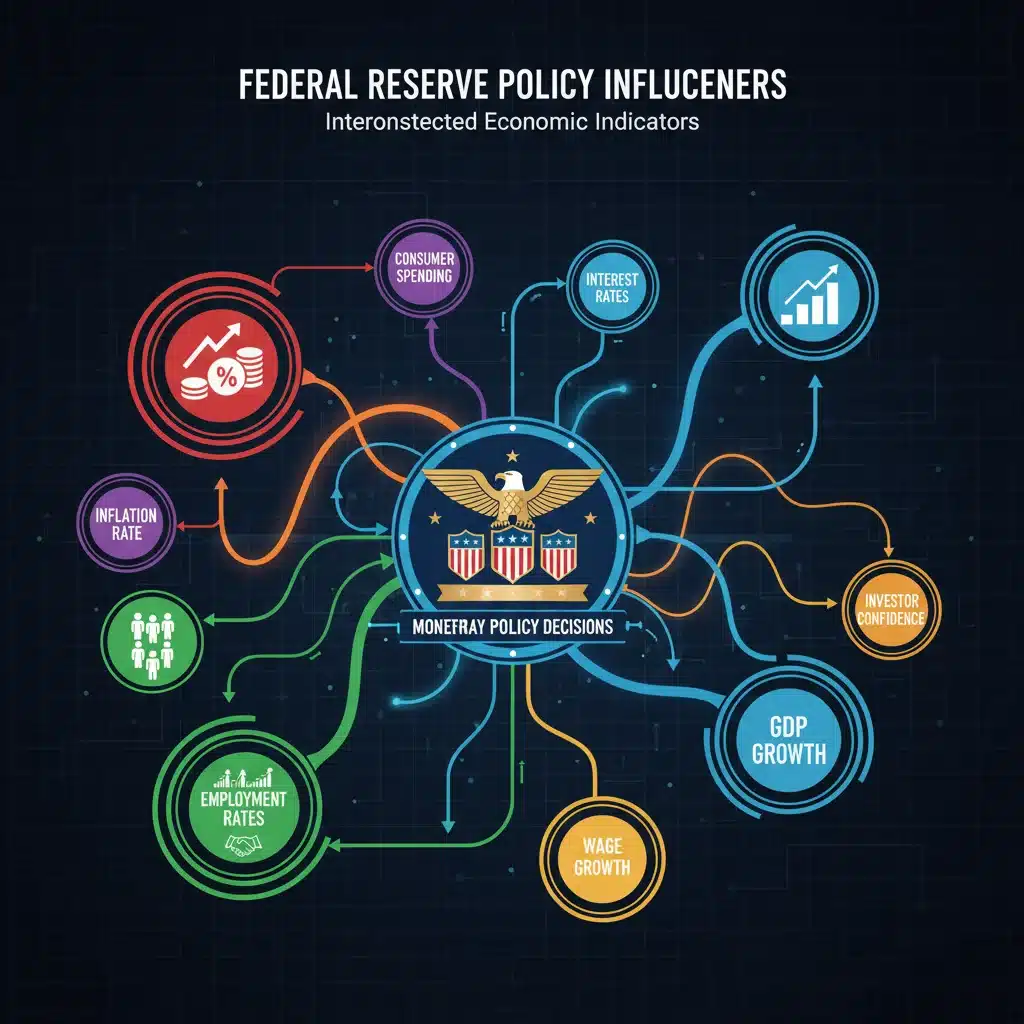
The employment market is a particularly crucial indicator. A strong labor market typically gives the Fed confidence that the economy can absorb higher interest rates. However, if unemployment begins to rise significantly, it signals a weakening economy, which would likely prompt the Fed to ease its monetary policy. Similarly, GDP growth provides a snapshot of the economy’s overall health. Sustained positive growth allows the Fed to focus on inflation control, while a contraction in GDP would shift their focus towards economic stimulus. Understanding these interconnected factors is vital for anyone trying to anticipate the future of mortgage rates.
Global Economic Influences
It’s also important to remember that the U.S. economy does not operate in isolation. Global economic conditions, such as economic slowdowns in other major economies, geopolitical conflicts, and supply chain disruptions, can all impact inflation and growth within the United States. For example, a global recession could depress demand for U.S. exports, leading to slower economic growth and potentially prompting the Fed to lower rates. Conversely, global supply shocks could exacerbate inflation, forcing the Fed to maintain a tighter monetary policy. These international factors add another layer of complexity to predicting the future of Fed Rate Mortgages.
Preparing for the Future: A Proactive Approach
In an environment shaped by Federal Reserve announcements and their subsequent impact on interest rates, a proactive and informed approach is key for both homebuyers and homeowners. The next 12 months could see continued volatility or a period of stabilization, making adaptability crucial. Staying informed about economic indicators, understanding the Fed’s communications, and consulting with financial professionals are essential steps in navigating this complex landscape.
Key Takeaways for the Next 12 Months:
- Stay Informed: Regularly follow economic news and Federal Reserve announcements.
- Review Your Financial Situation: Assess your budget, savings, and debt levels to understand your financial flexibility.
- Seek Expert Advice: Mortgage brokers, financial advisors, and real estate professionals can provide tailored guidance.
- Consider Long-Term Goals: Align your housing decisions with your broader financial objectives, rather than reacting to short-term market fluctuations.
- Maintain Financial Health: A strong credit score and a healthy savings account will always put you in a better position, regardless of interest rate movements.
The Federal Reserve’s actions are a powerful force, shaping the cost of borrowing and, by extension, the accessibility and affordability of homeownership. While predicting the future with absolute certainty is impossible, understanding the mechanisms at play and adopting a strategic approach can empower you to make informed decisions regarding Fed Rate Mortgages. By closely monitoring the Fed’s stance on monetary policy, coupled with a keen awareness of broader economic trends, individuals can better position themselves to navigate the evolving housing market over the next 12 months and beyond.