ESPP 2026: Maximize Your Employee Stock Purchase Plan Discount

Understanding Your Employee Stock Purchase Plan (ESPP) for 2026: A Strategy to Gain Up to a 15% Discount on Company Stock
In today’s competitive employment landscape, companies offer a myriad of benefits to attract and retain top talent. Among the most valuable, yet often underutilized, is the Employee Stock Purchase Plan (ESPP). For 2026, understanding and strategically leveraging your ESPP can be a powerful tool for building wealth, offering you the unique opportunity to purchase company stock at a discount, often up to 15%. This guide will delve deep into the intricacies of ESPPs, providing you with a robust ESPP 2026 Strategy to maximize your gains and navigate the associated financial landscape.
An ESPP is more than just a perk; it’s a direct investment opportunity into your company’s future, often at a price lower than what the public pays. For many employees, this can translate into a virtually guaranteed return from day one. However, like any financial instrument, ESPPs come with rules, tax implications, and strategic considerations that, if overlooked, can diminish their potential benefits. Our goal is to equip you with the knowledge to make informed decisions about your ESPP in 2026, ensuring you capitalize on every possible advantage.
What Exactly is an Employee Stock Purchase Plan (ESPP)?
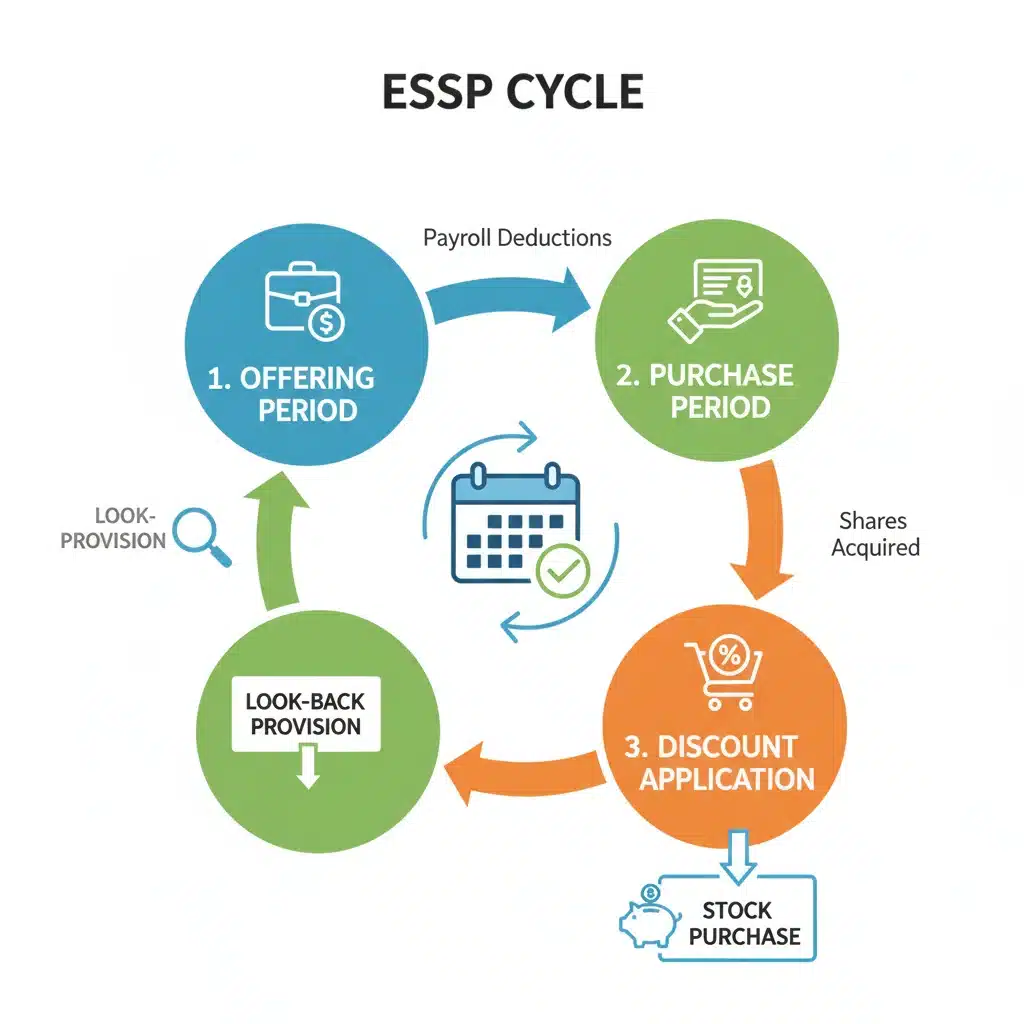
An Employee Stock Purchase Plan (ESPP) is a company-sponsored program that allows eligible employees to purchase shares of their company’s stock at a discounted price. The discount can range anywhere from 5% to 15%, depending on the plan. Employees typically contribute to the plan through payroll deductions over a specific period, known as the ‘offering period’ or ‘accumulation period’. At the end of this period, the accumulated funds are used to purchase company stock.
The attractiveness of an ESPP lies in this discount. Imagine buying something for $85 that is immediately worth $100. That’s the essence of the benefit. This immediate, built-in gain makes ESPPs one of the most compelling employee benefits available. However, the exact mechanics can vary significantly from one company to another, so understanding the specifics of your plan is crucial for developing an effective ESPP 2026 Strategy.
Key Features of a Typical ESPP
- Discounted Purchase Price: The most significant benefit. Employees can buy stock at a price lower than the market price, often 15% off.
- Offering Period: This is the timeframe during which employees make contributions through payroll deductions. It can range from 3 months to 24 months.
- Purchase Period: Within the offering period, there might be shorter purchase periods (e.g., every 3 or 6 months) when the accumulated funds are used to buy stock.
- Look-Back Provision: Many ESPPs include a ‘look-back’ provision, which is a powerful feature. This allows the purchase price to be based on the lower of the stock price at the beginning of the offering period or at the end of the purchase period. This significantly enhances the potential for gains, especially in a rising market.
- Contribution Limits: There are typically limits on how much an employee can contribute, both as a percentage of salary and an IRS-mandated limit (currently $25,000 per year in fair market value of stock purchased).
Why Your ESPP 2026 Strategy Matters: The Power of the Discount
The discount offered by an ESPP is a powerful wealth-building tool. Let’s consider a common scenario: a 15% discount. If your company’s stock is trading at $100 per share on the purchase date, you get to buy it for $85. This immediate $15 gain per share is substantial. If you then sell those shares immediately (a strategy we’ll discuss), you’ve locked in a profit with minimal risk.
This immediate profit potential is what makes an ESPP so attractive, especially when compared to other investment vehicles. While traditional investments carry market risk from the moment you buy, an ESPP often provides a built-in buffer. For 2026, as market conditions evolve, having a clear ESPP 2026 Strategy will ensure you are ready to capitalize on these opportunities.
The Look-Back Provision: A Hidden Gem
The look-back provision is arguably the most valuable feature of many ESPPs. It offers protection against market downturns and amplifies gains in rising markets. Here’s how it works:
Suppose your offering period begins on January 1, 2026, when your company’s stock is $50. The purchase period ends on June 30, 2026. If the stock price on June 30 is $60, with a 15% discount and a look-back, you would purchase shares at 15% off the lower price, which is $50. So, you buy at $42.50 per share ($50 * 0.85), even though the market price is $60. That’s an immediate gain of $17.50 per share!
Conversely, if the stock price drops to $40 on June 30, you would still buy at 15% off the lower of the two prices. In this case, $40 is lower than $50, so you’d buy at $34 ($40 * 0.85). While the immediate gain is smaller ($6 per share), you are still buying below market value, minimizing your downside risk. This feature is a cornerstone of any robust ESPP 2026 Strategy.
Developing Your ESPP 2026 Strategy: Key Decisions
Once you understand the mechanics, the next step is to formulate a strategy that aligns with your financial goals and risk tolerance. There isn’t a one-size-fits-all approach, but certain principles apply.
1. Maximize Contributions (If Possible)
Given the almost guaranteed return (at least on the discount), contributing the maximum allowed to your ESPP is often a wise decision. This is especially true if your plan has a look-back provision. Consider it a high-yield savings account for a short period, with the added benefit of potential stock appreciation.
Before committing, ensure you have an emergency fund in place and that these contributions won’t jeopardize your ability to meet other financial obligations. The funds are locked in until the purchase date, so liquidity is a factor to consider in your ESPP 2026 Strategy.
2. Decide When to Sell: Immediate vs. Holding
This is perhaps the most critical decision in your ESPP strategy. There are two primary approaches:
a. Sell Immediately (The ‘Flip’ Strategy)
Many financial advisors recommend selling ESPP shares as soon as they are purchased. Why? Because it allows you to lock in the discount profit immediately and diversify your portfolio. By selling, you eliminate the risk of your company’s stock price declining after you’ve purchased it. This strategy essentially treats the ESPP as a risk-free way to get a bonus, which you can then invest according to your broader financial plan.
This approach is particularly beneficial if you already have a significant portion of your net worth tied up in your company (e.g., through your salary, 401(k) match in company stock, or other equity awards). Diversification is key to managing risk, and selling ESPP shares immediately helps achieve this.
b. Hold the Shares
Some employees choose to hold their ESPP shares, believing in the long-term growth potential of their company. While this can lead to greater returns if the stock performs well, it also introduces market risk. If the stock declines, your gains from the discount could be eroded, or you could even incur a loss relative to your purchase price (though you’d still be up relative to the market price at the time of purchase if you bought at a discount).
Holding shares also has specific tax implications related to qualifying dispositions, which we will discuss shortly. This strategy is generally only recommended if you have a well-diversified portfolio already and are comfortable with the increased concentration risk in your company’s stock.
Tax Implications of Your ESPP 2026 Strategy
Understanding the tax treatment of ESPP shares is crucial, as it directly impacts your net gain. ESPPs are generally considered a type of qualified employee benefit, and their tax treatment differs from regular stock purchases.
Non-Qualified vs. Qualified Dispositions
The tax treatment depends on whether you have a ‘non-qualified disposition’ or a ‘qualified disposition’.
1. Non-Qualified Disposition (Selling Soon After Purchase)
A non-qualified disposition occurs if you sell your ESPP shares within:
- Two years from the offering date (the start of the offering period).
- One year from the purchase date.
Most employees who ‘flip’ their shares immediately after purchase will fall into this category. In a non-qualified disposition, your gain is split into two parts for tax purposes:
- Ordinary Income: The discount you received (the difference between the fair market value on the purchase date and your discounted purchase price) is taxed as ordinary income. This amount will be reported on your W-2.
- Capital Gains/Losses: Any additional gain or loss beyond the discount (the difference between your selling price and the fair market value on the purchase date) is treated as a capital gain or loss. If you sell immediately, this amount is often negligible or zero. If you hold for a short period, it will be a short-term capital gain, taxed at ordinary income rates.
Example: Stock price at offering start: $50. Stock price at purchase: $60. Discount: 15%. Purchase price: $51 ($60 * 0.85). Fair market value on purchase date: $60. You sell immediately at $60.
- Ordinary Income: $60 (FMV) – $51 (Purchase Price) = $9 per share.
- Capital Gain/Loss: $60 (Sale Price) – $60 (FMV) = $0.
Your total taxable gain is $9 per share, all treated as ordinary income.
2. Qualified Disposition (Holding for Longer)
A qualified disposition occurs if you hold your ESPP shares for at least:
- Two years from the offering date.
- One year from the purchase date.
In a qualified disposition, the tax treatment is slightly different:
- Ordinary Income: The amount taxed as ordinary income is the lesser of:
- The actual discount (FMV on purchase date minus purchase price).
- The gain you realized (selling price minus purchase price).
This amount is still reported on your W-2.
- Long-Term Capital Gains/Losses: Any remaining gain (selling price minus the fair market value on the offering date, adjusted for the ordinary income portion) is taxed as a long-term capital gain, which typically has lower tax rates than ordinary income.
Example (with look-back): Stock price at offering start: $50. Stock price at purchase: $60. Discount: 15%. Purchase price: $42.50 ($50 * 0.85). Fair market value on purchase date: $60. You hold for over two years and sell at $70.
- Ordinary Income: Lesser of ($60 – $42.50 = $17.50) OR ($70 – $42.50 = $27.50). So, $17.50 is ordinary income.
- Long-Term Capital Gain: $70 (Sale Price) – $42.50 (Purchase Price) – $17.50 (Ordinary Income) = $10.00 per share.
This shows the potential benefit of lower long-term capital gains rates if you hold, but it comes with increased market risk. For your ESPP 2026 Strategy, consider your tax bracket and risk tolerance carefully.
Advanced ESPP 2026 Strategy Considerations
Contribution Rate Adjustment
Some ESPPs allow you to adjust your contribution rate during the offering period. While typically you’d want to maximize contributions, if your financial situation changes, being able to reduce or pause contributions can be a valuable flexibility. Check your plan documents for these options.
Understanding Your Company’s Stock Volatility
The volatility of your company’s stock can influence your strategy. If your company’s stock is highly volatile, the ‘sell immediately’ strategy becomes even more appealing to lock in the discount without exposure to large price swings. If the stock is relatively stable and you believe in its long-term prospects, holding might be considered, but always with an eye on diversification.
The ‘Wash Sale’ Rule
If you sell your ESPP shares at a loss and then repurchase substantially identical stock within 30 days before or after the sale, the IRS’s ‘wash sale’ rule could disallow the loss for tax purposes. This is more relevant if you are actively trading or trying to harvest losses, but it’s good to be aware of when planning your sales and purchases.
Integrating ESPP with Your Overall Financial Plan
Your ESPP strategy should not exist in a vacuum. It needs to be integrated with your broader financial goals, including retirement planning, debt repayment, and other investments. For example, the profits from selling ESPP shares can be used to fund an IRA, pay down high-interest debt, or build up your emergency fund. This holistic approach is key to a successful ESPP 2026 Strategy.
Potential Pitfalls to Avoid with Your ESPP
While ESPPs are generally advantageous, there are a few common mistakes to avoid:
- Ignoring Tax Implications: Not understanding how your ESPP gains will be taxed can lead to an unexpected tax bill. Always factor taxes into your calculations.
- Over-Concentration in Company Stock: Holding too much of your wealth in a single stock, especially your employer’s, exposes you to significant risk. If the company performs poorly, your job and your investments could both be negatively impacted. Diversification is paramount.
- Forgetting to Sell: Some employees accumulate shares and forget to sell them, leaving potential profits unrealized or exposed to market downturns. Set reminders if you plan to sell immediately.
- Not Maxing Out Contributions: If you have the financial capacity, not contributing the maximum to an ESPP with a good discount and look-back is often a missed opportunity for easy gains.
- Not Understanding Plan Details: Each ESPP is unique. Relying on general advice without reading your specific plan documents can lead to errors. Pay attention to offering periods, purchase dates, look-back provisions, and any holding periods.
Case Study: A Practical ESPP 2026 Strategy Example
Let’s consider an employee, Sarah, who earns $100,000 annually. Her company offers an ESPP with a 15% discount and a look-back provision, with a 6-month offering period and a 6-month purchase period. She can contribute up to 10% of her salary.
- Offering Start (Jan 1, 2026): Stock Price = $100
- Contribution: 10% of $100,000 = $10,000 per year. Over 6 months, she contributes $5,000.
- Purchase Date (June 30, 2026): Stock Price = $120
- Purchase Price Calculation: Lower of (Start Price $100, End Price $120) = $100. Discounted price = $100 * 0.85 = $85.
- Shares Purchased: $5,000 / $85 = 58.82 shares.
- Market Value of Shares: 58.82 shares * $120 = $7,058.40
- Immediate Gain: $7,058.40 (Market Value) – $5,000 (Contribution) = $2,058.40 (a 41% return on her contribution in 6 months!).
If Sarah follows the ‘sell immediately’ strategy (non-qualified disposition):
- Ordinary Income: (FMV on purchase date – Purchase Price) * Shares = ($120 – $85) * 58.82 = $35 * 58.82 = $2,058.70. This will be added to her W-2.
- Capital Gain/Loss: $0 (assuming she sells at $120).
Sarah can then take her $7,058.40 (minus taxes) and invest it in a diversified portfolio, pay down debt, or use it for other financial goals. This demonstrates the power of a well-executed ESPP 2026 Strategy.
Conclusion: Make Your ESPP Work for You in 2026
Your Employee Stock Purchase Plan (ESPP) is a valuable benefit that offers a unique opportunity to acquire company stock at a discount. By understanding its mechanics, particularly the discount and look-back provision, and by carefully planning your contributions and disposition strategy, you can significantly enhance your financial position.
For 2026, take the time to review your company’s specific ESPP details, understand the tax implications, and decide whether an immediate sale or a longer-term hold aligns best with your financial goals and risk tolerance. Remember, diversification is key, and while holding company stock can be rewarding, over-concentration carries significant risks.
By adopting a thoughtful and informed ESPP 2026 Strategy, you can turn this employee benefit into a powerful engine for wealth creation, leveraging that valuable discount to its fullest potential.