Teacher Certification Updates 2025: What’s New for US Educators

Educators across the United States are preparing for significant teacher certification updates in 2025, encompassing revised requirements, enhanced professional development, and evolving reciprocity agreements.
Are you an educator wondering how the landscape of your profession might shift? The year 2025 brings crucial teacher certification updates across all 50 states, promising both new challenges and opportunities for professional growth.
Understanding the National Shift in Teacher Certification
The education sector is in constant evolution, and 2025 marks a pivotal year for teacher certification across the United States. States are refining their approaches to ensure high-quality instruction and address workforce needs. This national shift reflects a commitment to elevating teaching standards and providing equitable educational opportunities for all students.
These changes are not uniform; each state tailors its regulations to its specific educational context and demographic challenges. Therefore, understanding the broader trends while also diving into state-specific details is paramount for every educator.
Key Drivers Behind the 2025 Updates
- Enhancing Educator Competency: Many updates focus on ensuring teachers possess the most current pedagogical skills and content knowledge.
- Addressing Teacher Shortages: Some states are streamlining pathways to certification to attract and retain more qualified individuals into the profession.
- Promoting Diversity: Efforts are being made to diversify the teaching workforce to better reflect student populations.
- Integrating New Technologies: Certification requirements are beginning to reflect the increasing importance of educational technology in the classroom.
The landscape of teacher certification is dynamic, influenced by legislative actions, educational research, and feedback from the teaching community. These updates aim to create a more robust and responsive education system nationwide.
In conclusion, the national shift in teacher certification for 2025 is a multifaceted movement driven by various educational imperatives. Educators must stay informed about these overarching changes to adapt effectively to the evolving professional environment.
State-by-State Breakdown: Key Changes and New Requirements
Navigating the nuances of teacher certification across 50 states can be complex, as each jurisdiction introduces its own set of reforms for 2025. These state-specific changes often reflect local educational priorities and unique demographic challenges. Understanding these detailed requirements is essential for both aspiring and veteran educators.
From updated testing protocols to new continuing education mandates, the array of adjustments requires careful attention. Educators should consult their state’s Department of Education website for the most accurate and up-to-date information relevant to their specific licensure.
Notable State-Specific Adjustments
Several states are implementing significant changes. For instance, California is focusing on enhancing cultural competency training for all new teachers, while Texas is revising its certification exams to better align with current curriculum standards. Florida is exploring alternative pathways for professionals to transition into teaching, aiming to mitigate teacher shortages in critical subjects.
- New York: Introduction of a new tiered licensure system, requiring more extensive mentoring for initial certification.
- Illinois: Increased emphasis on special education endorsements for all general education teachers.
- Virginia: Streamlined process for out-of-state educators seeking reciprocity, aiming to attract more teachers.
- Arizona: Revised background check procedures and mandatory implicit bias training for all renewing certificates.
These examples illustrate the diverse strategies states are employing to strengthen their teaching force. The goal is consistently to improve educational outcomes and ensure a high standard of instruction across all public and private schools.
This detailed state-by-state analysis highlights the varied approaches to teacher certification updates in 2025. Educators must remain vigilant and proactively seek information pertinent to their individual state to ensure compliance and continued professional standing.
Impact on Professional Development and Continuing Education
The 2025 teacher certification updates are poised to significantly reshape professional development and continuing education requirements for educators nationwide. Many states are leveraging these updates to ensure teachers remain current with best practices, integrate new technologies, and address evolving student needs. This shift emphasizes lifelong learning as a cornerstone of effective teaching.
Educators will likely encounter new mandates for specific training modules, particularly in areas such as digital literacy, social-emotional learning, and inclusive teaching strategies. These requirements are designed to equip teachers with the tools necessary to thrive in modern classrooms.
Evolving Professional Learning Mandates
Several states are introducing more rigorous or specialized professional development units (PDUs) or continuing education units (CEUs). For example, some states might require a certain number of hours dedicated to trauma-informed practices or advanced data analysis for instructional improvement. The focus is moving beyond mere accumulation of hours to demonstrable impact on teaching effectiveness.
- Mandatory SEL Training: Increased requirements for social-emotional learning competencies.
- Digital Pedagogy Focus: New modules on integrating AI and other digital tools into teaching.
- Equity and Inclusion Workshops: Required training to foster diverse and equitable learning environments.
- Content Area Specialization: Regular updates to ensure deep content knowledge in specific subjects.
Online professional development platforms are also seeing significant growth and adaptation to meet these new demands, offering flexible and accessible options for busy educators. Districts are also investing in in-house training programs tailored to their specific needs, often in partnership with universities and educational organizations.
In summary, the 2025 updates will necessitate a more strategic and targeted approach to professional development, ensuring educators are continuously learning and adapting to the dynamic demands of the teaching profession.
Reciprocity Agreements: Facilitating Educator Mobility
Reciprocity agreements are crucial for facilitating the mobility of educators across state lines, and the 2025 teacher certification updates are bringing significant changes to these policies. As states grapple with teacher shortages and seek to attract talent, many are re-evaluating and streamlining their reciprocity processes. This aims to reduce barriers for qualified teachers who wish to relocate and continue their careers in a new state.
The goal is to create a more unified national approach to teacher licensure, albeit with state-specific nuances still in play. Enhanced reciprocity benefits both individual educators by expanding their career opportunities and school districts by widening their pool of potential hires.
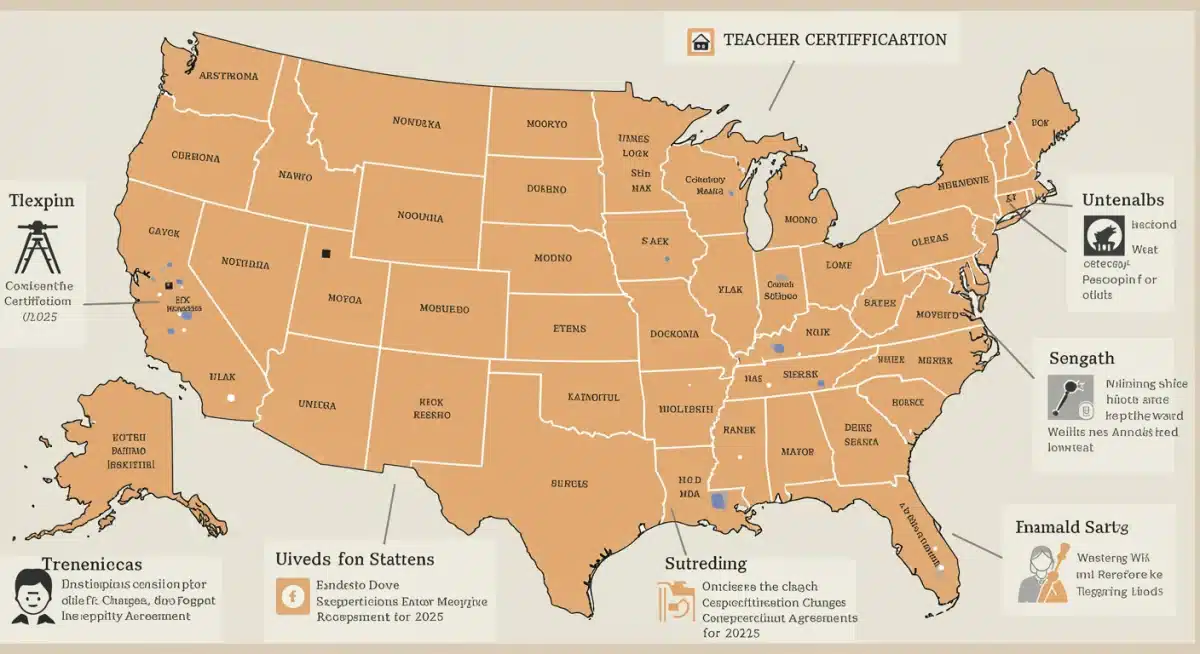
Some states are moving towards full reciprocity for teachers holding valid, equivalent licenses from other states, while others are implementing conditional reciprocity, requiring additional coursework or exams within a specified timeframe. It’s vital for mobile educators to understand the specific terms of reciprocity in their target state.
Key Developments in Reciprocity for 2025
- Interstate Compacts: Growth in multi-state agreements designed to simplify licensure transfer.
- Conditional Licensure: Many states offering temporary licenses while out-of-state teachers complete local requirements.
- Portfolio Reviews: Increased use of professional portfolios to assess qualifications instead of solely relying on exams.
- Military Spouse Provisions: Expedited certification processes for military spouses due to frequent relocations.
These developments aim to make the transition smoother for educators, ensuring that their valuable experience and qualifications are recognized across different state systems. However, it is always recommended to verify the most current reciprocity policies directly with the state’s licensing authority.
Ultimately, the evolution of reciprocity agreements in 2025 represents a positive step towards creating a more flexible and accessible teaching profession, benefiting educators and students alike by ensuring a steady supply of qualified teachers.
Alternative Pathways to Certification: Expanding the Educator Pipeline
In response to persistent teacher shortages and the need for a more diverse teaching workforce, many states are expanding and refining alternative pathways to certification as part of their 2025 updates. These pathways offer non-traditional routes for individuals with bachelor’s degrees or significant professional experience to enter the teaching profession, bypassing conventional teacher preparation programs.
These alternative routes often combine intensive pedagogical training with supervised classroom experience, sometimes allowing individuals to teach while completing their certification requirements. This approach helps to fill critical vacancies, especially in high-need subject areas and underserved communities.
Popular Alternative Route Models
Various models of alternative certification are gaining traction. These include programs for career changers, military veterans, and individuals with expertise in specific STEM fields. The focus is on providing rigorous, yet flexible, options that maintain high standards for educator quality.
- Residency Programs: Year-long apprenticeships with experienced mentor teachers.
- Post-Baccalaureate Programs: Intensive coursework for individuals with degrees in other fields.
- Teach For America & Similar Models: Fast-track programs combining training with immediate classroom placement.
- Vocational & Technical Education Pathways: Certification for skilled tradespeople to teach in career and technical programs.
While alternative pathways offer diverse entry points, they consistently emphasize practical classroom skills and a deep understanding of pedagogy. Many programs also include ongoing support and mentorship to ensure the success of new teachers. This ensures that even with varied entry points, the quality of instruction remains high.
The expansion of alternative pathways to certification in 2025 is a strategic move by states to address the complex challenges of teacher recruitment and retention, ultimately strengthening the educator pipeline and bringing diverse talents into classrooms.
Forecasting Future Trends in Teacher Licensure
Looking beyond the immediate 2025 teacher certification updates, several emerging trends are likely to shape the future of teacher licensure in the United States. These trends are driven by technological advancements, evolving educational philosophies, and societal demands. Anticipating these shifts can help educators and policymakers prepare for what lies ahead.
The emphasis will increasingly be on competency-based certification, where demonstrated skills and knowledge take precedence over traditional course credit accumulation. This shift could lead to more personalized and flexible pathways for educators to achieve and maintain licensure.
Anticipated Developments in Educator Certification
The integration of artificial intelligence (AI) in education, the growing demand for personalized learning, and the need for teachers to effectively address mental health and well-being in schools are all factors that will influence future certification requirements. Digital badges and micro-credentials might also play a larger role in acknowledging specialized skills.
- Competency-Based Standards: Focus on observable teaching skills rather than just academic coursework.
- Digital Credentialing: Use of blockchain and digital badges for verifying specialized training.
- AI Literacy Requirements: Mandatory training for teachers on utilizing and understanding AI in education.
- Mental Health & Wellness Endorsements: Specialized certifications for supporting student and staff well-being.
The role of ongoing professional development is also expected to become even more central, with a continuous cycle of learning and re-certification tied to demonstrated impact in the classroom. This ensures that teachers are always at the forefront of educational innovation and research.
By forecasting these future trends, educators can proactively engage in relevant professional development and advocate for policies that support a forward-thinking and effective system of teacher licensure, ensuring the profession remains robust and responsive.
| Key Update Area | Brief Description |
|---|---|
| State Requirements | Each state is implementing unique changes to licensure exams, coursework, and practical experience. |
| Professional Development | Increased focus on specialized training in areas like digital literacy, SEL, and inclusive practices. |
| Reciprocity | Efforts to streamline cross-state licensure for easier educator mobility, with varied state agreements. |
| Alternative Pathways | Expansion of non-traditional routes to certification to address shortages and diversify the workforce. |
Frequently Asked Questions About 2025 Teacher Certification
The biggest changes for 2025 involve state-specific adjustments to testing, professional development requirements, and reciprocity agreements. Many states are also expanding alternative pathways to certification to attract more diverse candidates into the teaching profession. It’s crucial for educators to check their state’s specific Department of Education guidelines for detailed information.
Current educators may need to complete new professional development modules or meet updated continuing education requirements to maintain their licensure. Some states might introduce new endorsements. It’s recommended to proactively review your state’s updated policies to ensure compliance and avoid any lapses in certification, impacting your ability to teach.
Yes, many states are working to streamline reciprocity agreements for 2025, making it generally easier for qualified educators to transfer their licenses. However, the extent of reciprocity varies significantly by state, with some offering full recognition and others requiring additional steps or temporary licensure while requirements are met.
Alternative pathways are non-traditional routes for individuals with bachelor’s degrees or professional experience in other fields to become certified teachers. They are designed for career changers, military veterans, and those with specific subject expertise, often combining intensive training with supervised teaching experience to address teacher shortages effectively.
For the most accurate and up-to-date information, you should visit the official website of your state’s Department of Education or Board of Education. These governmental bodies publish detailed guidelines, requirements, and any changes related to teacher certification, ensuring you have access to precise, official directives.
Conclusion
The comprehensive teacher certification updates for 2025 represent a significant evolution in the American education system. These changes, while varied across states, collectively aim to strengthen the teaching profession by enhancing educator competency, addressing workforce needs, and fostering greater mobility. Educators must remain informed and proactive, leveraging available resources to navigate new requirements and embrace ongoing professional growth. The ultimate goal is to ensure a highly qualified and diverse teaching force capable of meeting the dynamic demands of 21st-century learning environments.