SECURE 2.0 Act’s 401(k) Impact in 2025: Your Retirement Guide

The SECURE 2.0 Act introduces significant changes to 401(k) plans in 2025, impacting contribution limits, RMDs, and catch-up contributions, which are crucial for optimizing your retirement savings.
The Latest in Retirement Planning: Understanding the SECURE 2.0 Act’s Impact on Your 401(k) in 2025 is essential for anyone looking to secure their financial future. This landmark legislation brings forth a wave of modifications that could fundamentally alter how Americans save for retirement, making it crucial to grasp these changes.
Navigating the SECURE 2.0 Act: An Overview
The SECURE 2.0 Act, building upon the original SECURE Act of 2019, represents a significant legislative effort to enhance retirement savings opportunities and simplify the complex landscape of retirement planning. Enacted with bipartisan support, this act introduces a myriad of provisions designed to address common hurdles individuals face when saving for their golden years. Understanding its core objectives is the first step toward leveraging its benefits for your personal financial strategy.
This comprehensive legislation aims to expand coverage for retirement plans, increase retirement savings, and preserve accumulated savings. It recognizes the evolving nature of the American workforce and the challenges posed by longer lifespans and changing economic conditions. By implementing these changes, the government hopes to foster greater financial security for retirees across the nation.
Key Objectives of SECURE 2.0
- Expanding Retirement Plan Access: A primary goal is to make it easier for small businesses to offer retirement plans and for more individuals to participate.
- Boosting Savings: The act includes provisions to encourage higher savings rates, particularly for those nearing retirement.
- Simplifying Rules: It seeks to streamline administrative procedures for plan sponsors and clarify rules for participants.
- Protecting Savings: Measures are in place to safeguard retirement assets and ensure they last throughout retirement.
Ultimately, the SECURE 2.0 Act is more than just a set of new rules; it’s a recalibration of the nation’s approach to retirement savings. For 401(k) participants, this means new opportunities and adjustments that warrant careful attention to optimize their financial planning for 2025 and beyond.
Elevated Catch-Up Contributions for Older Workers
One of the most impactful changes introduced by the SECURE 2.0 Act concerns catch-up contributions for older workers. Currently, individuals aged 50 and over are permitted to make additional contributions to their 401(k) plans beyond the standard limit. The new legislation significantly enhances this provision, particularly for those approaching retirement, recognizing the increased financial needs and shorter savings horizons for this demographic.
Effective in 2025, individuals aged 60, 61, 62, and 63 will see a substantial increase in their permissible catch-up contribution limits. This specific age band is targeted to provide a more robust savings window during a critical period of pre-retirement planning. This change offers a powerful tool for those who may have started saving later in life or wish to accelerate their savings in their final working years.
Understanding the New Limits
- Current Catch-Up: Individuals aged 50 and older can contribute an additional amount (currently $7,500 for 2024).
- 2025 Enhancement: For those aged 60-63, the catch-up limit will be significantly higher, potentially reaching $10,000 or 50% more than the regular catch-up amount, whichever is greater, adjusted for inflation.
- Strategic Impact: This allows a substantial boost to retirement savings, potentially closing gaps in retirement readiness.
It’s important to note that these increased catch-up contributions will generally be subject to Roth treatment for those earning over a certain income threshold. This means contributions will be made with after-tax dollars, and qualified distributions in retirement will be tax-free, offering a different tax planning strategy for higher earners. This provision underscores the act’s dual goal of increasing savings while also providing tax diversification options.
The enhanced catch-up contribution limits provide a critical opportunity for older workers to supercharge their retirement savings. Financial advisors will likely emphasize this provision as a key strategy for clients in the eligible age bracket, helping them make the most of their pre-retirement years to build a more secure financial foundation.
Changes to Required Minimum Distributions (RMDs)
The SECURE 2.0 Act brings welcome news for retirees by further adjusting the age at which Required Minimum Distributions (RMDs) must begin. This change provides individuals with greater flexibility to keep their retirement savings invested and growing for a longer period, potentially leading to a larger nest egg throughout their retirement years. The previous legislation had already shifted the RMD age, and SECURE 2.0 continues this trend, reflecting evolving life expectancies and retirement patterns.
Starting in 2025, the RMD age will officially move to 73, and further to 75 in 2033. This incremental increase allows retirees more control over when they begin withdrawing funds from their 401(k)s and other qualified retirement accounts. For many, this offers a significant advantage, particularly if they do not immediately need the funds and prefer to defer taxation on their growing assets.
Impact on Retirement Planning
- Extended Growth Period: Delaying RMDs means your investments have more time to potentially grow tax-deferred.
- Tax Planning Flexibility: Retirees can better manage their taxable income in early retirement years, potentially avoiding higher tax brackets.
- Estate Planning Considerations: A larger invested sum means potentially more to pass on to beneficiaries, though RMDs will eventually apply.
It’s crucial for individuals nearing retirement to understand these new RMD rules and how they interact with their overall financial plan. While delaying RMDs offers benefits, it’s also important to consider your personal financial needs, tax situation, and estate planning goals. Consulting a financial advisor can help determine the optimal strategy for your specific circumstances, ensuring you maximize the advantages of these new provisions while avoiding potential pitfalls.
The adjustment to RMD age is a testament to the government’s recognition of changing demographics and the need for more flexible retirement planning options. It empowers retirees to make more informed decisions about their savings, aligning withdrawals with their personal financial timelines rather than strict regulatory mandates.
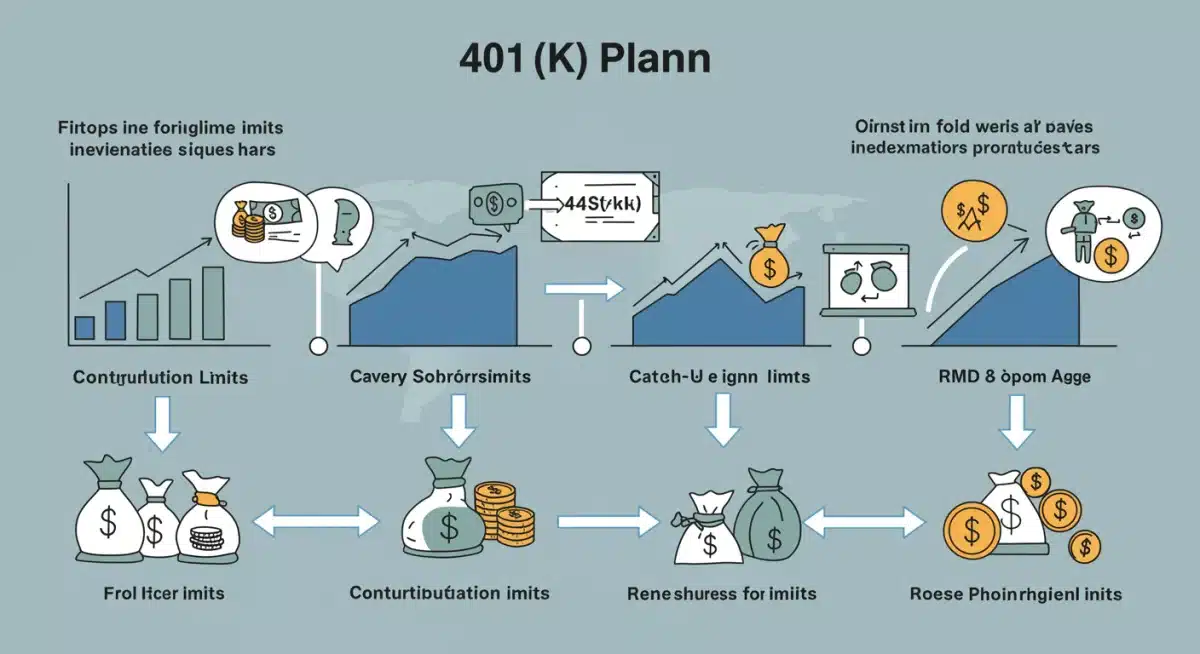
Automatic Enrollment and Escalation in 401(k) Plans
A cornerstone of the SECURE 2.0 Act’s strategy to boost retirement savings is the mandate for automatic enrollment and automatic escalation in new 401(k) and 403(b) plans. This provision aims to overcome inertia, a common barrier to retirement savings, by making participation the default rather than an active choice. For many employees, particularly those who might not proactively elect to join a retirement plan, this change could dramatically increase their participation rates and, consequently, their retirement readiness.
Starting in 2025, most new 401(k) and 403(b) plans will be required to automatically enroll eligible employees at a contribution rate of at least 3% of their pay, with an automatic escalation feature that increases the contribution rate by 1% each year, up to a maximum of at least 10%. This ‘set it and forget it’ approach is designed to gradually increase savings without requiring employees to take active steps year after year. It’s a powerful mechanism for encouraging consistent, growing contributions over time.
Benefits of Auto-Enrollment and Escalation
- Increased Participation: More employees will be saving for retirement without needing to opt-in manually.
- Higher Savings Rates: Gradual increases help employees save more over time without a dramatic immediate impact on their take-home pay.
- Simplified Decision-Making: Reduces the burden on employees to make complex financial decisions upfront.
- Improved Retirement Outcomes: Consistent, increasing contributions lead to larger retirement nest eggs.
While employees always have the option to opt out or adjust their contribution rates, the psychological impact of automatic enrollment has been shown to be highly effective in increasing overall savings participation. This provision is particularly beneficial for younger workers who may not prioritize retirement savings early in their careers but will benefit immensely from consistent, long-term contributions. Employers, too, will find administrative advantages in this streamlined process, though it does introduce new compliance considerations. This move towards automation represents a significant step in making retirement savings a more accessible and routine part of employment.
New Provisions for Student Loan Payments and Emergency Savings
Recognizing the significant financial burdens faced by many Americans, the SECURE 2.0 Act introduces innovative provisions to allow employers to help employees save for retirement while also addressing other pressing financial needs, such as student loan debt and emergency savings. These new rules acknowledge that financial wellness is multi-faceted and that addressing immediate financial concerns can ultimately free up resources for long-term retirement planning.
One notable provision allows employers to make matching contributions to an employee’s 401(k) based on their qualified student loan payments. This means that even if an employee cannot afford to contribute to their 401(k) because they are prioritizing student loan repayment, they can still receive valuable employer matching funds. This effectively removes a significant barrier to retirement savings for many individuals burdened by student debt, ensuring they don’t miss out on employer contributions.
Addressing Other Financial Needs
- Student Loan Matching: Employers can treat student loan payments as elective deferrals for matching contribution purposes.
- Emergency Savings Accounts: The act permits employers to offer emergency savings accounts linked to retirement plans, allowing employees to save for short-term needs without tapping into their retirement funds.
- Penalty-Free Withdrawals: Certain penalty-free withdrawals are allowed for emergency expenses, providing a safety net without completely derailing retirement plans.
These provisions demonstrate a more holistic approach to financial wellness, understanding that retirement savings cannot exist in a vacuum. By providing mechanisms to address student debt and build emergency savings, the SECURE 2.0 Act aims to create a more stable financial foundation for individuals, enabling them to contribute more consistently and confidently to their 401(k)s. This flexibility is crucial for empowering a broader segment of the workforce to achieve long-term financial security.
The integration of these features into retirement plans marks a progressive shift, acknowledging that immediate financial stability often precedes the ability to save for the distant future. It’s a proactive step towards making retirement planning more inclusive and responsive to the diverse financial realities of today’s workforce.
Understanding the Roth 401(k) Changes
The SECURE 2.0 Act brings important modifications to Roth 401(k) accounts, primarily aimed at simplifying their administration and enhancing their appeal as a retirement savings vehicle. Roth accounts, characterized by after-tax contributions and tax-free qualified withdrawals in retirement, offer a powerful hedge against future tax increases. The new legislation refines certain aspects of Roth 401(k)s, making them even more attractive and straightforward for participants.
Perhaps the most significant change for Roth 401(k)s is the elimination of the Required Minimum Distribution (RMD) rules for these accounts prior to the death of the owner, aligning them with Roth IRAs. This means that participants with Roth 401(k)s will no longer be forced to take distributions from these accounts during their lifetime, allowing their funds to continue growing tax-free for as long as they wish. This provides enhanced flexibility and greater control over their retirement assets, particularly beneficial for estate planning.
Key Roth 401(k) Updates
- No Pre-Death RMDs: Roth 401(k)s will no longer be subject to RMDs for the original owner, matching Roth IRAs rules.
- Mandatory Roth Treatment for High Earners’ Catch-Up: For individuals earning over a certain threshold, catch-up contributions will be required to be Roth contributions.
- Simplified Rollovers: The act also clarifies rules around rollovers, making it easier to move funds between different Roth accounts.
The elimination of RMDs for Roth 401(k)s is a major advantage, offering participants the ability to let their tax-free savings grow indefinitely. This change solidifies the Roth 401(k) as an excellent option for those who anticipate being in a higher tax bracket in retirement or who wish to leave a tax-free inheritance to their beneficiaries. The mandatory Roth treatment for certain catch-up contributions also steers higher-income individuals towards tax diversification, potentially benefiting them in the long run.
These adjustments make Roth 401(k)s an even more compelling component of a diversified retirement strategy. Individuals should review their current and future tax situations to determine if maximizing Roth contributions, especially considering these new provisions, aligns with their financial goals.
Strategic Planning for Your 401(k) in 2025
With the SECURE 2.0 Act’s changes taking effect in 2025, proactive strategic planning for your 401(k) becomes more vital than ever. The modifications to contribution limits, RMDs, catch-up rules, and Roth options present both opportunities and complexities. A well-thought-out approach can help you maximize the benefits of this legislation and ensure your retirement savings strategy remains robust and aligned with your long-term financial goals.
One of the first steps involves re-evaluating your current contribution strategy. With potentially higher catch-up limits for certain age groups and automatic escalation features, it’s a good time to assess if you are contributing enough to reach your retirement targets. Consider increasing your contributions, especially if you qualify for the enhanced catch-up provisions, to take full advantage of tax-deferred or tax-free growth.
Actionable Strategies for 2025
- Review Contribution Limits: Understand the new standard and catch-up limits to optimize your annual savings.
- Assess RMD Impact: If you are nearing RMD age, plan for the extended deferral period and its implications for your withdrawals and taxes.
- Consider Roth Options: Evaluate if a Roth 401(k) or Roth contributions for catch-up are beneficial given your anticipated tax situation in retirement.
- Leverage Employer Benefits: If your employer offers student loan matching or emergency savings accounts, understand how these can complement your 401(k) strategy.
- Consult a Financial Advisor: Seek professional guidance to tailor these new provisions to your unique financial circumstances and goals.
The SECURE 2.0 Act underscores the importance of ongoing engagement with your retirement plan. What was optimal before 2025 might not be optimal afterward. Regularly reviewing your investment allocations, understanding employer match policies, and staying informed about any further legislative developments are all critical components of effective retirement planning. By taking these steps, you can confidently navigate the evolving retirement landscape and build a more secure financial future.
Ultimately, the changes in 2025 are designed to empower individuals with more tools and flexibility for retirement savings. Harnessing these new provisions effectively requires diligence and a willingness to adapt your financial strategy to the updated regulatory environment.
| Key Provision | Brief Description |
|---|---|
| Enhanced Catch-Up Contributions | Increased limits for workers aged 60-63, often with Roth treatment for higher earners. |
| RMD Age Increase | Required Minimum Distribution age moves to 73 in 2025, and 75 in 2033. |
| Auto-Enrollment & Escalation | New 401(k) plans must automatically enroll and increase employee contributions. |
| Roth 401(k) Simplification | Eliminates pre-death RMDs for Roth 401(k)s, aligning with Roth IRAs. |
Frequently Asked Questions About SECURE 2.0 and Your 401(k)
The primary goal is to enhance retirement savings opportunities for Americans by expanding access to plans, increasing contribution incentives, simplifying administrative rules, and preserving accumulated savings for longer periods. It builds on the original SECURE Act’s objectives.
For individuals aged 60-63, the SECURE 2.0 Act significantly increases the catch-up contribution limits in 2025. This allows them to save substantially more in their 401(k)s during these critical pre-retirement years, often with mandatory Roth treatment for higher earners.
Starting in 2025, the Required Minimum Distribution (RMD) age increases to 73, and to 75 in 2033. This means you can keep your retirement funds invested and growing tax-deferred for a longer period, offering more flexibility in managing your taxable income during retirement.
The act allows employers to make matching 401(k) contributions based on employees’ student loan payments. It also permits employers to offer emergency savings accounts linked to retirement plans, providing options for short-term needs without impacting long-term savings.
Yes, Roth 401(k)s will no longer be subject to pre-death Required Minimum Distributions (RMDs), aligning them with Roth IRAs. This allows these tax-free accounts to grow indefinitely for the original owner, offering greater financial flexibility and estate planning benefits.
Conclusion
The SECURE 2.0 Act’s impact on your 401(k) in 2025 is profound, introducing a suite of changes designed to empower Americans to save more effectively for retirement. From enhanced catch-up contributions for older workers and a delayed RMD age to automatic enrollment and innovative provisions for student loan payments and emergency savings, this legislation offers new avenues for financial security. Understanding and strategically leveraging these updates is crucial for optimizing your retirement planning and ensuring a more stable financial future. Proactive engagement with your retirement strategy and, when necessary, professional guidance, will be key to navigating this evolving landscape successfully.