Scholarship Success 2026: Your Guide to 20+ Funding Opportunities

Are you dreaming of higher education but worried about the financial burden? The good news is that securing scholarships can make those dreams a reality. As we look ahead to 2026, it’s never too early to start planning your strategy for scholarship success 2026. This comprehensive guide will walk you through everything you need to know, from finding the right opportunities to crafting a winning application, ensuring you’re well-prepared to secure the funding you need.
The landscape of financial aid is constantly evolving, but the core principles of successful scholarship applications remain consistent. By understanding these principles and starting early, you can significantly increase your chances of receiving substantial financial support for your college or university education. Let’s dive into the world of scholarships and empower you to achieve your academic goals without the overwhelming weight of student debt.
Understanding the Scholarship Landscape for 2026
Before you even begin your search, it’s crucial to understand what scholarships are and the different types available. A scholarship is a grant or payment made to support a student’s education, awarded on the basis of academic or other achievement. Unlike loans, scholarships do not need to be repaid, making them an incredibly valuable form of financial aid.
Types of Scholarships
- Merit-Based Scholarships: These are awarded based on a student’s academic achievements, such as GPA, test scores (SAT/ACT), extracurricular activities, leadership roles, and special talents (e.g., athletics, arts). Many universities offer these directly.
- Need-Based Scholarships: These are awarded based on a student’s financial need. Applicants typically need to demonstrate their family’s financial situation through forms like the FAFSA (Free Application for Federal Student Aid) in the U.S. or similar forms internationally.
- Athletic Scholarships: Offered to students who demonstrate exceptional athletic talent and can contribute to a college’s sports team. These are often awarded by coaches and athletic departments.
- Creative/Performing Arts Scholarships: For students with outstanding talents in music, art, drama, dance, creative writing, and other artistic fields. Portfolios or auditions are usually required.
- Community Service Scholarships: Awarded to students who have a strong record of volunteering and making a positive impact in their communities.
- Specific Major/Field of Study Scholarships: Many organizations, companies, and departments offer scholarships to students pursuing particular fields, such as STEM, nursing, education, or business.
- Minority Scholarships: Designed to support students from underrepresented groups, promoting diversity in higher education.
- Location-Based Scholarships: Offered by local businesses, community foundations, or state governments to residents of a particular city, county, or state.
- Unusual/Niche Scholarships: Believe it or not, there are scholarships for almost everything! From being tall to demonstrating a specific hobby, these can be less competitive simply because fewer people know about them.
Understanding these categories is the first step towards achieving scholarship success 2026. It helps you identify which types of scholarships align best with your profile and strengths.
When to Start Your Scholarship Search for 2026
The phrase "the early bird gets the worm" couldn’t be more true when it comes to scholarships. While 2026 might seem far away, starting your search and preparation early is paramount. Many scholarships have deadlines a year or more in advance of the academic year they apply to.
Ideal Timeline for Scholarship Applications
- Sophomore Year (High School): Begin researching potential career paths and majors. Start building a strong academic record and engaging in extracurricular activities, community service, and leadership roles. This is foundational for future applications.
- Junior Year (High School): This is when the serious search should begin. Identify potential scholarships, note their requirements, and start drafting essays. Request letters of recommendation early. Many prestigious national scholarships open applications during this year.
- Senior Year (High School): The peak of scholarship applications. Most deadlines fall between fall of senior year and spring of senior year. Submit FAFSA and CSS Profile (if applicable) as soon as they open. Continue applying for local, regional, and institutional scholarships.
- College/University Years: Don’t stop applying once you’re in college! Many scholarships are specifically for current college students, often tied to specific majors, departments, or academic progress.
By starting early, you give yourself ample time to gather necessary documents, perfect your essays, secure strong letters of recommendation, and apply for a greater number of opportunities, significantly boosting your chances for scholarship success 2026.
Strategies for Finding Scholarships in 2026
Finding the right scholarships can feel like searching for a needle in a haystack, but with a strategic approach, you can uncover numerous opportunities. Here are some effective strategies:
1. Online Scholarship Search Engines
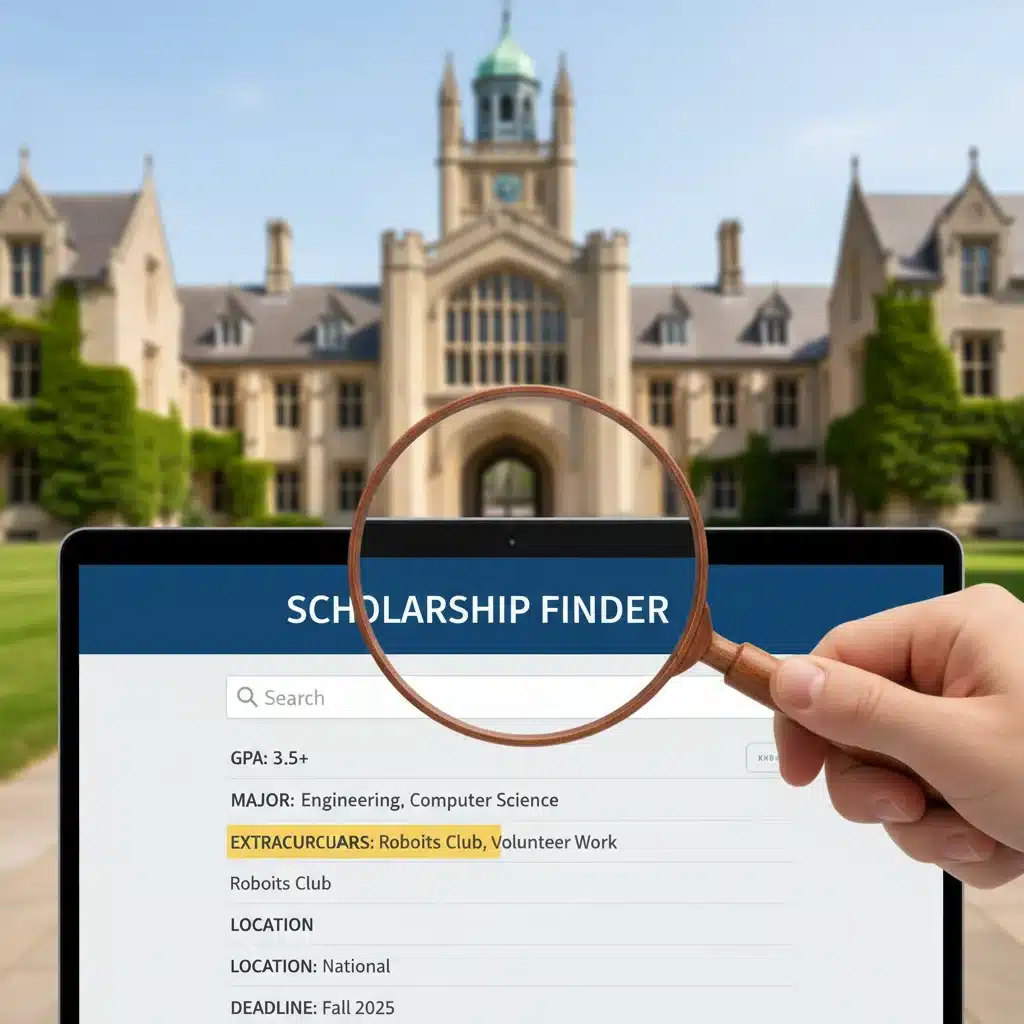
These platforms are invaluable tools for finding a wide array of scholarships. They allow you to filter by criteria such as GPA, major, location, ethnicity, interests, and more. Popular search engines include:
- Fastweb.com
- Scholarships.com
- Cappex.com
- College Board’s Scholarship Search
- Niche.com
- Unigo.com
- BigFuture.collegeboard.org
Set up profiles on multiple sites and regularly check for new listings. The more specific you are with your profile, the better the matches you’ll receive.
2. High School Guidance Counselors and College Financial Aid Offices
Your high school guidance counselor is a treasure trove of information, especially for local and regional scholarships that might not be widely advertised online. They often have lists of opportunities specific to your school or community. Similarly, college financial aid offices are excellent resources for institutional scholarships, which are often the most generous.
3. Local Community Resources
Don’t overlook local opportunities. Check with:
- Local businesses and employers (especially your parents’ employers)
- Community foundations
- Civic organizations (e.g., Rotary Club, Lions Club, Kiwanis)
- Religious organizations
- Alumni associations (if you have family members who attended certain institutions)
These local scholarships often have fewer applicants, increasing your odds of winning.
4. Professional Organizations and Associations
If you have a specific career path in mind, research professional organizations related to that field. Many offer scholarships to students pursuing degrees in their area of expertise. For example, engineering societies, medical associations, or journalism guilds often have their own scholarship programs.
5. Government and State Programs
Many governments offer scholarships or grants based on merit, need, or specific fields of study critical to the country’s development. Research your state’s department of education or higher education commission for state-specific opportunities.

Crafting a Winning Scholarship Application
Once you’ve identified potential scholarships, the real work begins: crafting an application that stands out. This is where your efforts for scholarship success 2026 will truly pay off.
1. Understand the Requirements and Criteria
Read the scholarship description thoroughly. What are they looking for? Is it academic excellence, leadership, community involvement, a specific major, or a combination? Tailor your application to address these specific criteria. Don’t submit a generic application.
2. The Essay: Your Voice and Story
The essay is often the most critical component of a scholarship application. It’s your chance to tell your story, demonstrate your personality, and explain why you deserve the scholarship. Here are tips for a compelling essay:
- Answer the Prompt Directly: Make sure you address every part of the question.
- Be Authentic and Personal: Share your unique experiences, challenges, and aspirations. What makes you, YOU?
- Show, Don’t Just Tell: Instead of saying you’re a leader, provide an example of a time you demonstrated leadership.
- Highlight Your Achievements: Connect your achievements to the scholarship’s criteria.
- Proofread Meticulously: Typos and grammatical errors can leave a poor impression. Have multiple people review your essay.
- Adhere to Word Limits: Follow instructions precisely.
3. Stellar Letters of Recommendation
A strong letter of recommendation can significantly boost your application. Choose recommenders who know you well and can speak to your strengths, character, and potential. Ideally, these are teachers, counselors, employers, or mentors.
- Ask Early: Give your recommenders plenty of time (at least 2-3 weeks, preferably more).
- Provide Information: Give them your resume, the scholarship description, your essay (if applicable), and clear instructions on how to submit the letter.
- Follow Up Politely: Send a gentle reminder a week before the deadline.
- Thank Them: Always send a thank-you note or email.
4. Academic Transcripts and Test Scores
Ensure your academic transcripts are accurate and up-to-date. If standardized test scores (SAT/ACT) are required, make sure they are sent directly from the testing agency if specified. A strong academic record is often a baseline for many scholarships.
5. Resume/Activity List
Compile a comprehensive list of your extracurricular activities, volunteer work, leadership roles, work experience, awards, and honors. Quantify your achievements whenever possible (e.g., "Volunteered 100+ hours at…"). This demonstrates your well-roundedness and commitment outside of academics.
6. The Interview (If Applicable)
Some scholarships require an interview. Prepare by researching the organization, practicing common interview questions, and articulating why you are a deserving candidate. Dress appropriately and be confident and polite.
20+ Scholarship Opportunities to Target for 2026
While specific deadlines and criteria can change, many scholarships are recurring. Here’s a list of categories and examples of scholarships (or types of scholarships) to begin your research for scholarship success 2026. Remember to always check the official websites for the most current information.
General Merit & Leadership Scholarships:
- Coca-Cola Scholars Program: Recognizes students for their capacity to lead and serve, as well as their commitment to making a significant impact on their schools and communities.
- Jack Kent Cooke Foundation Scholarship: For high-achieving high school seniors with financial need who seek to attend the nation’s best four-year colleges and universities.
- Gates Scholarship: A highly selective, last-dollar scholarship for outstanding minority high school seniors from low-income households.
- Burger King Scholars Program: Awards scholarships to high school seniors based on academic achievement, leadership, and community involvement.
STEM-Focused Scholarships:
- Society of Women Engineers (SWE) Scholarships: For women pursuing degrees in engineering or computer science.
- National Society of Black Engineers (NSBE) Scholarships: Various scholarships for NSBE members pursuing STEM degrees.
- Siemens Competition in Math, Science & Technology: A research competition for high school students with significant scholarship awards.
- Intel Science Talent Search (Regeneron STS): The nation’s oldest and most prestigious science competition for high school seniors.
Community Service & Leadership Scholarships:
- Prudential Spirit of Community Awards: Honors young people for outstanding acts of volunteerism.
- Horatio Alger Scholarship: For students who have overcome significant adversity and demonstrate integrity and perseverance.
- DoSomething.org Scholarships: Offers scholarships for various social impact campaigns and volunteer efforts.
Specific Major/Field Scholarships:
- Health Professions Scholarships (e.g., Nursing, Medicine): Many hospitals, professional associations (e.g., American Nurses Association), and universities offer these.
- Business & Entrepreneurship Scholarships: Look for opportunities from organizations like the National Association of Women Business Owners (NAWBO) or local Chambers of Commerce.
- Education Scholarships: For aspiring teachers, often provided by state education departments or professional teaching organizations.
Minority & Diversity Scholarships:
- UNCF Scholarships: United Negro College Fund offers a wide range of scholarships for African American students.
- Hispanic Scholarship Fund (HSF): Provides scholarships to Latino students.
- Asian & Pacific Islander American Scholarship Fund (APIASF): Supports Asian and Pacific Islander American students.
- American Indian College Fund: Provides scholarships to Native American and Alaska Native students.
Niche & Unique Scholarships:
- "No Essay" Scholarships: Many platforms offer sweepstakes-style scholarships that require minimal effort to enter. While the odds are lower, they are quick to apply for.
- Tall Clubs International Scholarship: For students who meet specific height requirements (e.g., 5’10” for women, 6’2″ for men).
- Duct Tape Prom Dress Scholarship: For students who create prom attire out of duct tape.
This list is just a starting point. Remember to use the strategies mentioned earlier to uncover even more opportunities tailored to your unique profile. Dedication to finding and applying for these can be the cornerstone of your scholarship success 2026.
Common Pitfalls to Avoid in Your Scholarship Journey
While the path to scholarships can be rewarding, there are common mistakes that can hinder your progress. Being aware of these can help you navigate the process more smoothly:
1. Missing Deadlines
This is perhaps the most common and devastating mistake. Create a detailed calendar with all scholarship deadlines and work backward to set personal deadlines for essays, recommendations, and transcript requests. Missing a deadline means an automatic rejection.
2. Not Following Instructions
Read every instruction carefully. Failure to submit all required documents, adhering to word limits, or following specific formatting guidelines can lead to your application being discarded without review. Attention to detail is crucial.
3. Generic Applications
Submitting the same essay or application materials to multiple scholarships without tailoring them to the specific requirements is a recipe for rejection. Scholarship committees want to see that you’ve put thought into why you’re a good fit for *their* scholarship.
4. Procrastination
As mentioned, starting early is key. Waiting until the last minute stresses you out, compromises the quality of your application, and limits the number of scholarships you can apply for.
5. Not Proofreading
Grammatical errors, typos, and awkward phrasing can undermine your credibility. Always proofread your application materials multiple times, and have others review them as well.
6. Limiting Your Search
Only looking for national scholarships or only focusing on one type of scholarship can severely limit your opportunities. Expand your search to local, regional, and niche scholarships.
7. Not Asking for Help
Don’t be afraid to ask for help from guidance counselors, teachers, mentors, or even parents when reviewing essays or understanding complex application requirements.
8. Believing You Don’t Qualify
Many students self-reject before even looking at the criteria. You might be surprised by the variety of scholarships available. Apply for everything you even remotely qualify for.
Maximizing Your Chances for Scholarship Success 2026
Beyond avoiding pitfalls, there are proactive steps you can take to significantly improve your odds:
1. Build a Strong Personal Brand
From your academic record to your extracurricular involvement, everything contributes to your "personal brand." Focus on consistency, leadership, and making a positive impact. Colleges and scholarship committees look for well-rounded individuals who will contribute positively to their community.
2. Develop Excellent Writing Skills
Essays are central to many scholarship applications. Practice your writing, seek feedback, and refine your ability to articulate your thoughts clearly and persuasively. Take advantage of school writing centers or English teachers for guidance.
3. Maintain a High GPA and Strong Test Scores
While not the only factor, academic excellence opens doors to many merit-based scholarships. Strive for the best grades you can achieve and prepare thoroughly for standardized tests.
4. Engage in Meaningful Extracurriculars
Quality over quantity. It’s better to be deeply involved in a few activities where you can demonstrate leadership, commitment, and impact, rather than superficially participating in many.
5. Network and Seek Mentorship
Connect with professionals in your desired field, college alumni, or even older students who have successfully navigated the scholarship process. Their insights and advice can be invaluable.
6. Create a "Scholarship Portfolio"
Keep an organized folder (digital and physical) with your resume, transcripts, essay drafts, recommendation letters, and a list of your achievements. This will streamline the application process for multiple scholarships.
7. Reapply (When Possible)
If you don’t win a scholarship the first time, don’t be discouraged. Many scholarships allow reapplication, and you might have strengthened your profile since your last attempt.
The Long-Term Benefits of Scholarship Success
Achieving scholarship success 2026 isn’t just about covering tuition fees; it has far-reaching benefits:
- Reduced Student Loan Debt: This is the most obvious benefit. Less debt means more freedom after graduation to pursue your passions without immediate financial pressure.
- Focus on Studies: Without the constant worry of tuition costs, you can dedicate more time and energy to your academic pursuits.
- Enhanced Resume: Scholarship awards are impressive additions to your resume, demonstrating your achievements and potential to future employers or graduate schools.
- Networking Opportunities: Many scholarship programs offer networking events, mentorship, and connections to influential individuals and organizations.
- Personal Growth: The process of applying for scholarships hones your writing, organizational, and self-advocacy skills, which are valuable for life beyond college.
Conclusion: Your Path to Scholarship Success 2026
The journey to securing scholarships for 2026 is a marathon, not a sprint. It requires research, dedication, meticulous planning, and a commitment to presenting the best version of yourself. By starting early, understanding the diverse scholarship landscape, strategically searching for opportunities, and crafting compelling applications, you are setting yourself up for significant scholarship success 2026.
Don’t be disheartened by rejections; every "no" brings you closer to a "yes." Stay persistent, leverage all available resources, and believe in your ability to earn the financial support you deserve. Your academic future is within reach, and with this guide, you have a powerful tool to help you fund your dreams and embark on your higher education journey with confidence.
Start today, stay organized, and watch as your efforts translate into tangible financial aid that paves the way for a bright and successful future. Good luck!