Federal Grant Programs for Small Businesses: Apply by January 15th, 2026

Time-Sensitive: New Federal Grant Programs for Small Businesses Opening Applications on January 15th, 2026
Are you a small business owner constantly seeking new avenues for growth, innovation, and stability? The federal government consistently offers vital support through various grant programs, and a new wave of these opportunities is about to become available. Mark your calendars: January 15th, 2026, is the pivotal date when applications will officially open for several new federal grant programs specifically designed to empower small businesses across various sectors. This is not just another funding announcement; it’s a critical window of opportunity that could reshape the trajectory of your enterprise. Understanding these new federal small business grants and preparing effectively is paramount for success.
In today’s dynamic economic landscape, access to capital is often the most significant hurdle for small businesses. While traditional loans require repayment and equity financing demands a share of your company, federal grants offer a non-dilutive form of funding that can provide the necessary capital injection without adding debt or sacrificing ownership. These programs are often designed to stimulate specific economic activities, encourage innovation, foster job creation, or support businesses in underserved communities. The upcoming set of federal small business grants opening on January 15th, 2026, promises to address a diverse range of these objectives, making it crucial for every eligible business to pay close attention.
This comprehensive guide will walk you through everything you need to know about these impending federal grant programs. We’ll delve into the specifics of what these grants entail, who is eligible, how to prepare a compelling application, and crucial strategies to maximize your chances of securing this invaluable funding. Don’t let this time-sensitive opportunity pass you by. The early bird often catches the worm, and with a January 15th, 2026, opening date, preparation starting now is your best strategy. Let’s explore how these federal small business grants can fuel your future success.
What Are Federal Small Business Grants and Why Are They Important?
Federal small business grants are financial awards provided by the U.S. government to support businesses that align with specific public policy goals. Unlike loans, grants do not need to be repaid, making them an incredibly attractive funding source. They are typically awarded competitively, based on the merit of a proposal and its potential to achieve the grantor’s objectives. These objectives can range from developing innovative technologies, creating jobs, expanding into new markets, supporting disadvantaged groups, or contributing to community development. The importance of these federal small business grants cannot be overstated, especially for startups and small enterprises that may struggle to access conventional financing.
For many small businesses, grants represent a lifeline. They can fund research and development, purchase new equipment, hire additional staff, expand marketing efforts, or even cover operational costs during critical growth phases. The upcoming federal small business grants represent a fresh injection of capital into the economy, targeting areas where the government sees the most potential for growth and positive societal impact. By securing one of these grants, your business gains not only financial resources but also a significant credential that can enhance your reputation and attract further investment or partnerships. It’s a testament to your business’s potential and its alignment with national priorities.
Key Benefits of Federal Grant Programs
- Non-Repayable Funds: The most significant advantage is that the money does not need to be paid back.
- Boost to Credibility: Receiving a federal grant can enhance your business’s standing and attractiveness to other investors.
- Catalyst for Innovation: Many grants specifically target innovative projects, allowing businesses to pursue groundbreaking ideas without immediate financial pressure.
- Economic Development: Grants often aim to stimulate economic growth, job creation, and address specific societal challenges.
- Access to Resources: Beyond funding, some grant programs offer mentorship, technical assistance, and networking opportunities.
Understanding the Application Opening: January 15th, 2026
The date January 15th, 2026, is critical. This is not merely a suggestion but a firm deadline for when the application portals for these new federal small business grants will become active. It’s crucial to understand that ‘opening applications’ means that the official forms, guidelines, and submission mechanisms will be live. This does not mean you should wait until that day to start preparing. In fact, successful grant applicants begin their preparation months in advance. The period leading up to January 15th, 2026, should be dedicated to meticulous research, strategic planning, and comprehensive document gathering.
Government grant cycles can be highly competitive, and the window for submission, once opened, can sometimes be short. Moreover, the sheer volume of applications can lead to technical issues on submission platforms close to the deadline. By being ready on or shortly after January 15th, 2026, you position your business at a significant advantage. Early submission allows for potential clarification on application details and demonstrates your organization’s preparedness and efficiency. Missing this opening could mean waiting another year or more for similar opportunities, which could be detrimental to your business’s growth trajectory. Therefore, prioritizing the preparation for these federal small business grants is a strategic imperative.
Who is Eligible? Decoding the Criteria for Federal Small Business Grants
Eligibility for federal small business grants can vary significantly from one program to another. However, there are common threads that typically run through most federal funding opportunities. Generally, you must be a legitimate small business operating within the United States or its territories. The definition of ‘small business’ is often determined by the Small Business Administration (SBA) based on factors like annual revenue or number of employees, which can differ by industry.
Beyond the fundamental definition of a small business, specific federal grant programs will have their own unique criteria. These might include:
- Industry Focus: Some grants target specific sectors like technology, clean energy, agriculture, or healthcare.
- Geographic Location: Grants may be available only to businesses operating in certain regions, rural areas, or historically underutilized business zones (HUBZones).
- Business Structure: Certain grants might prioritize non-profits, for-profit entities, or specific legal structures.
- Demographic Focus: Programs often exist to support businesses owned by women, minorities, veterans, or individuals with disabilities.
- Project Type: The proposed project must align with the grant’s objectives, whether it’s for research and development, expansion, job creation, or community impact.
- Financial Health: While grants are not loans, applicants may need to demonstrate financial viability and the capacity to manage grant funds responsibly.
Before January 15th, 2026, it is crucial to identify which specific federal grant programs align with your business and project. Resources like Grants.gov and the SBA website are invaluable for this research. You’ll need to carefully review each program’s Notice of Funding Opportunity (NOFO) or Request for Proposals (RFP) to understand the precise eligibility requirements. Do not assume your business qualifies; verify every single criterion to avoid wasting time on ineligible applications. A thorough understanding of eligibility is the first, and perhaps most critical, step toward securing these federal small business grants.
Preparing Your Application: A Step-by-Step Guide for Federal Small Business Grants
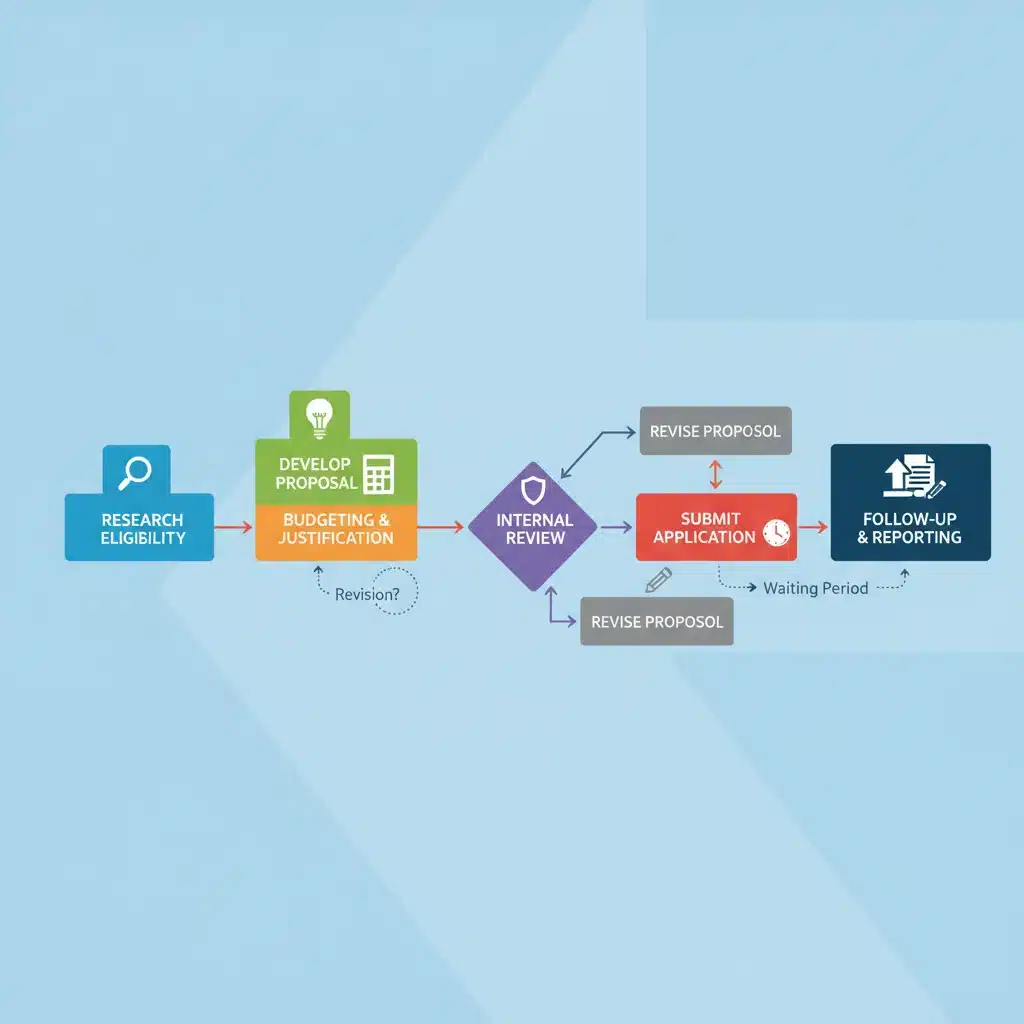
The period leading up to January 15th, 2026, is your prime time for preparation. A well-prepared application significantly increases your chances of success. Here’s a step-by-step guide to get ready:
1. Register and Obtain Necessary Identifiers
Many federal grant applications require specific registrations. Ensure your business is registered with the System for Award Management (SAM.gov) and has a valid Unique Entity Identifier (UEI). This process can take several weeks, so start immediately. Without these, you cannot apply for federal small business grants.
2. Identify the Right Grant Programs
As mentioned, use Grants.gov, the SBA website, and agency-specific sites (e.g., Department of Energy, USDA) to find programs relevant to your business and project. Filter by industry, project type, and eligibility. Read the NOFOs carefully to understand the program’s goals and requirements.
3. Develop a Strong Project Proposal
Your proposal is the heart of your application. It must clearly articulate your project’s goals, methodology, expected outcomes, and how it aligns with the grant’s objectives. Be specific, measurable, achievable, relevant, and time-bound (SMART). Highlight the innovative aspects of your project and its potential impact. For federal small business grants, a compelling narrative is key.
4. Craft a Detailed Budget
Every grant application requires a meticulous budget. Itemize all anticipated expenses, including personnel, equipment, travel, and indirect costs. Justify each line item and demonstrate how the requested funds will be used efficiently and effectively to achieve your project goals. Ensure your budget aligns with the grant’s allowable costs.

5. Gather Supporting Documentation
This may include your business plan, financial statements (profit and loss, balance sheet, cash flow projections), résumés of key personnel, letters of support, and any relevant permits or licenses. Organize these documents well in advance of January 15th, 2026. Incomplete applications are often immediately disqualified from federal small business grants.
6. Write a Compelling Executive Summary
This is often the first, and sometimes only, section a reviewer reads in detail. It must concisely summarize your entire proposal, highlighting your project’s significance, objectives, methodology, and expected impact. Make it engaging and persuasive.
7. Seek Feedback and Review
Before submitting, have others review your application. A fresh pair of eyes can catch errors, identify areas for improvement, and ensure clarity. Consider engaging a professional grant writer or consultant if you lack internal expertise, especially for competitive federal small business grants.
Maximizing Your Chances: Strategies for Success with Federal Grant Programs
Securing federal grant programs is a highly competitive endeavor. Beyond simply meeting the eligibility criteria and submitting a complete application, there are several strategies you can employ to significantly enhance your chances of success:
1. Start Early and Plan Ahead
This cannot be stressed enough. The January 15th, 2026, opening date is a starting gun, not a finish line. Begin your research, registrations, and document preparation months in advance. Rushing leads to errors and incomplete applications, which are almost always rejected. Proactive planning is the cornerstone of successful federal small business grants.
2. Understand the Grantor’s Mission
Each federal agency and specific grant program has a unique mission and set of priorities. Your application should clearly demonstrate how your project aligns with and contributes to these objectives. Frame your proposal in the language of the grantor, showing that you understand their goals and are a valuable partner in achieving them. This is crucial for all federal small business grants.
3. Highlight Innovation and Impact
Federal grants often seek to fund projects that are innovative, scalable, and have a significant positive impact. Clearly articulate what makes your project unique, how it addresses a specific need, and the broader benefits it will generate (e.g., job creation, environmental improvement, technological advancement). Quantify your expected impact whenever possible.
4. Demonstrate Capacity and Experience
Grantors want to be confident that you have the capability to successfully execute your proposed project. Highlight the experience and qualifications of your team, your business’s track record, and any relevant partnerships. Provide evidence of past successes, even if they are smaller-scale projects. Strong past performance is a key indicator for federal small business grants.
5. Network and Seek Guidance
Attend webinars, workshops, and informational sessions hosted by the granting agencies. These events often provide valuable insights, answer common questions, and sometimes offer direct contact with program officers. While program officers cannot write your grant, they can offer clarifications on guidelines and priorities. Connecting with others who have successfully obtained federal small business grants can also provide valuable lessons.
6. Be Meticulous with Details
Government applications are notorious for their strict adherence to instructions. Pay close attention to page limits, font sizes, formatting requirements, and specific attachment types. Even minor deviations can lead to disqualification. Treat every instruction as mandatory for federal small business grants.
7. Develop a Sustainability Plan
Grantors often want to see that your project has a life beyond the grant funding. Outline how your business plans to sustain the project’s activities or outcomes once the grant funds are exhausted. This demonstrates long-term vision and a commitment to long-term impact.
Common Pitfalls to Avoid When Applying for Federal Small Business Grants
Even the most promising projects can fail to secure funding due to common mistakes in the application process. Being aware of these pitfalls can help you navigate the competitive landscape of federal grant programs successfully:
1. Ignoring or Misinterpreting Guidelines
This is perhaps the most frequent reason for rejection. Each Notice of Funding Opportunity (NOFO) or Request for Proposals (RFP) is a legal document. Failing to follow instructions meticulously, missing deadlines, or misunderstanding key requirements will almost certainly lead to your application being discarded. Always read the guidelines multiple times and cross-reference your application against them.
2. Submitting an Incomplete Application
Missing a required document, an incomplete form, or an unsigned section is a guaranteed way to be disqualified. Federal agencies have strict protocols, and they will not chase down missing information. Double-check every component of your application before submission. This includes ensuring all necessary registrations (like SAM.gov and UEI) are active and correct.
3. Poorly Written or Unclear Proposal
Your proposal needs to be clear, concise, and compelling. Avoid jargon specific to your industry without explanation. Ensure your objectives are well-defined, your methodology is logical, and your expected outcomes are realistic and measurable. Reviewers often have many applications to read; a confusing or verbose proposal will quickly lose their attention.
4. Lack of Alignment with Grantor’s Mission
As discussed, federal grant programs exist to serve specific government objectives. If your project does not clearly demonstrate how it contributes to these objectives, it will likely be overlooked. Don’t try to force a square peg into a round hole. Only apply for grants that genuinely match your business’s activities and goals.
5. Unrealistic or Unjustified Budget
A budget that is too high or too low, or that includes unallowable costs, will raise red flags. Every line item should be justified and directly tied to your project’s activities. Demonstrate cost-effectiveness and responsible financial planning. Grantors are stewards of taxpayer money and expect a high degree of fiscal responsibility.
6. Waiting Until the Last Minute
Submitting an application just hours before the deadline is risky. Technical glitches, slow internet, or unexpected system maintenance can prevent your submission. Furthermore, rushed applications often contain errors and lack polish. Aim to submit several days before the official closing date, which gives you a buffer to address any unforeseen issues.
7. Failure to Proofread
Typos, grammatical errors, and inconsistencies undermine your professionalism and attention to detail. These mistakes can create a negative impression and suggest a lack of care. Always proofread your entire application thoroughly, and ideally, have multiple people review it. For federal small business grants, precision matters.
8. Not Addressing All Review Criteria
Many grant programs provide specific review criteria or a scoring rubric. Ensure your application directly addresses each point within these criteria. If a section is worth a certain percentage of the score, dedicate appropriate attention and detail to it in your proposal. Ignoring any part of the review criteria is a missed opportunity to score points.
9. Lack of a Sustainability Plan
While the grant provides initial funding, agencies often want to see how your project will continue to operate or how its benefits will endure after the grant period ends. Demonstrating a clear vision for post-grant sustainability shows foresight and a commitment to long-term impact.
Key Federal Agencies Offering Small Business Grants
While the specific programs opening on January 15th, 2026, will be detailed in their respective NOFOs, it’s beneficial to be familiar with the primary federal agencies that consistently offer federal small business grants. Understanding their general focus can help you narrow down your search:
- Small Business Administration (SBA): While primarily known for loans, the SBA also funnels grants through various programs, often supporting specific initiatives or target groups.
- Department of Commerce (DOC): Various bureaus within the DOC, such as the Economic Development Administration (EDA) or the National Institute of Standards and Technology (NIST), offer grants for economic development, innovation, and technology commercialization.
- National Institutes of Health (NIH): A major source of funding for small businesses engaged in health-related research and development through programs like Small Business Innovation Research (SBIR) and Small Business Technology Transfer (STTR).
- Department of Energy (DOE): Supports small businesses involved in energy research, development, and commercialization of new energy technologies.
- Department of Defense (DOD): Offers extensive SBIR/STTR grants for small businesses developing technologies relevant to national defense.
- National Science Foundation (NSF): Funds small businesses pursuing high-risk, high-reward research and development in science and engineering.
- Department of Agriculture (USDA): Provides grants for rural businesses, agricultural innovation, and food-related enterprises.
- Department of Education (ED): Offers grants for educational technology and services.
Each of these agencies will have specific criteria and focus areas for their federal small business grants. Regularly checking their respective websites, in addition to Grants.gov, will provide the most up-to-date information as January 15th, 2026, approaches.
After Submission: What to Expect and How to Follow Up
Once you’ve meticulously prepared and submitted your application for federal small business grants, the waiting game begins. This period can be long, often spanning several months. It’s important to understand what to expect and how to conduct appropriate follow-up.
Confirmation of Receipt
Most online portals, like Grants.gov, will provide an immediate confirmation of your submission. Save this confirmation and any associated tracking numbers. This is your proof that your application was received successfully. If you don’t receive confirmation, check the portal status or contact the help desk.
Review Process
Federal agencies employ a rigorous review process. Applications are typically evaluated by a panel of subject matter experts against the specific criteria outlined in the NOFO. This process ensures fairness and that funding is awarded to the most meritorious projects. The review can involve multiple stages, including initial screening for eligibility and completeness, followed by in-depth technical and financial evaluations.
Notification of Decision
You will eventually be notified of the decision, whether your application for federal small business grants was successful or not. This notification usually comes via email or through the application portal. The timeline for notification varies significantly by agency and program, so patience is key. Avoid repeatedly contacting the agency for updates, as this can be counterproductive.
If Awarded: Grant Management
Congratulations if you receive an award! This is just the beginning. Grant recipients are responsible for strict adherence to federal regulations regarding fund usage, reporting, and compliance. This includes submitting regular financial and progress reports, maintaining detailed records, and potentially undergoing audits. Familiarize yourself with the grant agreement and any terms and conditions to ensure proper management of your federal small business grants.
If Not Awarded: Don’t Despair, Learn and Reapply
Rejection is a common part of the grant application process. It does not mean your business or project is unworthy. Often, it’s due to the sheer competitiveness or minor alignment issues. Most agencies offer feedback on unsuccessful applications. Request and carefully review this feedback. It provides invaluable insights into areas where your application could be strengthened. Use this knowledge to refine your proposal and reapply for future federal small business grants or similar opportunities. Persistence is often a key factor in ultimate success.
Conclusion: Seize the Opportunity on January 15th, 2026
The upcoming opening of new federal grant programs on January 15th, 2026, presents a significant and time-sensitive opportunity for small businesses across the nation. These federal small business grants can provide the crucial capital needed for innovation, expansion, and sustained growth without the burdens of debt or equity dilution. However, securing these funds requires meticulous preparation, a deep understanding of eligibility criteria, and a strategically crafted application.
By starting your preparations now – registering with SAM.gov, thoroughly researching relevant programs, developing a compelling proposal, and assembling all necessary documentation – you will be well-positioned to submit a strong application as soon as the portals open. Remember to align your project closely with the grantor’s mission, highlight your business’s innovative potential, and meticulously adhere to all guidelines. Avoiding common pitfalls and demonstrating a clear plan for sustainability will further enhance your chances.
Don’t let this vital opportunity pass you by. The window to apply for these federal small business grants will be limited, and competition will be fierce. Proactive engagement and diligent preparation are your greatest assets. Begin your journey today to unlock the potential of federal funding and propel your small business toward unprecedented success in 2026 and beyond.