State Unemployment Benefits 2026: A National Comparison and 5% Difference Analysis
Understanding Unemployment Benefits 2026: A Comprehensive State-by-State Look
The economic landscape is in constant flux, and with it, the safety nets designed to support individuals during periods of joblessness. As we look ahead to 2026, understanding the nuances of Unemployment Benefits 2026 across different states becomes more crucial than ever. For many, unemployment insurance is a lifeline, providing essential financial support while they search for new employment. However, the system is not monolithic; it’s a complex tapestry woven with individual state regulations, economic conditions, and legislative priorities. This article aims to dissect the anticipated changes and current structures, offering a detailed comparison of state-specific unemployment benefits, with a particular focus on how a seemingly small 5% difference can significantly impact claimants.
Navigating unemployment can be a daunting experience, and the financial implications are often at the forefront of concerns. The amount of aid an individual receives can vary dramatically based on their state of residence, duration of employment, and previous earnings. These variations are not arbitrary; they are the result of diverse state policies, which reflect local economic realities and political philosophies. As we approach 2026, several factors are poised to influence these benefits, including ongoing economic recovery post-pandemic, inflation rates, labor market shifts, and potential legislative adjustments at both federal and state levels. Being informed about these changes is vital for anyone who might rely on these benefits, as well as for policymakers and employers.
The Foundation of Unemployment Benefits: A Federal-State Partnership
At its core, the unemployment insurance (UI) system in the United States is a joint federal-state program. While the federal government sets broad guidelines, each state is responsible for administering its own program, including determining eligibility requirements, benefit amounts, and the duration of benefits. This decentralized approach leads to the significant variations we observe nationwide when discussing Unemployment Benefits 2026.
Federal Role and Oversight
The federal government, primarily through the Department of Labor, provides oversight, establishes minimum standards, and offers administrative funding. Federal law mandates that states offer UI programs, but it leaves considerable discretion to individual states regarding the specifics. This framework ensures a baseline level of support while allowing states to tailor their programs to their unique economic environments and workforce needs. For instance, the Federal Unemployment Tax Act (FUTA) imposes a payroll tax on employers, which funds the federal share of unemployment benefits and administrative costs. States then collect their own unemployment taxes from employers to finance their portion of the benefits.
State Autonomy and Program Design
States have considerable autonomy in designing their unemployment insurance programs. This includes defining what constitutes an eligible separation from employment, calculating weekly benefit amounts, and setting the maximum duration for which benefits can be received. Some states might have more generous benefits or longer durations, while others might have stricter eligibility criteria or lower weekly maximums. These differences are often a reflection of a state’s economic health, its political leanings, and the prevailing philosophy on social welfare programs. For instance, states with strong union presence or those with historically higher unemployment rates might lean towards more robust benefit structures. Understanding these foundational differences is the first step in comprehending the diverse landscape of Unemployment Benefits 2026.
Key Factors Influencing Unemployment Benefits in 2026
Several critical factors will shape the landscape of Unemployment Benefits 2026. These influences are dynamic and can lead to significant changes in benefit structures, eligibility, and overall availability.
Economic Forecasts and Labor Market Trends
The overall health of the national and state economies plays a paramount role. If economic forecasts predict a slowdown or recession in 2026, states might consider extending benefit durations or increasing weekly amounts to support a larger number of unemployed individuals. Conversely, a robust economy with low unemployment rates might lead to discussions about tightening eligibility or reducing benefit levels. Labor market trends, such as the growth of the gig economy, automation, and shifts in industry demands, also influence how states adapt their UI programs to cover a changing workforce. The rising prevalence of independent contractors, for example, often falls outside traditional UI coverage, prompting ongoing debates about expanding eligibility.
Legislative Changes at State and Federal Levels
Legislation is a primary driver of change in unemployment benefits. State legislatures regularly review and amend their UI laws. These changes can be proactive, aimed at modernizing the system, or reactive, responding to economic crises or shifts in public sentiment. Federal legislation can also have a profound impact, as seen during the COVID-19 pandemic with the implementation of programs like Pandemic Unemployment Assistance (PUA) and Federal Pandemic Unemployment Compensation (FPUC), which significantly expanded eligibility and increased benefit amounts. While these specific programs have ended, their legacy might influence future federal interventions, especially during periods of high unemployment. For 2026, it’s crucial to monitor any proposed bills or reforms that could alter the existing UI framework.
Impact of Inflation and Cost of Living
Inflation directly erodes the purchasing power of unemployment benefits. If benefit amounts are not adjusted to keep pace with rising costs of living, claimants effectively receive less real financial support. States often grapple with how to balance fiscal responsibility with ensuring that benefits provide adequate relief. Some states may implement automatic adjustments tied to inflation, while others require legislative action to increase benefit levels. The inflation rates leading up to and during 2026 will undoubtedly be a significant consideration for state lawmakers when evaluating the adequacy of their unemployment insurance programs. This is especially pertinent when discussing the ‘5% difference’ – a 5% increase in benefits might not feel like much if inflation has risen by a similar or greater percentage.
Technological Advancements and Administrative Efficiencies
The administrative processes for applying for and receiving unemployment benefits have historically been complex and, at times, inefficient. States are increasingly investing in technological advancements to streamline these processes, improve user experience, and detect fraud more effectively. While not directly impacting benefit amounts, improved administrative efficiency can ensure that eligible individuals receive their benefits more quickly and reliably. This can make a significant difference in a claimant’s financial stability during unemployment, even if the benefit amount remains unchanged. A smoother application process could be a silent but powerful improvement to Unemployment Benefits 2026.
Comparing State-Specific Unemployment Benefits: The 5% Difference
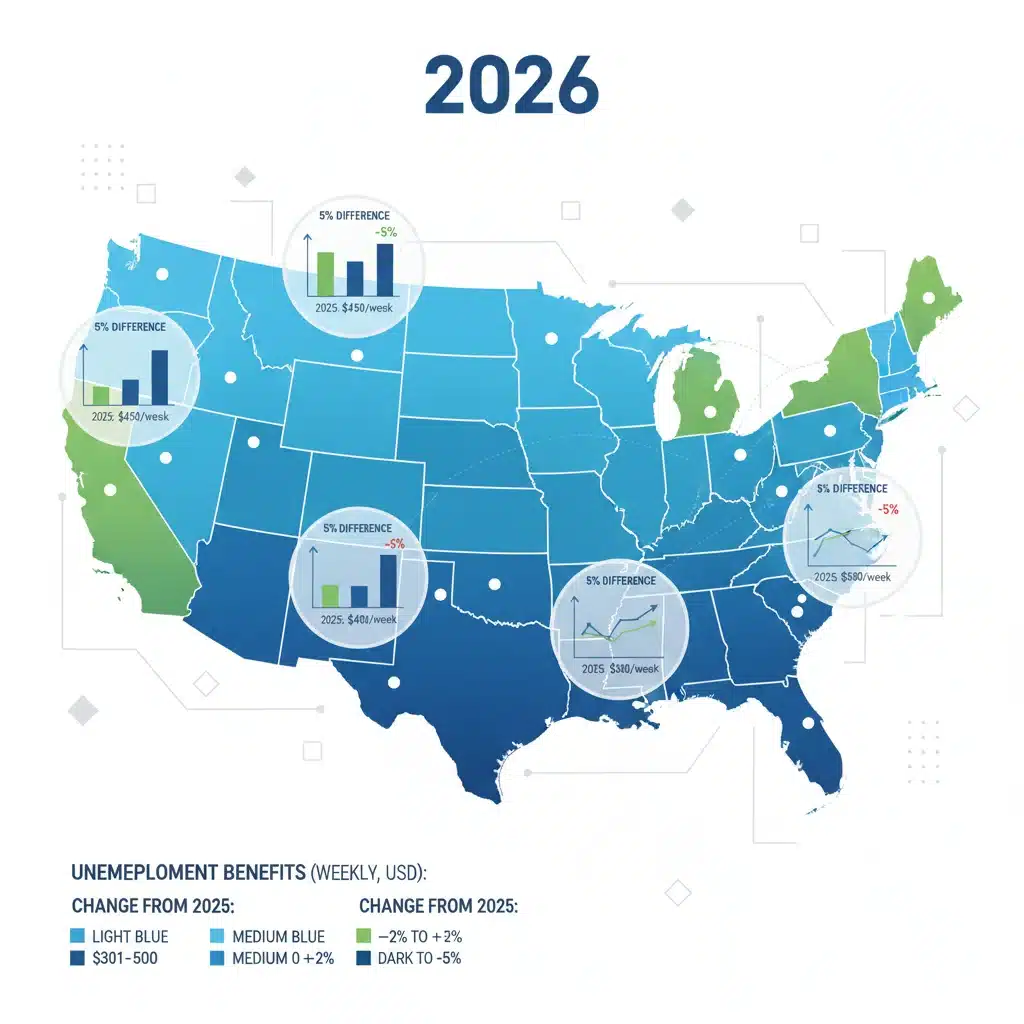
The variation in unemployment benefits from one state to another can be substantial, often leading to a ‘5% difference’ or even greater discrepancies in weekly payouts. These differences can have a profound impact on an individual’s ability to cover essential living expenses and maintain financial stability during unemployment.
Weekly Benefit Amounts (WBAs)
Each state calculates its Weekly Benefit Amount (WBA) based on a claimant’s past wages, typically earned during a ‘base period’ (e.g., the first four of the last five completed calendar quarters). However, the formulas and maximum weekly amounts vary significantly. For example, a state might offer a maximum WBA of $350, while a neighboring state, with a similar cost of living, might offer $450. This immediate difference of over 20% highlights the disparity. Even a 5% difference in WBA can translate to hundreds of dollars over the course of an unemployment claim, making a tangible impact on a household budget.
Consider two hypothetical states, State A and State B, where a claimant earned the same average weekly wage. State A might have a formula that yields a WBA of $400, while State B, due to a slightly different calculation or a higher maximum, might offer $420. This $20 weekly difference, which is precisely a 5% increase, adds up to $520 over 26 weeks – a significant sum for someone without income. These small percentage differences can dictate whether an individual can afford their rent, utilities, or even basic groceries.
Duration of Benefits
Beyond the weekly amount, the duration for which benefits are paid is another critical differentiator. Most states offer a standard maximum of 26 weeks of benefits, but some states offer fewer weeks (e.g., as low as 12-20 weeks in certain circumstances) and a few offer more. The number of weeks can also be tied to a state’s unemployment rate, with longer durations triggered during periods of high joblessness. A 5% difference in duration might mean an extra week or two of benefits, which can be invaluable for someone struggling to find a new job in a challenging market. For instance, if a state offers 20 weeks instead of 21 (a 5% difference), that one lost week of benefits could be a critical financial gap for a claimant.
Eligibility Criteria and Qualifying Wages
Eligibility requirements also vary, affecting who can even claim Unemployment Benefits 2026. States set different thresholds for ‘qualifying wages’ – the minimum amount an individual must have earned during their base period to be eligible. Some states require higher earnings or a longer period of employment than others. Factors such as the reason for separation from employment (e.g., voluntary quit vs. layoff) and availability for work also have different interpretations and implications across states. A slight difference in these criteria can mean the difference between receiving benefits and being denied, affecting a claimant’s entire financial outlook.
Additional State-Specific Programs and Waivers
Some states offer unique programs or waivers that can further impact the overall value of their unemployment benefits. This might include programs for retraining, job search assistance, or partial unemployment benefits for those working reduced hours. While not always directly reflected in the weekly benefit amount, these supplementary services can add significant value. For 2026, it’s important to research what additional support programs might be available in a given state, as these can indirectly contribute to or mitigate the impact of a 5% difference in direct benefit payments.
The Real-World Impact of a 5% Difference
While a 5% difference in Unemployment Benefits 2026 might seem statistically small, its real-world impact on individuals and local economies can be substantial. For someone already struggling with job loss, every dollar counts.
Individual Financial Stability
For an unemployed individual, a 5% reduction in weekly benefits could mean the inability to cover a specific bill, purchase necessary groceries, or afford transportation for job interviews. Conversely, a 5% increase could provide just enough breathing room to manage expenses without falling into debt. This marginal difference can be the tipping point between maintaining financial stability and experiencing significant hardship. It affects their ability to pay rent, keep utilities on, and afford healthcare, directly impacting their quality of life during a vulnerable period.
Local Economic Ripple Effects
Unemployment benefits are not just about individual support; they also serve as an economic stabilizer. When unemployed individuals receive benefits, they spend that money on goods and services, injecting capital back into local economies. A 5% difference in aggregated benefits across a state can translate into millions of dollars in consumer spending. If benefits are lower, this means less money circulating in local businesses, potentially exacerbating economic downturns. Conversely, more generous benefits can help sustain local economies during periods of high unemployment by maintaining consumer demand.
Job Search Behavior and Reemployment
The level of unemployment benefits can also subtly influence job search behavior. While the primary goal of UI is to provide temporary support, some research suggests that overly generous benefits might, in some cases, slightly extend the job search duration. However, inadequate benefits can force individuals to take the first available job, even if it’s a poor fit or significantly below their skill level, which can have long-term negative consequences for their career trajectory and overall economic productivity. A well-calibrated benefit system, where a 5% difference is thoughtfully considered, aims to provide sufficient support without disincentivizing reemployment.
Navigating the Unemployment Benefits Landscape in 2026
Given the complexities and variations in Unemployment Benefits 2026, it’s essential for individuals to be proactive and informed. Whether you anticipate needing to claim benefits or are simply interested in understanding the system, certain steps can help you navigate this landscape effectively.
Understanding Your State’s Specific Rules
The first and most crucial step is to thoroughly understand the unemployment insurance rules of your specific state. Each state’s Department of Labor or equivalent agency provides detailed information on eligibility, application processes, weekly benefit calculations, and duration. Do not rely on general information; always seek out state-specific guidelines. Pay close attention to qualifying wages, the base period, and any specific requirements for maintaining eligibility, such as actively searching for work.
Documentation and Record Keeping
Maintain meticulous records of your employment history, wages, and any communications with your employer regarding separation. This documentation will be invaluable if you need to apply for unemployment benefits. Keep copies of pay stubs, W-2 forms, and any employment contracts. If you are laid off, ensure you understand the official reason for your separation and obtain any relevant documentation from your employer. This preparation can significantly streamline the application process and help resolve any disputes that may arise.
Staying Informed About Legislative Changes
As 2026 approaches, keep an eye on local and federal news regarding potential legislative changes to unemployment benefits. State legislatures often introduce bills that can alter benefit amounts, eligibility, or duration. Subscribing to updates from your state’s Department of Labor or following reputable economic news sources can help you stay informed about any impending changes that might affect Unemployment Benefits 2026.
Seeking Professional Advice
If you find yourself in a complex situation or are unsure about your eligibility, consider seeking advice from legal aid services, workers’ rights organizations, or a qualified attorney specializing in employment law. These professionals can provide personalized guidance and help you navigate the intricacies of the unemployment system, especially if your claim is denied or contested. Their expertise can be invaluable in ensuring you receive the benefits you are entitled to.

Future Outlook: Trends and Predictions for 2026
Looking further into 2026, several overarching trends could shape the future of Unemployment Benefits 2026. These are not definitive predictions but rather informed observations based on current economic trajectories and policy discussions.
Modernization of UI Systems
Many states are undertaking efforts to modernize their aging unemployment insurance IT systems. The COVID-19 pandemic exposed significant vulnerabilities and inefficiencies in these systems, leading to delays and frustration for claimants. Expect continued investment in technology to improve the application process, enhance fraud detection, and provide more timely benefit payments. This modernization could lead to a more responsive and claimant-friendly system by 2026.
Focus on Reemployment Services
There’s a growing emphasis on connecting unemployment benefits with robust reemployment services. States are increasingly looking to integrate job training, career counseling, and job placement assistance directly into their UI programs. The goal is not just to provide financial aid but to help individuals transition back into the workforce as quickly and effectively as possible. This approach could see a shift towards more comprehensive support packages that go beyond just monetary benefits.
Debates on Gig Economy Workers and UI Coverage
The classification of gig economy workers (e.g., ride-share drivers, delivery workers, freelancers) remains a contentious issue. Traditionally, these workers are often classified as independent contractors and are therefore ineligible for standard unemployment benefits. However, discussions are ongoing at both federal and state levels about how to extend a social safety net to this growing segment of the workforce. By 2026, we might see some states implementing pilot programs or new legislation to provide some form of unemployment coverage for these workers, potentially adding another layer of complexity and variation to the system.
Potential for Federal Reforms
While states largely govern their UI programs, the federal government plays a critical role during national economic crises. There’s an ongoing debate about potential federal reforms to establish more consistent national standards for unemployment benefits, or to create a permanent federal backstop for extended benefits during severe recessions. While comprehensive federal reform is politically challenging, the discussions will likely continue into 2026, potentially influencing state-level decisions or laying the groundwork for future changes. These reforms could aim to reduce the significant state-by-state disparities, making the ‘5% difference’ less impactful in certain scenarios.
Conclusion: Preparing for Unemployment Benefits 2026
The landscape of Unemployment Benefits 2026 will undoubtedly be shaped by a confluence of economic, legislative, and technological factors. The decentralized nature of the U.S. unemployment insurance system means that state-specific variations will continue to be a defining characteristic, with differences in weekly benefit amounts, duration, and eligibility criteria significantly impacting claimants. A seemingly small 5% difference in benefits can have profound real-world consequences for individuals and the broader economy, underscoring the importance of understanding these nuances.
For workers, staying informed about your state’s specific rules, meticulously documenting employment history, and monitoring legislative developments are paramount. For policymakers, the challenge lies in balancing fiscal responsibility with the need to provide an adequate safety net that supports individuals during periods of joblessness and contributes to economic stability. As we move towards 2026, the ongoing discussions about modernization, reemployment services, coverage for gig workers, and potential federal reforms will continue to shape how the nation supports its workforce during economic transitions. Being prepared and knowledgeable is the best defense against the uncertainties that job loss can bring.