Maximize Your 2026 HSA Contributions: Unlock 15% Tax Savings

In the evolving landscape of personal finance and healthcare, the Health Savings Account (HSA) stands out as an exceptionally powerful tool for both managing medical expenses and building long-term wealth. As we look ahead to 2026, understanding how to maximize your HSA contributions 2026 is not just about saving for healthcare; it’s about unlocking significant tax advantages that can boost your overall financial health by as much as 15% or more. This comprehensive guide will delve deep into the nuances of HSAs, providing an insider’s perspective on how to leverage these accounts to their fullest potential in the coming year.
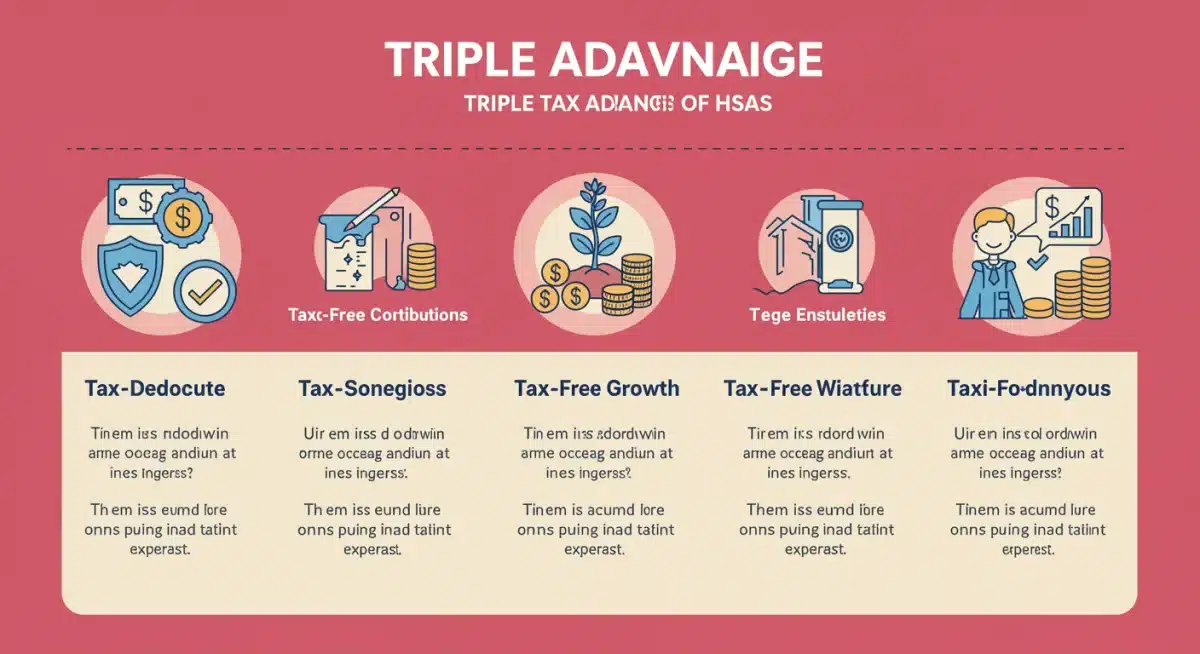
The allure of the HSA lies in its unique triple tax advantage: contributions are tax-deductible, earnings grow tax-free, and withdrawals for qualified medical expenses are also tax-free. No other investment vehicle offers such a robust combination of benefits. For many, the HSA can serve as a potent retirement savings vehicle, a flexible emergency fund for health-related costs, and a smart strategy for reducing your taxable income. However, to truly capitalize on these benefits, a clear understanding of eligibility requirements, contribution limits, investment strategies, and withdrawal rules is paramount.
This article aims to be your definitive resource for navigating the 2026 HSA landscape. We’ll cover everything from the foundational eligibility criteria to advanced strategies for investing your HSA funds. Whether you’re new to HSAs or a seasoned contributor looking to optimize your approach, this guide will equip you with the knowledge and actionable insights needed to make the most of your HSA contributions 2026.
Understanding the Basics: What is an HSA and Why Does it Matter for 2026?
A Health Savings Account (HSA) is a tax-advantaged savings account that can be used for qualified medical expenses. It’s available to individuals who are enrolled in a High-Deductible Health Plan (HDHP). Unlike a Flexible Spending Account (FSA), HSA funds roll over year after year and are portable, meaning they stay with you even if you change employers or health plans. This permanence is a key differentiator, making HSAs a powerful long-term savings tool.
The significance of HSAs extends beyond just healthcare savings. For many, it’s a stealth retirement account. Once you reach age 65, you can withdraw funds for any purpose without penalty, though withdrawals for non-medical expenses will be taxed as ordinary income. This flexibility, combined with the triple tax advantage, makes the HSA an indispensable component of a well-rounded financial plan.
Eligibility Requirements for HSA Contributions 2026
Before you can make HSA contributions 2026, you must meet specific eligibility criteria set by the IRS. The primary requirement is enrollment in a High-Deductible Health Plan (HDHP). For 2026, the IRS will release the official HDHP definitions, but based on historical adjustments, we can anticipate certain thresholds. Generally, an HDHP must have a minimum deductible and a maximum out-of-pocket limit. For instance, in recent years, the minimum deductible for self-only coverage has been around $1,600, and for family coverage, around $3,200. The maximum out-of-pocket limits have been around $8,000 for self-only and $16,000 for family coverage.
In addition to being covered by an HDHP, you cannot be enrolled in any other non-HDHP health coverage (with some exceptions like specific injury insurance, accident coverage, or dental/vision plans). You also cannot be enrolled in Medicare, nor can you be claimed as a dependent on someone else’s tax return. Meeting these criteria is the first step towards unlocking the benefits of an HSA.
The Triple Tax Advantage: A Closer Look
The triple tax advantage is what truly sets HSAs apart. Let’s break down each component:
- Tax-Deductible Contributions: When you contribute to an HSA, those contributions are 100% tax-deductible, reducing your taxable income in the year you make them. This is an ‘above-the-line’ deduction, meaning you don’t need to itemize to claim it.
- Tax-Free Growth: The funds in your HSA can be invested, and any interest, dividends, or capital gains earned on those investments grow tax-free. This allows your money to compound more rapidly over time, significantly boosting your long-term savings potential.
- Tax-Free Withdrawals: When you withdraw funds from your HSA to pay for qualified medical expenses, those withdrawals are completely tax-free. This includes a wide range of expenses, from doctor’s visits and prescriptions to dental care, vision care, and even many over-the-counter medications.
This powerful combination means that money goes into your HSA tax-free, grows tax-free, and comes out tax-free when used for qualified medical expenses. This makes it an incredibly efficient vehicle for both current healthcare costs and future medical needs, especially in retirement.
Anticipated HSA Contributions 2026 Limits and Catch-Up Contributions
Each year, the IRS adjusts the maximum contribution limits for HSAs to account for inflation. While the official 2026 limits won’t be announced until later in 2025, we can project them based on historical trends and current inflation rates. These limits are crucial for planning your HSA contributions 2026 strategy.
Projected Standard Contribution Limits for 2026
For 2025, the limits were $4,150 for self-only coverage and $8,300 for family coverage. Assuming a modest inflation adjustment, we can anticipate the 2026 limits to be slightly higher. For example:
- Self-Only Coverage: Potentially around $4,300 – $4,400
- Family Coverage: Potentially around $8,600 – $8,800
It’s important to keep an eye on official IRS announcements in late 2025 for the precise figures. Once these are released, you should adjust your contribution plan accordingly to ensure you’re maximizing your savings.
Catch-Up Contributions for Those 55 and Older
For individuals aged 55 and older, the IRS allows an additional ‘catch-up’ contribution. This is a significant benefit designed to help those nearing retirement boost their healthcare savings. The catch-up contribution amount typically remains constant for several years. For 2025, it was $1,000. It is highly probable that this will remain $1,000 for HSA contributions 2026.
This means if you are 55 or older, you can contribute an extra $1,000 on top of the standard limit. For a married couple where both spouses are 55 or older and both are covered under an HDHP, each spouse can contribute an additional $1,000, provided they each have their own HSA account. This effectively allows a couple to significantly increase their combined HSA savings.
Strategic Approaches to Maximize Your HSA Contributions 2026
Maximizing your HSA isn’t just about hitting the contribution limits; it’s about smart planning and strategic execution. Here are several approaches to consider for your HSA contributions 2026.
Front-Loading Your Contributions
If your financial situation allows, consider front-loading your HSA contributions at the beginning of the year. This strategy allows your funds more time to grow tax-free through investments, maximizing the power of compounding. The earlier your money is in the account, the longer it has to generate returns.
Employer Contributions and Matching
Many employers offer contributions to their employees’ HSAs, and some even provide matching contributions, similar to 401(k) plans. Always take full advantage of any employer contributions, as this is essentially free money that significantly boosts your HSA balance without impacting your personal cash flow. Check with your HR department about your company’s HSA contribution policy for 2026.
Paying Medical Expenses Out-of-Pocket
This is an advanced strategy for those who can afford it. Instead of using your HSA funds immediately for qualified medical expenses, pay for those expenses out-of-pocket and keep detailed records (receipts). This allows your HSA funds to continue growing tax-free. You can then reimburse yourself for these past expenses at any point in the future – even years or decades later – with tax-free withdrawals. This effectively turns your HSA into an even more powerful, long-term investment vehicle.
Spousal and Family Contributions
If you have family HDHP coverage, you can contribute up to the family limit. If both spouses are eligible for an HSA (i.e., both are covered by an HDHP and meet other criteria), they can each open their own HSA and contribute up to the family limit, dividing the contribution as they see fit, as long as the total combined contribution does not exceed the family limit. Remember the catch-up contribution applies individually to each spouse aged 55 or older.
Investing Your HSA Contributions 2026 for Long-Term Growth
One of the most underutilized aspects of HSAs is their investment potential. Many individuals treat their HSA solely as a spending account for current medical expenses, missing out on the significant tax-free growth opportunities. To truly maximize your HSA contributions 2026, you should consider investing the funds you don’t immediately need.
Choosing an HSA Provider with Investment Options
Not all HSA providers offer robust investment platforms. When selecting an HSA provider, look for one that:
- Offers a wide range of investment options (mutual funds, ETFs, individual stocks).
- Has low fees for investments and account maintenance.
- Provides easy-to-use online tools and resources.
- Has a low minimum threshold for investing your balance.
Some popular HSA providers known for their investment options include Fidelity, Lively, and HealthEquity. Researching and choosing the right provider is a critical step in turning your HSA into a powerful investment vehicle.
Investment Strategies for Your HSA
Your HSA investment strategy should align with your risk tolerance and time horizon. Since HSA funds can be used for future medical expenses, including those in retirement, a long-term investment approach is often appropriate. Consider:
- Diversification: Spread your investments across different asset classes (stocks, bonds, real estate, etc.) to mitigate risk.
- Growth-Oriented Funds: If you have a long time horizon, consider investing in equity-based mutual funds or ETFs that offer higher growth potential.
- Target-Date Funds: These funds automatically adjust their asset allocation as you approach a certain target date, offering a hands-off approach to investing.
- Index Funds/ETFs: Low-cost index funds or ETFs that track broad market indices (like the S&P 500) are excellent choices for long-term, passive growth.
Remember that past performance is not indicative of future results, and all investments carry some level of risk. If you’re unsure, consider consulting a financial advisor.
Qualified Medical Expenses: What Can You Pay For?
Understanding what constitutes a qualified medical expense is crucial for ensuring your HSA withdrawals remain tax-free. The IRS defines qualified medical expenses as those paid for the diagnosis, cure, mitigation, treatment, or prevention of disease, and for treatments affecting any structure or function of the body. This is a broad definition, covering a wide array of services and products.
Common Qualified Medical Expenses
Here’s a non-exhaustive list of common qualified medical expenses:
- Doctor’s office visits, specialist visits, and hospital stays
- Prescription medications and insulin
- Dental care (cleanings, fillings, braces, dentures)
- Vision care (eye exams, glasses, contact lenses, corrective surgery)
- Chiropractic care
- Acupuncture
- Mental health services (therapy, counseling)
- Over-the-counter medications with a doctor’s prescription (prior to the CARES Act, now many are eligible without a prescription)
- Feminine hygiene products
- First aid supplies
- Medical equipment (wheelchairs, crutches)
- Hearing aids
- Certain long-term care services and insurance premiums
It’s always a good idea to consult IRS Publication 502, ‘Medical and Dental Expenses,’ for the most up-to-date and comprehensive list of qualified expenses. Keep all receipts and documentation for any expenses you pay with your HSA, or for expenses you pay out-of-pocket with the intention of future reimbursement.
Non-Qualified Withdrawals and Penalties
If you withdraw funds from your HSA for non-qualified medical expenses before age 65, the amount withdrawn will be subject to ordinary income tax and an additional 20% penalty. This penalty is designed to deter individuals from using their HSA as a regular checking account. After age 65, non-qualified withdrawals are only subject to ordinary income tax, similar to a traditional IRA or 401(k) distribution.
HSA vs. Other Savings Vehicles: Why HSA Wins for Healthcare
While 401(k)s and IRAs are excellent for general retirement savings, the HSA holds a unique position, especially when it comes to healthcare costs. Comparing it to other options highlights its distinct advantages.
HSA vs. 401(k)/IRA
Both 401(k)s/IRAs and HSAs offer tax advantages, but the HSA’s triple tax benefit for qualified medical expenses is unparalleled. While 401(k)s and traditional IRAs offer tax-deductible contributions and tax-deferred growth, withdrawals in retirement are typically taxed as ordinary income. Roth 401(k)s and Roth IRAs offer tax-free withdrawals in retirement, but contributions are made with after-tax dollars.
The HSA combines the best of both worlds: tax-deductible contributions (like a traditional IRA/401k) and tax-free withdrawals for medical expenses (even better than a Roth, as contributions are pre-tax). This makes it an ideal vehicle for future healthcare costs, which are a significant concern for retirees.
HSA vs. FSA
Flexible Spending Accounts (FSAs) also allow you to save money for medical expenses on a pre-tax basis. However, FSAs have a ‘use-it-or-lose-it’ rule, meaning most of the funds not used by the end of the plan year are forfeited (though some plans offer a grace period or a small carryover amount). HSAs, on the other hand, allow funds to roll over indefinitely, accumulate, and even be invested. This makes HSAs far superior for long-term healthcare savings and investment.
Integrating Your HSA into Your Overall Financial Plan for 2026
To truly maximize your HSA contributions 2026, it’s essential to view it as an integral part of your broader financial strategy. It shouldn’t operate in a silo but rather complement your other savings and investment accounts.
Prioritizing Contributions
For many, the recommended order of savings priority is:
- 401(k) up to employer match: Don’t leave free money on the table.
- HSA up to the annual limit: Capitalize on the triple tax advantage.
- Roth IRA/401(k) or traditional IRA: Depending on your income and tax situation.
- Max out 401(k): If you still have capacity.
- Taxable brokerage accounts: For additional investment beyond retirement vehicles.
This order prioritizes accounts that offer the most significant immediate and long-term tax benefits, with the HSA often ranking very high due to its unique advantages.
Healthcare Costs in Retirement
Healthcare costs are one of the most significant expenses for retirees. By consistently maximizing your HSA contributions 2026 and investing the funds, you can build a substantial tax-free reserve specifically for these costs. This can alleviate financial stress in retirement and allow your other retirement accounts (401k, IRA) to be used for discretionary spending.

Common Misconceptions About HSAs
Despite their benefits, several misconceptions about HSAs prevent people from fully utilizing them.
Myth 1: HSAs are only for current medical expenses.
Reality: As discussed, HSAs are powerful investment vehicles that can be used for future, even retirement, medical expenses. By treating it as an investment, you allow the funds to grow significantly over decades.
Myth 2: You lose the money if you don’t use it.
Reality: This is true for FSAs but not for HSAs. HSA funds roll over year after year, indefinitely.
Myth 3: HDHPs are always worse than traditional plans.
Reality: While HDHPs have higher deductibles, they often come with lower monthly premiums. For healthy individuals or those who strategically save in an HSA, an HDHP can be more cost-effective overall, especially when factoring in the tax benefits of the HSA.
Myth 4: HSAs are complicated to manage.
Reality: While there are rules, many HSA providers offer user-friendly platforms and resources. Once set up, contributing and investing can be automated, making management relatively straightforward.
The Future of HSAs and HSA Contributions 2026
The landscape of healthcare and taxation is always subject to change, but the core benefits of HSAs have remained remarkably consistent since their inception. There is strong bipartisan support for HSAs, indicating their continued relevance and stability as a financial tool.
As we approach 2026, staying informed about any potential legislative changes or updates to IRS guidelines will be important. However, the fundamental strategy of maximizing your HSA contributions 2026 and investing those funds for long-term growth is likely to remain one of the smartest financial moves you can make.
The potential for 15% or more in tax savings is not an exaggeration. Consider a scenario where you contribute the maximum family amount (e.g., $8,800 projected for 2026) and are in a combined federal and state income tax bracket of 25%. Your tax deduction alone could save you $2,200 annually. Add to that the tax-free growth and tax-free withdrawals for medical expenses, and the compounded savings over decades can be truly staggering, easily surpassing the 15% benchmark.
Conclusion: Make Your HSA Contributions 2026 a Priority
The Health Savings Account is a powerful, multifaceted financial tool that offers unparalleled tax advantages for healthcare expenses and long-term savings. By understanding the eligibility requirements, projected contribution limits, and strategic investment opportunities for your HSA contributions 2026, you can significantly enhance your financial well-being.
Don’t view your HSA merely as another savings account; see it as a strategic asset that can help you manage rising healthcare costs, reduce your tax burden, and build a substantial nest egg for retirement. Start planning now to ensure you are positioned to maximize your HSA contributions 2026 and secure your financial future.
Remember to consult official IRS publications and, if necessary, a qualified financial advisor for personalized guidance, especially as the official 2026 figures are released. Proactive planning today will pave the way for a healthier and wealthier tomorrow.