College Readiness 2026: Curriculum Planning Guide for High Schoolers
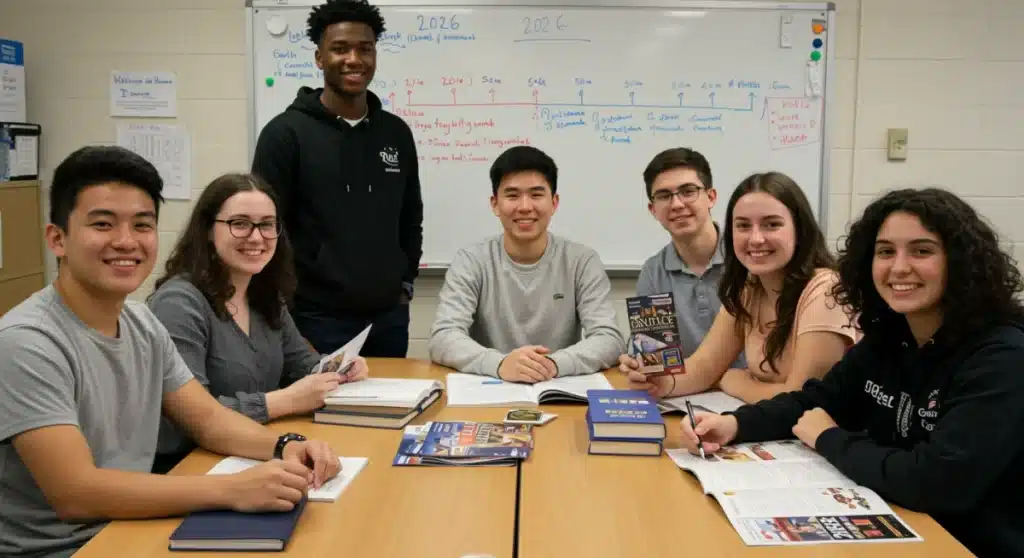
To achieve college readiness by 2026, high schoolers must strategically plan their curriculum by focusing on core academic subjects, engaging in meaningful extracurricular activities, and preparing for standardized tests.
Are you a high schooler setting your sights on college by 2026? Achieving college readiness curriculum requires more than just good grades; it demands a thoughtful, strategic approach to your academic and extracurricular journey. This guide will walk you through essential steps to build a robust high school curriculum that stands out.
Understanding College Expectations by 2026
The landscape of college admissions is constantly evolving, and by 2026, expectations will continue to emphasize a holistic review of applicants. Colleges seek students who are not only academically capable but also well-rounded, curious, and engaged citizens. This means your high school curriculum needs to demonstrate both intellectual rigor and personal growth, preparing you for the challenges of higher education.
Admissions committees look for a strong foundational understanding across various subjects, along with a demonstrated ability to pursue advanced coursework. They also value students who have explored their interests beyond the classroom, showing initiative and commitment. Understanding these expectations early on is crucial for effective planning.
Academic Rigor and Course Selection
Colleges want to see that you have challenged yourself academically. This often translates to taking advanced courses, such as Advanced Placement (AP), International Baccalaureate (IB), or dual enrollment classes, when available and appropriate for your academic strengths. These courses not only provide a deeper dive into subjects but also signal to admissions committees that you are prepared for college-level work.
- AP Courses: Offers college-level curriculum and exams in various subjects, potentially earning college credit.
- IB Program: A comprehensive, internationally recognized curriculum focusing on critical thinking and global perspectives.
- Dual Enrollment: Allows high school students to take college courses, earning both high school and college credit.
- Honors Classes: Provides a more challenging curriculum within standard subjects.
Selecting courses that align with your potential major or career interests can also be highly beneficial. For example, aspiring engineers should focus on advanced math and science, while humanities majors might prioritize literature, history, and foreign languages. Demonstrating a clear academic path through your course choices can strengthen your application significantly. Always consult with your school counselor to ensure your selections meet graduation requirements and college entrance recommendations.
In conclusion, knowing what colleges expect in terms of academic rigor and personal development is the first step in crafting a successful high school curriculum. Challenging yourself with advanced courses and aligning your studies with your aspirations will set a strong foundation for your college applications.
Mapping Your Academic Journey: Grades 9-12
Creating a four-year academic plan is fundamental to achieving college readiness by 2026. This isn’t just about scheduling classes; it’s about strategically building a transcript that showcases your strengths, interests, and commitment to learning. Each year presents unique opportunities to strengthen your academic profile and explore potential career paths.
Starting early allows for flexibility and adjustments as your interests evolve. Work closely with your school counselor to ensure your plan meets both high school graduation requirements and the specific prerequisites of your target colleges. This proactive approach minimizes last-minute stress and ensures you’re on track.
Ninth Grade: Foundations and Exploration
Ninth grade is about building a strong academic base and exploring new subjects. Focus on solidifying your skills in core areas like English, Math, Science, and Social Studies. This is also an excellent time to try out different electives to discover new passions or potential areas of study for college.
- Core Subjects: Ensure a strong foundation in Algebra I, Biology, World History, and English I.
- Electives: Experiment with foreign languages, arts, or introductory computer science courses.
- Study Habits: Develop effective study routines and organizational skills early on.
Beyond academics, consider joining a club or two to start building your extracurricular profile. These early experiences can help you identify long-term interests and develop leadership skills. Remember, steady performance from the beginning sets a positive trend for your entire high school career.
Tenth Grade: Deeper Dives and Continued Growth
As you enter tenth grade, it’s time to delve deeper into subjects and consider more challenging coursework. Continue to build upon your core subjects, perhaps moving into Geometry, Chemistry, and English II. This is also a good time to revisit your elective choices and narrow down areas of interest.
Many students begin to consider their PSAT scores in tenth grade, which can provide valuable insights into areas needing improvement for future standardized tests. Engage in more significant extracurricular activities, perhaps taking on minor leadership roles or committing to a longer-term project. This year is about reinforcing your academic strength and beginning to define your unique profile.
Strategic Course Selection for Competitive Admissions
When it comes to college admissions, the courses you choose can be just as important as the grades you earn in them. Strategic course selection means understanding which subjects are highly valued by colleges and how to balance challenging coursework with your academic capabilities. It’s about demonstrating intellectual curiosity and a commitment to rigorous learning.
Most competitive colleges prefer applicants who have taken a full schedule of academic courses, including four years of English, three to four years of math (up to pre-calculus or calculus), three to four years of science (including biology, chemistry, and physics), three to four years of social studies, and at least two to three years of a foreign language. Deviating from these recommendations without a compelling reason can weaken your application.
Balancing AP/IB/Dual Enrollment with Overall GPA
While taking advanced courses like AP, IB, or dual enrollment can significantly boost your application, it’s crucial to strike a balance. Overloading yourself with too many challenging courses can negatively impact your GPA if you struggle to maintain high grades. Colleges prefer to see strong grades in challenging courses rather than mediocre grades in an excessive number of advanced classes.
- Assess Your Strengths: Choose advanced courses in subjects you genuinely enjoy and excel in.
- Manage Your Workload: Be realistic about the time commitment required for each advanced course.
- Prioritize Quality over Quantity: A few A’s in AP classes are often better than many B’s.
Consider your overall academic performance. A consistent upward trend in grades, especially in challenging subjects, is often viewed favorably. Don’t shy away from advanced courses, but make informed decisions based on your capacity and interests.
Furthermore, explore electives that complement your academic goals or showcase an unusual talent. For instance, if you’re interested in journalism, a strong elective in creative writing or media studies can add depth to your profile. These choices demonstrate initiative and a well-rounded intellectual curiosity, which are highly attractive to admissions committees.
Extracurricular Engagement and Leadership Development
While academic performance forms the bedrock of your college application, extracurricular activities provide the crucial context that brings your profile to life. Colleges aren’t just looking for good students; they’re looking for engaged individuals who will contribute positively to their campus community. By 2026, this emphasis on holistic review will remain paramount.
Your involvement outside the classroom demonstrates your passions, commitment, leadership potential, and ability to collaborate with others. It shows that you can manage your time effectively and are willing to pursue interests beyond required coursework. The key is to engage in activities that genuinely interest you and allow you to develop meaningful skills.
Quality Over Quantity: Making an Impact
It’s a common misconception that having a long list of extracurriculars is better than focusing on a few. Colleges prioritize depth of involvement and the impact you’ve made over a superficial breadth of activities. Choose activities you are passionate about and dedicate consistent effort to them over time.

- Sustained Involvement: Participate in activities for multiple years, showing long-term commitment.
- Demonstrate Leadership: Seek opportunities to take on leadership roles, even small ones, to show initiative.
- Show Impact: How did your involvement contribute to the club, school, or community? Quantify achievements where possible.
- Authenticity: Choose activities that genuinely reflect your personality and interests, not just what you think colleges want to see.
Leadership doesn’t always mean being the president of a club. It can also involve mentoring younger students, organizing events, or taking initiative on a project. Colleges want to see that you can take responsibility and influence others positively. Reflect on how your activities have helped you grow and what you’ve learned from them.
Ultimately, your extracurricular profile should tell a story about who you are beyond your grades. It should highlight your unique talents, your dedication, and your potential to contribute to a college campus. Start early, explore your interests, and commit deeply to those that resonate with you.
Standardized Testing: ACT/SAT Preparation by 2026
Standardized tests like the ACT and SAT continue to be a significant component of college admissions for many institutions, even with the rise of test-optional policies. For high schoolers aiming for college readiness by 2026, a strategic approach to standardized test preparation is essential. These tests are designed to assess college readiness and predict academic success in higher education.
While some colleges have adopted test-optional policies, submitting strong test scores can still significantly enhance your application, especially for competitive programs or scholarship opportunities. Therefore, dedicating time and effort to prepare for these exams is a smart investment in your future.
Developing a Personalized Test Prep Plan
Effective test preparation is not a one-size-fits-all endeavor. It requires a personalized plan that takes into account your current academic standing, learning style, and target scores. Starting early, ideally in your sophomore or junior year, allows ample time for preparation, practice, and re-testing if necessary.
- Diagnostic Tests: Begin with a full-length diagnostic test for both the ACT and SAT to determine your baseline scores and identify areas for improvement.
- Targeted Study: Focus your study efforts on the specific sections and question types where you need the most improvement.
- Consistent Practice: Regular practice with official materials (e.g., College Board for SAT, ACT for ACT) helps familiarize you with the test format and timing.
- Consider Prep Courses/Tutors: If self-study isn’t sufficient, consider enrolling in a test prep course or working with a private tutor for personalized guidance.
Many students find it beneficial to take the tests multiple times. Most colleges will consider your highest scores or will “superscore,” taking the best section scores from different attempts. However, avoid taking the test too many times, as it can indicate a lack of preparation or strategic planning. Aim for two to three attempts after thorough preparation.
Ultimately, a well-executed test preparation plan can significantly boost your chances of admission and open doors to more opportunities. Research the testing policies of your desired colleges and tailor your preparation accordingly to meet their specific requirements.
Building a Strong College Application Portfolio
Beyond your grades and test scores, your college application is a comprehensive portfolio that tells your unique story. For high schoolers targeting college by 2026, building a strong application means meticulously crafting each component to showcase your personality, achievements, and potential. It’s about presenting yourself as a valuable addition to a college community.
This portfolio includes not only your academic transcript and test scores but also compelling essays, thoughtful letters of recommendation, and a well-organized list of extracurricular activities. Each piece plays a vital role in painting a complete picture of who you are and what you can bring to a university.
Crafting Compelling Essays and Personal Statements
The college essay is your opportunity to speak directly to the admissions committee, sharing aspects of your personality, experiences, and aspirations that aren’t evident elsewhere in your application. It’s a chance to demonstrate your writing skills, critical thinking, and self-awareness.
- Start Early: Give yourself plenty of time to brainstorm topics, draft, revise, and get feedback.
- Be Authentic: Share a personal story or reflection that reveals something unique about you.
- Show, Don’t Tell: Use vivid details and anecdotes to illustrate your points rather than simply stating them.
- Proofread Meticulously: Errors in grammar or spelling can detract from even the most brilliant ideas.
Your personal statement should reflect your voice and perspective. Avoid clichés and generic statements. Instead, focus on a specific experience or idea that has shaped you. Similarly, letters of recommendation should come from teachers and counselors who know you well and can speak to your academic abilities, character, and contributions to the school community. Ask for these letters well in advance, providing recommenders with information about your goals and achievements.
In sum, a strong college application portfolio is a cohesive narrative that highlights your best qualities. By carefully preparing each element, you can present a compelling case for why you belong at your dream institution.
The Importance of Early Planning and Adaptability
Achieving college readiness by 2026 is a marathon, not a sprint, and early planning is your most powerful tool. Starting to think about your academic and extracurricular path in ninth grade provides a significant advantage, allowing you to make intentional choices that build a strong foundation for your college applications. This proactive approach helps alleviate stress and ensures you are on the right trajectory.
Early planning also affords you the luxury of adaptability. High school is a time of immense personal growth and discovery. Your interests may shift, new academic opportunities may arise, or you might discover a passion you never knew you had. A flexible plan allows you to pivot and adjust without derailing your ultimate goal of college admission.
Regular Check-ins and Re-evaluation
Your four-year plan shouldn’t be set in stone. Regular check-ins with your school counselor, teachers, and parents are crucial to ensure you remain on track and to make necessary adjustments. These conversations can help you assess your progress, explore new options, and address any challenges that may arise.
- Annual Review: At the end of each school year, review your academic performance, extracurricular involvement, and college goals.
- Counselor Meetings: Schedule regular meetings with your school counselor to discuss course selections, college lists, and application strategies.
- Self-Reflection: Periodically reflect on your interests, strengths, and weaknesses to ensure your path aligns with your evolving aspirations.
The college admissions process can be unpredictable, with policies and requirements sometimes changing. Staying informed and being willing to adapt your strategy is vital. For example, if a target college announces a new test-optional policy, you might re-evaluate your test preparation strategy.
By combining diligent early planning with a willingness to adapt, high schoolers can confidently navigate their journey toward college readiness by 2026. This balanced approach ensures that you are well-prepared for both the application process and the academic rigor of higher education.
| Key Aspect | Brief Description |
|---|---|
| Academic Rigor | Challenge yourself with AP, IB, or dual enrollment courses to demonstrate college-level capability. |
| Extracurriculars | Engage deeply in activities, seeking leadership roles and showing sustained commitment over time. |
| Standardized Tests | Develop a personalized ACT/SAT prep plan, taking diagnostic tests and practicing consistently. |
| Application Portfolio | Craft compelling essays and secure strong recommendations to tell your unique story to admissions. |
Frequently Asked Questions About College Readiness
▼
For college readiness, it’s crucial to focus on core subjects: four years of English, three to four years of math (up to calculus), three to four years of science (biology, chemistry, physics), and three to four years of social studies. Additionally, two to three years of a foreign language are highly recommended by most competitive institutions.
▼
Extracurriculars showcase your passions, commitment, and potential contributions to a college community. Colleges value deep involvement and leadership in a few activities over superficial participation in many. They demonstrate time management, teamwork, and initiative, providing a holistic view of your character beyond academics.
▼
Ideally, students should begin preparing for the ACT or SAT during their sophomore or early junior year. This allows ample time for diagnostic tests, targeted study, consistent practice, and potential re-testing to achieve desired scores. Early preparation reduces stress and provides flexibility in your testing schedule.
▼
While not strictly necessary for all colleges, AP or IB courses significantly strengthen your application for competitive institutions. They demonstrate academic rigor and readiness for college-level work. However, balance is key; strong grades in challenging courses are preferred over struggling in an excessive number of advanced classes.
▼
College essays are extremely important as they allow you to convey your personality, experiences, and aspirations directly to the admissions committee. They provide a unique opportunity to differentiate yourself from other applicants and demonstrate critical thinking, self-awareness, and strong writing skills that are not always evident from grades or test scores.
Conclusion
Achieving college readiness by 2026 is a multifaceted journey that requires careful planning, dedication, and adaptability throughout your high school years. By strategically selecting rigorous courses, engaging deeply in meaningful extracurricular activities, diligently preparing for standardized tests, and crafting a compelling application portfolio, high schoolers can significantly enhance their chances of admission to their desired institutions. Remember, the process is about more than just checking boxes; it’s about personal growth, discovering your passions, and preparing yourself for the intellectual challenges and opportunities that higher education offers. Embrace each step with enthusiasm and stay committed to your goals.