The Latest in K-12 Curriculum: 5 Innovative Approaches for 2025
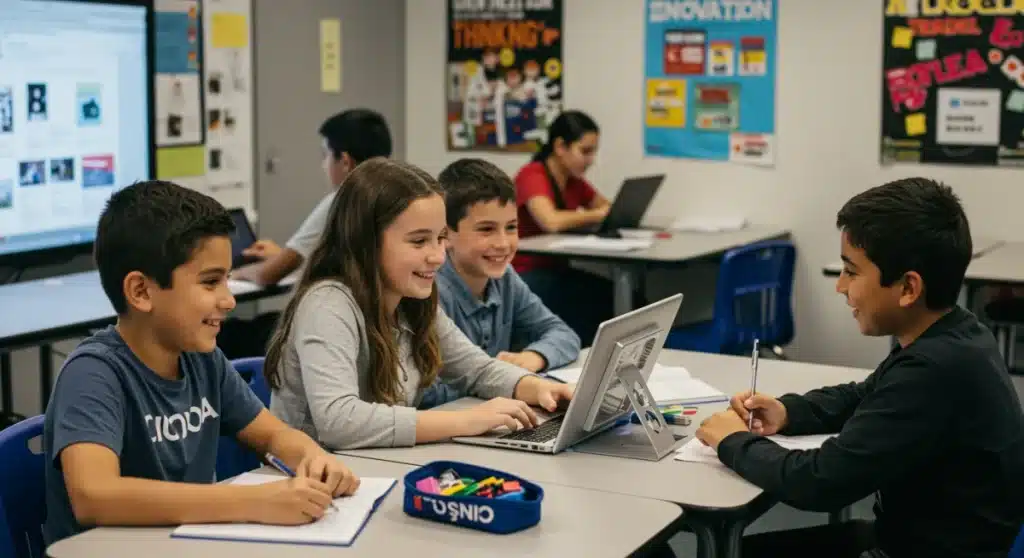
The latest in K-12 curriculum innovation for 2025 focuses on learner-centered approaches, integrating technology, fostering social-emotional skills, and promoting real-world problem-solving to prepare students for future challenges.
As we approach 2025, the landscape of education continues to transform, driven by the need to equip students with skills relevant for an ever-changing world. This article delves into The Latest in K-12 Curriculum: 5 Innovative Approaches for 2025, exploring how educators are reimagining learning to foster critical thinking, creativity, and adaptability in the next generation. These forward-thinking strategies promise to redefine the educational experience, making it more engaging, equitable, and effective for every student.
Personalized Learning Pathways and Adaptive Technologies
Personalized learning is no longer a buzzword but a cornerstone of modern education, tailoring educational experiences to meet the unique needs and interests of each student. In 2025, this approach is set to become even more sophisticated, leveraging advanced adaptive technologies to create truly individualized learning journeys.
This innovation moves beyond one-size-fits-all instruction, recognizing that students learn at different paces and through various modalities. By understanding individual strengths and areas for growth, educators can design curricula that resonate deeply with learners, fostering greater engagement and academic success.
The Role of AI in Customizing Education
Artificial intelligence (AI) plays a pivotal role in the evolution of personalized learning. AI-powered platforms can analyze student performance data, identify learning patterns, and recommend targeted resources or interventions. This allows teachers to focus more on mentorship and less on administrative tasks, creating a more dynamic classroom environment.
- AI algorithms adapt content difficulty in real-time.
- Personalized feedback mechanisms guide student progress.
- Automated assessment tools free up teacher time for instruction.
- Curriculum pathways are dynamically adjusted based on student mastery.
Adaptive Learning Platforms
Adaptive learning platforms are at the forefront of this shift, providing students with content that adjusts to their proficiency level and learning style. These platforms often incorporate gamification elements, making learning more interactive and enjoyable. They also offer teachers valuable insights into student performance, enabling data-driven instructional decisions.
The integration of these technologies ensures that every student, regardless of their background or learning challenges, receives the support they need to thrive. This focus on individual growth is critical for preparing students for diverse future roles and responsibilities.
Ultimately, personalized learning pathways, supported by adaptive technologies, empower students to take ownership of their education, developing self-directed learning skills essential for lifelong success. This foundational shift is transforming how we conceive and deliver K-12 education.
Integrating STEM and STEAM Across All Subjects
The integration of Science, Technology, Engineering, and Mathematics (STEM), and increasingly, Arts (STEAM), is no longer confined to specialized courses. In 2025, this interdisciplinary approach is woven into the fabric of the entire K-12 curriculum, ensuring that students develop critical problem-solving skills and innovative thinking from an early age.
This holistic integration recognizes that real-world challenges rarely fit neatly into single academic disciplines. By breaking down traditional subject silos, students can see the interconnectedness of knowledge and apply diverse skills to complex issues.
Project-Based Learning in STEM/STEAM
Project-based learning (PBL) is a key methodology for integrating STEM and STEAM. Students engage in extended, in-depth projects that require them to research, design, and create solutions to authentic problems. This hands-on approach fosters creativity, collaboration, and critical thinking.
- Students design and build prototypes for sustainable energy.
- They use coding to create interactive art installations.
- Engineering principles are applied to solve community challenges.
- Data analysis is integrated into social studies projects.
Developing 21st-Century Skills
Beyond specific content knowledge, STEM and STEAM integration cultivates essential 21st-century skills. Students learn to think critically, communicate effectively, collaborate with peers, and approach problems with an innovative mindset. These are the skills employers consistently seek in the modern workforce.
By making STEM and STEAM an integral part of every subject, schools are preparing students not just for careers in science and technology, but for any field that demands adaptability, creativity, and complex problem-solving. This broad application ensures that all students benefit from these vital educational components.
The widespread adoption of STEM and STEAM integration across the K-12 curriculum reflects a forward-thinking vision for education, one that prioritizes practical application and interdisciplinary understanding, setting students up for success in a rapidly evolving world.
Emphasis on Social-Emotional Learning (SEL) and Well-being
Recognizing that academic success is deeply intertwined with emotional health, the K-12 curriculum in 2025 places a significant emphasis on Social-Emotional Learning (SEL) and student well-being. This approach aims to equip students with the skills to understand and manage emotions, set and achieve positive goals, feel and show empathy for others, establish and maintain positive relationships, and make responsible decisions.
SEL is not an add-on but an integral part of the learning environment, influencing classroom culture, teaching methodologies, and student interactions. It acknowledges that a supportive and emotionally intelligent environment is crucial for optimal learning and development.
Core Competencies of SEL
The Collaborative for Academic, Social, and Emotional Learning (CASEL) identifies five core competencies of SEL, which are increasingly embedded in curricula:
- Self-awareness: Recognizing one’s own emotions, strengths, and values.
- Self-management: Regulating emotions and behaviors, setting goals, and demonstrating self-discipline.
- Social awareness: Understanding and empathizing with others, recognizing social cues.
- Relationship skills: Building and maintaining healthy relationships, effective communication.
- Responsible decision-making: Making constructive choices about personal and social behavior.
Creating Supportive School Environments
Schools are actively working to create environments that foster SEL. This includes teacher training in SEL strategies, implementing restorative justice practices, and integrating mindfulness and stress-reduction techniques into daily routines. The goal is to build a school culture where every student feels safe, valued, and connected.
By prioritizing SEL, educators are addressing the whole child, recognizing that emotional intelligence and resilience are just as important as academic knowledge. This holistic approach prepares students not only for academic achievements but also for navigating the complexities of life with confidence and empathy.
The focus on social-emotional learning and well-being in the K-12 curriculum for 2025 signifies a profound understanding of what it means to educate a child fully, ensuring they grow into well-rounded, compassionate, and resilient individuals.
Globally Competent Citizens and Intercultural Understanding
In an increasingly interconnected world, developing globally competent citizens is a paramount goal for K-12 education in 2025. This innovative approach moves beyond traditional geography lessons, aiming to cultivate students’ understanding of diverse cultures, global issues, and their role as active participants in the global community.
Global competence encompasses not just knowledge, but also attitudes and skills that enable individuals to examine local, global, and intercultural issues, understand and appreciate different perspectives and worldviews, interact successfully and respectfully with others, and take responsible action toward collective well-being and sustainable development.
Curriculum Design for Global Competence
Curricula are being redesigned to incorporate global themes, perspectives, and real-world connections. This might involve studying international conflicts, climate change, global health issues, or economic interdependencies. Emphasis is placed on developing critical media literacy to navigate diverse information sources.
- Integrating international literature and history into language arts.
- Analyzing global economic trends in social studies.
- Collaborating with students from other countries on projects.
- Learning about different cultural traditions and perspectives.
Promoting Empathy and Respect
Beyond academic content, fostering global competence involves cultivating empathy, respect, and an appreciation for diversity. Schools are implementing programs that encourage intercultural dialogue, celebrate multiculturalism, and challenge stereotypes. The goal is to prepare students to thrive in diverse environments and contribute positively to a global society.
By embedding global competence and intercultural understanding throughout the K-12 curriculum, educators are preparing students not just for future careers but for responsible global citizenship. This prepares them to tackle complex global challenges with an informed and empathetic perspective.
The commitment to nurturing globally competent citizens reflects a vision of education that extends beyond national borders, aiming to create individuals who can navigate and contribute meaningfully to our diverse and interconnected world.
Competency-Based Education and Mastery Learning
Competency-based education (CBE), often coupled with mastery learning, represents a significant shift in how student progress is measured and understood in the K-12 curriculum for 2025. Instead of advancing based on seat time or age, students progress once they have demonstrated mastery of specific learning objectives, or competencies.
This approach emphasizes what students know and can do, rather than how long they have spent in a classroom. It allows for flexible pacing, ensuring that students receive the necessary support to achieve deep understanding before moving on to new material.
Key Principles of CBE
CBE is built on several core principles that differentiate it from traditional educational models:
- Clear Learning Objectives: Competencies are explicit, measurable, and transferable.
- Flexible Pacing: Students advance when they demonstrate mastery, not on a fixed schedule.
- Personalized Support: Teachers provide targeted support and interventions as needed.
- Meaningful Assessment: Assessments are designed to measure mastery of competencies, often through authentic tasks.
Benefits of Mastery Learning
Mastery learning, a key component of CBE, ensures that students have a solid foundation before tackling more advanced concepts. This reduces learning gaps and builds confidence, as students are not pushed forward until they are truly ready. It also encourages a growth mindset, where mistakes are seen as opportunities for learning.
By focusing on mastery, students develop a deeper understanding of content and skills, which is far more valuable than simply covering material. This prepares them for higher education and careers where a strong grasp of fundamentals is crucial.
The adoption of competency-based education and mastery learning in the K-12 curriculum signals a move towards a more equitable and effective system, one that prioritizes genuine understanding and skill development over arbitrary timelines, ultimately serving students better in their long-term educational and professional journeys.
Technology-Enhanced Immersive Learning Experiences
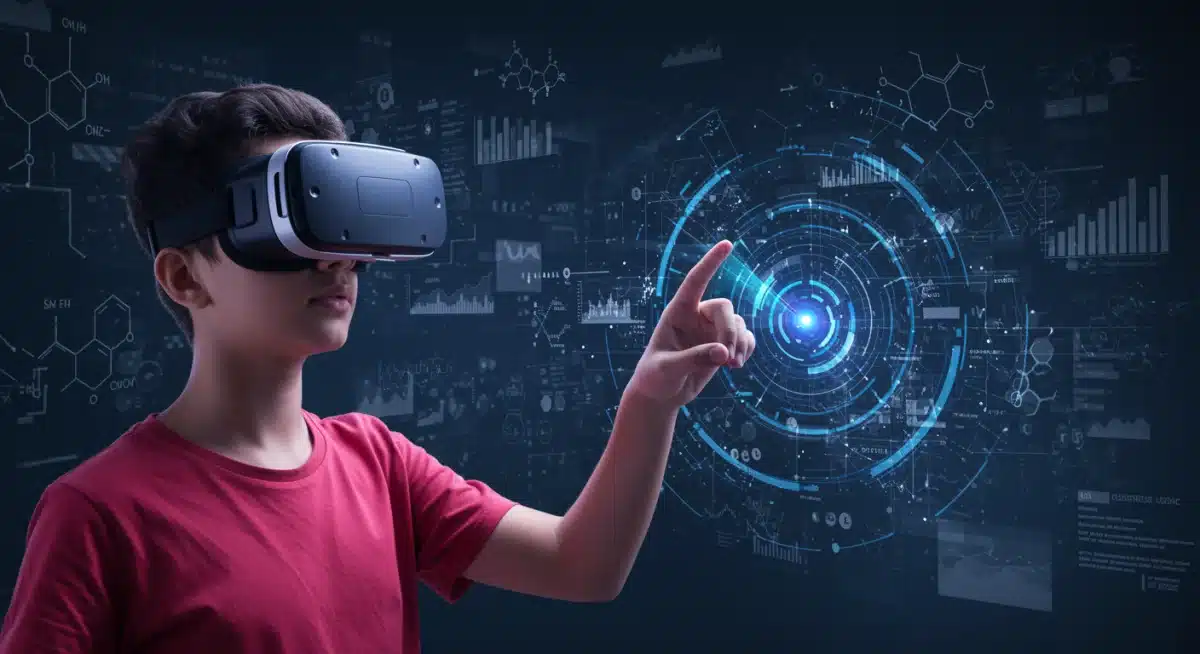
The K-12 curriculum in 2025 is increasingly embracing technology to create immersive learning experiences that go beyond traditional textbooks and lectures. This innovative approach harnesses tools like virtual reality (VR), augmented reality (AR), and interactive simulations to make learning more engaging, experiential, and memorable.
Immersive technologies allow students to explore complex concepts and environments in ways that were previously impossible. They can virtually visit historical sites, conduct scientific experiments in a safe digital lab, or even dissect a virtual frog, all from the classroom.
Virtual and Augmented Reality in the Classroom
VR and AR are transforming various subjects, offering unparalleled opportunities for exploration and interaction. VR can transport students to ancient civilizations or the surface of Mars, while AR overlays digital information onto the real world, enhancing understanding of physical objects.
- Explore the human body in 3D using AR.
- Virtually tour the Amazon rainforest to study ecosystems.
- Conduct chemistry experiments in a VR laboratory without safety risks.
- Reconstruct historical events through interactive simulations.
Interactive Simulations and Gamification
Beyond VR/AR, interactive simulations and gamification are also integral to immersive learning. Educational games and simulations allow students to practice skills, make decisions, and see the consequences of their actions in a low-stakes environment. This active learning approach fosters critical thinking and problem-solving.
These technology-enhanced experiences not only make learning more fun but also cater to different learning styles, particularly kinesthetic and visual learners. They provide a dynamic and interactive way to master complex subjects and develop practical skills.
The integration of technology-enhanced immersive learning experiences within the K-12 curriculum for 2025 signifies a commitment to creating dynamic, engaging, and highly effective educational environments, preparing students for a future where digital literacy and adaptability are paramount.
| Key Innovation | Brief Description |
|---|---|
| Personalized Learning | Tailoring education to individual student needs using adaptive technologies and AI for customized pathways. |
| STEM/STEAM Integration | Embedding science, technology, engineering, arts, and math across all subjects for interdisciplinary problem-solving. |
| Social-Emotional Learning | Focusing on emotional intelligence, relationship skills, and well-being to support holistic student development. |
| Globally Competent Citizens | Cultivating understanding of diverse cultures and global issues, preparing students for an interconnected world. |
Frequently Asked Questions about K-12 Curriculum Innovations
Personalized learning tailors educational pathways to each student’s unique needs, interests, and learning pace. It often employs adaptive technologies and AI to provide customized content, feedback, and resources, ensuring that every student receives targeted support for optimal growth and mastery.
STEM/STEAM integration helps students develop crucial 21st-century skills such as critical thinking, creativity, and problem-solving by applying scientific, technological, engineering, artistic, and mathematical concepts across all subjects. This interdisciplinary approach prepares them for complex real-world challenges and diverse career paths.
SEL is vital because it equips students with the skills to manage emotions, build healthy relationships, and make responsible decisions. By fostering self-awareness, empathy, and resilience, SEL supports students’ overall well-being and academic success, creating a more positive and supportive learning environment.
Educating for global competence means preparing students to understand diverse cultures, global issues, and their role as active participants in an interconnected world. It involves fostering empathy, critical thinking about global challenges, and the ability to interact respectfully with people from different backgrounds.
Immersive learning, utilizing technologies like VR and AR, transforms K-12 education by making it more engaging, experiential, and memorable. Students can virtually explore complex concepts, conduct simulations, and interact with content in dynamic ways, leading to deeper understanding and skill acquisition.
Conclusion
The innovative approaches highlighted for the K-12 curriculum in 2025 represent a profound evolution in how we educate our children. From personalized learning pathways leveraging cutting-edge AI to the comprehensive integration of STEM/STEAM, a renewed emphasis on social-emotional well-being, the cultivation of globally competent citizens, and the advent of immersive technology-enhanced experiences, these strategies collectively aim to create a more dynamic, equitable, and effective educational system. By embracing these changes, schools are not just preparing students for tests, but for life, equipping them with the adaptability, critical thinking skills, and emotional intelligence necessary to thrive in an unpredictable yet opportunity-rich future. The commitment to these forward-thinking curricula underscores a collective vision for a generation ready to innovate, collaborate, and lead in a rapidly changing world.