Federal Agencies Announce $50 Billion Renewable Energy Grants 2025
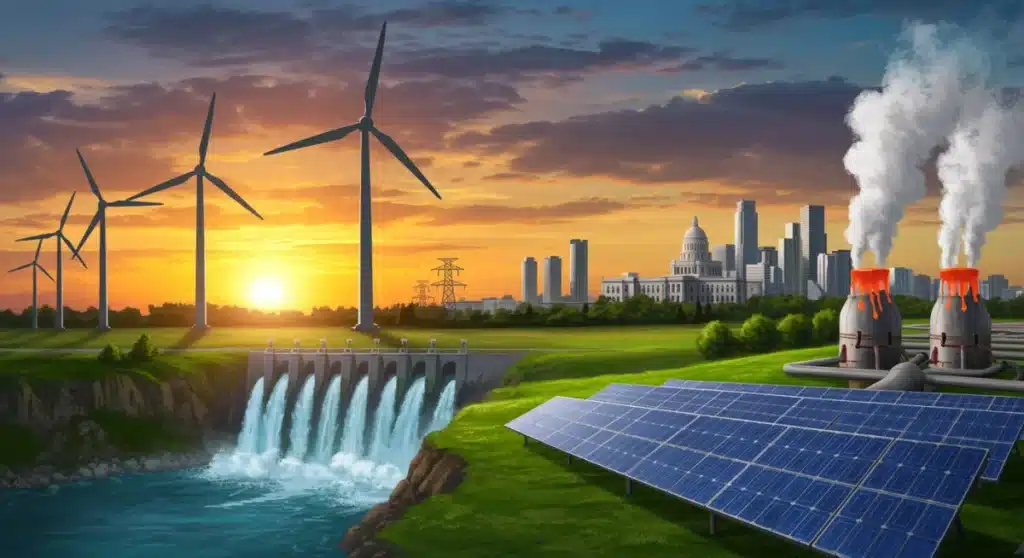
Federal agencies have announced a substantial $50 billion in grants for 2025, specifically targeting renewable energy initiatives across the United States, aiming to accelerate the nation’s transition to a sustainable energy future.
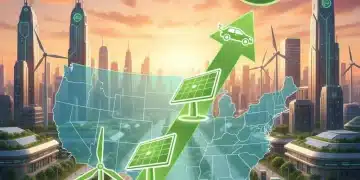
In a landmark move poised to reshape the nation’s energy landscape, federal agencies announce $50 billion in 2025 grants for renewable energy initiatives nationwide. This significant financial commitment underscores a profound dedication to fostering sustainable growth and combating climate change across the United States. It signals a new era of opportunity for innovators, businesses, and communities alike, driving forward the adoption of clean energy technologies.
The unprecedented scale of federal investment
The recent announcement of $50 billion in federal grants for renewable energy initiatives in 2025 marks a pivotal moment for the United States. This substantial investment is designed to accelerate the transition away from fossil fuels, supporting a wide array of projects from utility-scale solar farms to community-based wind projects. The sheer scale of this funding reflects a national urgency to address environmental challenges while simultaneously bolstering economic development and energy independence.
This commitment is not merely about funding; it’s about catalyzing a systemic shift. Federal agencies are aiming to create a robust ecosystem where renewable energy sources are not just alternatives but become the primary drivers of the nation’s power grid. The grants are expected to foster job creation, stimulate technological innovation, and reduce the country’s carbon footprint significantly.
Driving innovation and job creation
A key objective of the grants is to spur innovation within the renewable energy sector. By providing financial backing, federal agencies hope to encourage research and development into next-generation technologies. This includes advancements in energy storage, grid modernization, and new materials for solar panels and wind turbines.
- Funding for advanced battery storage solutions.
- Support for smart grid infrastructure development.
- Investment in cutting-edge solar panel efficiency research.
- Grants for offshore wind technology improvements.
Beyond technological progress, these grants are projected to create hundreds of thousands of new jobs across various sectors. From manufacturing and installation to maintenance and research, the renewable energy industry is set to become a major employer. This job growth will offer new career paths and contribute to a more diversified and resilient national economy.
In conclusion, the $50 billion federal investment represents a bold step towards a sustainable future. It’s a comprehensive strategy designed to accelerate the adoption of clean energy, foster innovation, and create a significant number of jobs, ultimately benefiting communities nationwide.
Eligibility and application process for renewable energy grants
Understanding the eligibility criteria and navigating the application process are crucial steps for any entity seeking to benefit from the 2025 renewable energy grants. Federal agencies have outlined specific guidelines to ensure that funds are allocated effectively and to projects that align with national sustainability goals. This section will demystify the requirements and provide insights into preparing a competitive application.
The grants are broadly available to a diverse range of applicants, including state and local governments, tribal nations, non-profit organizations, academic institutions, and private businesses. However, specific grant programs may have more tailored eligibility requirements based on the type of renewable energy technology or the project’s intended impact. Potential applicants are strongly advised to review each program’s detailed solicitation.
Key eligibility criteria
While specific requirements vary by program, several common themes emerge across the federal grant landscape. These often include demonstrating a clear project plan, outlining environmental benefits, and showcasing financial viability. Projects that promote community engagement and benefit underserved populations are frequently prioritized.
- Proof of project feasibility and technical readiness.
- Detailed budget outlining planned expenditures.
- Commitment to environmental impact assessment and mitigation.
- Evidence of community support and local partnerships.
The application process typically involves multiple stages, starting with a letter of intent or a concept paper, followed by a full proposal. Applicants will need to provide comprehensive documentation, including project timelines, team qualifications, and expected outcomes. Federal agencies emphasize transparency and accountability throughout the process, requiring regular reporting from grant recipients.
Successfully securing these grants requires meticulous preparation and a thorough understanding of federal guidelines. Diligence in meeting all requirements and clearly articulating the project’s value proposition will significantly enhance an applicant’s chances of success. The investment in preparing a strong application is well worth the potential for significant funding.
Impact on different renewable energy sectors
The $50 billion in renewable energy grants 2025 is set to have a transformative impact across various sectors, from established technologies like solar and wind to emerging areas such as geothermal and hydropower. Each sector is poised to receive a significant boost, enabling expansion, technological refinement, and broader adoption. This strategic allocation aims for a balanced and diversified national energy portfolio.
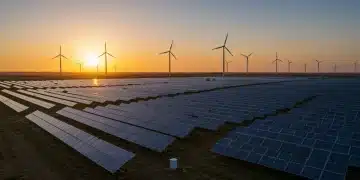
Solar energy, already a leading renewable source, is expected to see a surge in utility-scale projects and rooftop installations. The grants will likely fund innovative storage solutions that address intermittency, making solar power a more reliable base-load option. Similarly, the wind energy sector, both onshore and offshore, will benefit from investments in larger turbines and improved grid integration, pushing efficiency boundaries.
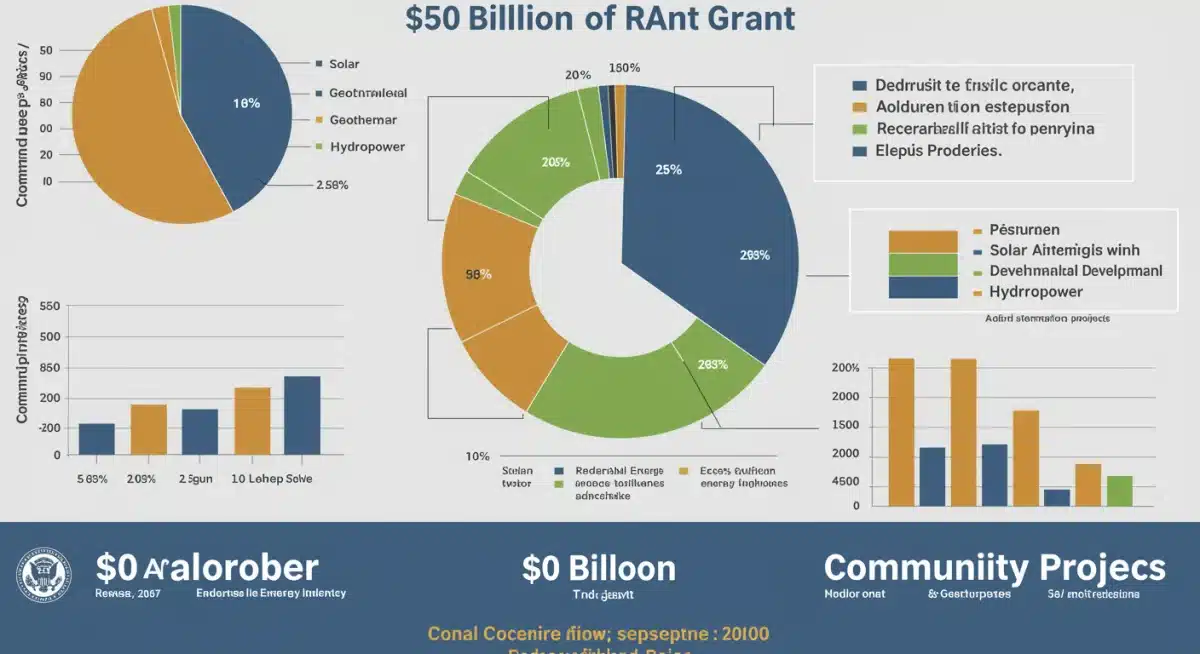
Beyond the dominant players, federal funding will also invigorate less-developed renewable energy sources. Geothermal projects, which harness Earth’s internal heat, will receive support for exploration and drilling technologies, particularly in regions with high potential. Hydropower, a consistent source of clean energy, will see grants directed towards modernizing existing facilities and developing new, environmentally sound projects.
Advancing emerging technologies
A portion of the grants is specifically earmarked for advancing nascent renewable energy technologies. This includes tidal and wave energy, biomass conversion, and advanced biofuels. Investing in these areas is crucial for long-term energy diversification and for discovering new methods of sustainable power generation.
- Funding for pilot projects in tidal and wave energy.
- Research into efficient biomass conversion processes.
- Development of sustainable advanced biofuel production.
- Grants for innovative hybrid renewable energy systems.
The federal government’s holistic approach ensures that no single technology is over-prioritized, fostering a competitive and innovative environment across the entire renewable energy spectrum. This broad investment strategy will strengthen the nation’s energy security and accelerate its path towards a fully sustainable future. The grants are designed to create a ripple effect, inspiring further private sector investment and collaboration.
In summary, the $50 billion in federal grants will significantly bolster all renewable energy sectors, promoting growth in established areas while also fostering the development of new, innovative technologies to diversify the national energy mix.
Economic benefits and job creation
The infusion of $50 billion in federal grants for renewable energy initiatives in 2025 is projected to be a powerful engine for economic growth and job creation across the United States. This substantial investment will not only fund green projects but also stimulate a broader economic ripple effect, benefiting various industries and communities. The transition to clean energy is increasingly recognized as a significant economic opportunity, not just an environmental imperative.
Direct job creation will occur in the manufacturing, installation, operation, and maintenance of renewable energy infrastructure. This includes roles for engineers, construction workers, technicians, and researchers. Many of these jobs are well-paying and cannot be outsourced, providing stable employment opportunities in local communities. The demand for skilled labor in these areas is expected to rise significantly, prompting new training and educational programs.
Stimulating local economies
Beyond direct employment, the grants will foster indirect job creation in supporting industries. For example, increased demand for raw materials like steel, glass, and specialized electronics will boost manufacturing sectors. Logistics and transportation companies will also see expanded activity as components are moved to project sites. Local businesses, from restaurants to hardware stores, will benefit from the increased economic activity generated by these large-scale projects.
- Growth in related manufacturing and supply chain industries.
- Increased demand for local services and businesses.
- Enhanced tax revenues for state and local governments.
- Development of new training and education programs for green jobs.
Furthermore, the long-term economic benefits include reduced energy costs for consumers and businesses, greater energy independence, and improved public health due to decreased air pollution. These factors contribute to a more stable and prosperous economic environment. The federal grants are designed to kickstart a virtuous cycle, where initial investments lead to sustained growth and innovation.
Ultimately, the $50 billion in grants is poised to deliver substantial economic benefits, creating a robust job market in the green sector and stimulating local economies nationwide, while simultaneously advancing the nation’s environmental goals.
Environmental impact and climate goals
The renewable energy grants 2025 represent a critical step towards achieving ambitious environmental objectives and mitigating the impacts of climate change. By significantly boosting the deployment of clean energy technologies, these grants will directly contribute to a substantial reduction in greenhouse gas emissions, a primary driver of global warming. This federal commitment aligns with national and international efforts to transition to a low-carbon economy.
Reducing reliance on fossil fuels is paramount for improving air quality and protecting natural ecosystems. Renewable energy sources produce little to no air pollutants during operation, leading to fewer instances of respiratory illnesses and a healthier environment for communities. The grants will facilitate projects that replace older, dirtier power plants with clean alternatives, making a tangible difference in local air quality.
Contributing to emission reduction targets
The United States has set aggressive targets for reducing carbon emissions, and the $50 billion in grants is a direct mechanism to help meet these goals. By investing in solar, wind, geothermal, and other clean energy projects, the federal government aims to accelerate the decarbonization of the electricity sector, which is a major source of emissions. This will put the nation on a faster track to achieving its climate commitments.
- Significant reduction in carbon dioxide and other greenhouse gas emissions.
- Improved air quality in urban and industrial areas.
- Protection of biodiversity and natural habitats from fossil fuel extraction.
- Promotion of sustainable land use practices with renewable energy installations.
Beyond emissions, the grants will also support projects that minimize environmental footprints through sustainable development practices. This includes careful siting of renewable energy facilities, efficient use of resources, and responsible waste management. The long-term vision is to create an energy system that not only powers the nation but also preserves its natural heritage for future generations.
In conclusion, the federal grants are a cornerstone of the nation’s environmental strategy, designed to significantly reduce emissions, improve air quality, and accelerate progress towards critical climate goals, thereby securing a healthier and more sustainable future.
Challenges and opportunities for implementation
While the announcement of $50 billion in renewable energy grants 2025 presents immense opportunities, the successful implementation of these initiatives will not be without its challenges. Navigating regulatory landscapes, ensuring grid stability, and addressing potential supply chain issues are critical considerations that federal agencies, grant recipients, and communities must collectively address. However, these challenges also present unique opportunities for innovation and collaboration.
One significant challenge involves the modernization of the national electricity grid. Integrating a large influx of intermittent renewable energy sources, such as solar and wind, requires substantial upgrades to transmission lines and smart grid technologies. Without these improvements, the full potential of new renewable projects cannot be realized. This presents an opportunity for innovative solutions in energy storage and grid management.
Overcoming regulatory hurdles and community concerns
Regulatory processes can often be slow and complex, potentially delaying project timelines. Streamlining permitting and approval procedures at federal, state, and local levels will be essential to expedite deployment. Furthermore, community acceptance is vital; addressing local concerns regarding land use, visual impact, and environmental justice will be crucial for successful project implementation.
- Developing efficient and consistent regulatory frameworks.
- Engaging local communities early in project planning.
- Investing in workforce development to meet industry demands.
- Ensuring equitable distribution of benefits to all communities.
Supply chain resilience is another area of focus. As the demand for renewable energy components increases, ensuring a stable and ethical supply chain, potentially reducing reliance on single-source foreign suppliers, becomes paramount. This could spur domestic manufacturing and create additional jobs. Despite these hurdles, the grants offer a chance to build a more robust, sustainable, and equitable energy system.
In summary, while challenges in grid modernization, regulation, and community engagement exist, the federal grants also provide a powerful impetus to overcome these obstacles through strategic investment, innovative solutions, and collaborative efforts, ultimately strengthening the nation’s renewable energy infrastructure.
| Key Aspect | Brief Description |
|---|---|
| Grant Amount | $50 billion allocated for renewable energy initiatives in 2025. |
| Target Sectors | Solar, wind, geothermal, hydropower, and emerging green technologies. |
| Key Benefits | Job creation, economic growth, reduced emissions, energy independence. |
| Application Focus | Project feasibility, environmental impact, community engagement. |
Frequently asked questions about 2025 renewable energy grants
Eligibility is broad, including state and local governments, tribal nations, non-profit organizations, academic institutions, and private businesses. Specific programs may have tailored requirements based on project type or intended impact, so reviewing individual grant solicitations is essential.
Priorities include solar, wind, geothermal, and hydropower projects, as well as emerging technologies like tidal and advanced biofuels. Projects demonstrating significant environmental impact, community benefits, and innovative solutions are often favored.
The grants are expected to create hundreds of thousands of jobs across various sectors, including manufacturing, installation, operation, and maintenance of renewable energy infrastructure. This will also stimulate job growth in supporting industries and local economies.
The primary environmental goals include significant reductions in greenhouse gas emissions, improved air quality, and enhanced energy independence. The grants aim to accelerate the nation’s transition to a low-carbon economy and meet climate change mitigation targets.
Challenges include modernizing the electricity grid for new energy sources, streamlining complex regulatory processes, ensuring community acceptance, and building resilient supply chains. These areas also present opportunities for innovation and strategic partnerships.
Conclusion
The federal government’s commitment of $50 billion in 2025 grants for renewable energy initiatives nationwide represents a monumental step towards a sustainable and energy-independent future for the United States. This substantial investment is poised to drive innovation, create numerous jobs, and significantly reduce the nation’s carbon footprint. While the path to full implementation will involve navigating various challenges, the opportunities for transformative change across the energy landscape are immense. By fostering collaboration between government, industry, and communities, these grants can accelerate the transition to clean energy, ensuring a healthier environment and a more robust economy for generations to come. The long-term benefits of this strategic funding are expected to resonate far beyond 2025, solidifying America’s position as a leader in global sustainability efforts.