Boosting Student Engagement: 4 Data-Backed Techniques for 2025
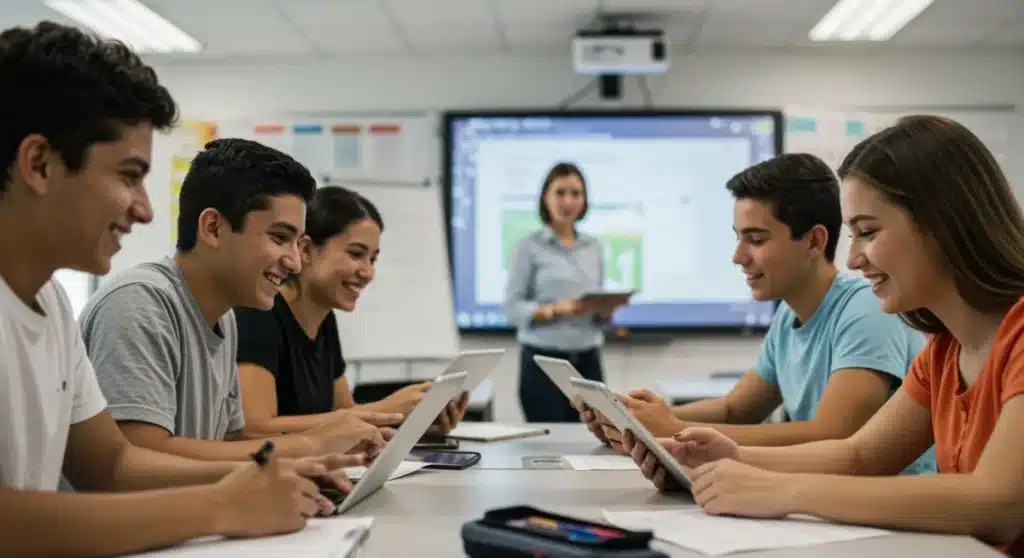
Implementing personalized learning paths, gamification, collaborative project-based learning, and real-time feedback are crucial data-backed techniques for significantly boosting student engagement in modern classrooms by 2025 and beyond.
In today’s rapidly evolving educational landscape, keeping students actively involved and motivated is more challenging than ever. The concept of boosting student engagement has become a cornerstone for effective learning. This article delves into four powerful, data-backed techniques that educators can implement to transform their classrooms into dynamic hubs of learning by 2025, ensuring students are not just present but truly participating and thriving.
Understanding the Core of Student Engagement
Student engagement is far more than mere participation; it encompasses a student’s psychological investment in and effort directed toward learning, comprehending, or mastering the knowledge, skills, or crafts that academic studies are intended to promote. It’s about fostering an environment where students feel connected, motivated, and empowered to take ownership of their educational journey. Without engagement, even the most meticulously planned lessons can fall flat, leading to disinterest and underperformance.
The modern classroom, particularly heading into 2025, demands a proactive approach to understanding and nurturing engagement. This involves leveraging insights from educational psychology and technological advancements to create learning experiences that resonate with contemporary students. It’s moving beyond traditional metrics of attendance and assignment completion to deeper indicators like critical thinking, problem-solving, and collaborative efforts.
The multifaceted nature of engagement
Engagement isn’t a monolithic concept; it manifests in several forms, each contributing to a holistic learning experience. Recognizing these different facets allows educators to tailor their strategies more effectively.
- Behavioral engagement: This refers to students’ active participation, attendance, and adherence to classroom rules and academic tasks.
- Emotional engagement: This involves students’ feelings, attitudes, and sense of belonging within the learning environment.
- Cognitive engagement: This is about students’ investment in learning, their willingness to exert effort to comprehend complex ideas, and their use of self-regulated learning strategies.
By focusing on these interconnected dimensions, educators can develop comprehensive strategies for boosting student engagement that address the whole student. The goal is to cultivate a learning environment where students are not only doing the work but are genuinely interested in it, feel supported, and are challenged to think critically.
Technique 1: Personalized Learning Paths
Personalized learning is not a new concept, but its implementation has been revolutionized by data analytics and adaptive technologies. By 2025, creating tailored learning experiences based on individual student needs, strengths, and interests will be paramount for boosting student engagement. This approach acknowledges that not all students learn at the same pace or in the same way, offering a flexible framework that adapts to each learner.
Data plays a crucial role here. Learning management systems (LMS) and educational software can track student progress, identify areas of difficulty, and suggest resources or activities that align with their learning style. This allows educators to move away from a one-size-fits-all curriculum, providing instead a dynamic and responsive educational journey that keeps students invested and challenged at their optimal level.
Implementing adaptive technologies
Adaptive learning platforms are at the forefront of personalized education. These systems use algorithms to adjust the content and pace of instruction in real-time based on a student’s performance and interactions. This ensures that students are neither overwhelmed nor bored, maintaining a state of optimal challenge that fuels engagement.
- Diagnostic assessments: Utilize initial assessments to identify students’ prior knowledge and skill gaps.
- Tailored content delivery: Offer a variety of learning materials, including videos, interactive simulations, and articles, catering to different preferences.
- Flexible pacing: Allow students to move through modules at their own speed, providing extra support or advanced challenges as needed.
The benefits extend beyond academic performance. Students feel more valued and understood when their unique learning journey is recognized. This sense of individual attention significantly contributes to their emotional and cognitive engagement, making them more likely to persevere through difficulties and embrace new concepts.
Technique 2: Gamification in the Classroom
Gamification involves applying game-design elements and game principles in non-game contexts, and it has proven to be an incredibly effective strategy for boosting student engagement. By introducing elements like points, badges, leaderboards, and quests into learning activities, educators can tap into students’ natural competitive instincts and desire for achievement, transforming mundane tasks into exciting challenges.
In 2025, gamification will move beyond simple reward systems to more sophisticated designs that integrate narrative, choice, and meaningful challenges. The data derived from gamified activities can provide rich insights into student motivation, problem-solving approaches, and areas where they might need additional support or advanced opportunities. This allows for continuous refinement of the learning experience.
Designing engaging game-based learning
Effective gamification is not just about adding points; it’s about crafting an immersive experience that encourages active participation and deep learning. This requires thoughtful design that aligns game mechanics with educational objectives.
- Clear objectives and rules: Students need to understand what they are trying to achieve and how their actions contribute to their progress.
- Immediate feedback: Games provide instant feedback, allowing students to learn from mistakes and adjust their strategies quickly.
- Opportunities for mastery: Design challenges that gradually increase in difficulty, providing a sense of accomplishment as students master new skills.
The competitive yet supportive environment fostered by gamification can significantly enhance emotional engagement, reduce anxiety around failure, and promote a growth mindset. When learning feels like a game, students are often more willing to take risks, experiment, and persist in the face of obstacles, all of which are critical for deep learning.
Technique 3: Collaborative Project-Based Learning
Collaborative project-based learning (PBL) is a pedagogical approach where students work together over an extended period to investigate and respond to a complex question, problem, or challenge. This technique is highly effective for boosting student engagement because it makes learning relevant, hands-on, and socially interactive. In a world that increasingly values teamwork and interdisciplinary skills, PBL prepares students for future challenges while keeping them deeply involved in their studies.
By 2025, PBL will leverage advanced digital collaboration tools, allowing students to work together seamlessly regardless of their physical location. Data from these collaborative platforms can reveal insights into team dynamics, individual contributions, and the development of crucial soft skills like communication and conflict resolution. This data helps educators refine project design and provide targeted interventions for teams or individuals.

Designing impactful collaborative projects
Successful PBL requires careful planning and facilitation to ensure that all students contribute meaningfully and achieve the learning objectives. The projects should be authentic, meaning they connect to real-world issues or problems, making the learning experience more relatable and impactful.
- Authentic challenges: Present problems that are relevant to students’ lives or current events, sparking their curiosity and intrinsic motivation.
- Defined roles and responsibilities: Ensure clarity on each team member’s role to promote accountability and equitable contribution.
- Scaffolding and support: Provide guidance and resources throughout the project, but allow students sufficient autonomy to explore and innovate.
PBL fosters a sense of community and shared purpose within the classroom, significantly enhancing emotional and social engagement. Students learn from each other, develop empathy, and build essential communication skills. The tangible outcomes of their projects provide a strong sense of accomplishment, further reinforcing their commitment to learning.
Technique 4: Real-Time Feedback and Assessment
Timely and constructive feedback is a powerful catalyst for learning and a critical component for boosting student engagement. In 2025, real-time feedback, facilitated by educational technology, will move beyond traditional grading to offer immediate, actionable insights that guide students’ learning journey. This approach allows students to understand their strengths and weaknesses on the spot, enabling rapid adjustments and improvements.
Data from continuous assessment provides educators with a dynamic understanding of student comprehension and skill acquisition. This live data stream helps teachers identify common misconceptions, pinpoint individual struggles, and adapt their teaching strategies proactively, rather than waiting for summative assessments to reveal issues that might be too late to address effectively.
Leveraging technology for instant insights
Various digital tools and platforms are designed to provide instant feedback, making the learning process more interactive and responsive. These tools can range from simple quizzes to sophisticated AI-powered tutors that offer personalized guidance.
- Automated quizzes and polls: Use platforms that provide immediate scores and explanations for correct/incorrect answers.
- Interactive simulations: Allow students to experiment and see the immediate consequences of their actions in a safe, virtual environment.
- Peer feedback systems: Implement tools that enable students to provide constructive criticism to their peers, fostering a culture of mutual support and learning.
The immediacy of feedback prevents students from practicing errors and reinforces correct understanding, significantly increasing cognitive engagement. When students can see the direct impact of their efforts and receive clear guidance on how to improve, they are more likely to remain motivated and committed to mastering the material. This continuous loop of action and feedback creates a powerful learning cycle.
Integrating Data Analytics for Continuous Improvement
The true power of these four techniques for boosting student engagement lies in their ability to generate actionable data. In 2025, educators will increasingly rely on sophisticated learning analytics to understand student behavior, preferences, and performance patterns. This data is not just for grading; it’s a dynamic resource for continuous improvement of teaching methods and curriculum design.
By analyzing data from personalized learning paths, gamified activities, collaborative projects, and real-time assessments, teachers can identify emerging trends, predict potential challenges, and tailor interventions with precision. This data-driven approach transforms teaching from an art to a more precise science, allowing for evidence-based decisions that maximize student success and engagement.
Making data actionable
Collecting data is only the first step; the real challenge lies in interpreting it and translating insights into effective educational strategies. Educators need tools and training to make sense of the vast amounts of information generated by modern learning environments.
- Dashboard visualizations: Utilize platforms that present data in easy-to-understand visual formats, highlighting key metrics.
- Predictive analytics: Employ AI-powered tools to identify students at risk of disengagement or academic difficulty, allowing for early intervention.
- Professional development: Provide ongoing training for teachers on how to effectively use data to inform their pedagogical practices.
This systematic approach to data analytics ensures that efforts to boost student engagement are not based on guesswork but on empirical evidence. It creates a feedback loop for educators themselves, allowing them to continually refine their teaching strategies and create an increasingly effective and engaging learning environment for all students.
Overcoming Challenges in Implementation
While the benefits of these data-backed techniques for boosting student engagement are clear, their successful implementation is not without challenges. Integrating new technologies, adapting curricula, and training educators require significant resources and strategic planning. However, with a clear vision and a commitment to student success, these hurdles can be overcome, leading to transformative educational outcomes.
One of the primary challenges is ensuring equitable access to technology and resources for all students. Digital divides can exacerbate existing inequalities, making it crucial for educational institutions to invest in infrastructure and support systems that bridge these gaps. Furthermore, teacher training is paramount; educators need to feel confident and competent in using new tools and methodologies to effectively implement these engagement strategies.
Strategies for smooth transition
A phased approach, coupled with strong administrative support, can facilitate a smoother transition to more engaged and data-driven classrooms. Starting with pilot programs and gradually scaling up can help identify and address issues before widespread implementation.
- Pilot programs: Test new techniques in a controlled environment with a small group of teachers and students to gather feedback.
- Continuous professional development: Offer ongoing training, workshops, and peer support networks for educators.
- Parental involvement: Engage parents and guardians in the process, explaining the benefits of new learning approaches.
Addressing these challenges proactively ensures that the innovative techniques for boosting student engagement are not just theoretical but become practical and sustainable realities in classrooms across the nation. The investment in these areas is an investment in the future of education and the success of every student.
| Key Technique | Brief Description |
|---|---|
| Personalized Learning Paths | Tailoring education to individual student needs, strengths, and interests using adaptive technology. |
| Gamification | Applying game elements like points, badges, and leaderboards to motivate and engage students in learning. |
| Collaborative Project-Based Learning | Students work together on real-world problems, fostering teamwork and critical thinking. |
| Real-Time Feedback | Providing immediate, actionable insights to students on their performance and understanding. |
Frequently asked questions about student engagement
Student engagement is critical because it directly correlates with academic achievement, motivation, and overall well-being. Engaged students are more likely to retain information, develop critical thinking skills, and become lifelong learners, preparing them for future success in an ever-changing world.
Personalized learning paths boost engagement by tailoring content and pace to individual student needs and interests. This ensures students are appropriately challenged, preventing boredom or frustration, and fostering a sense of ownership over their learning journey, which increases intrinsic motivation.
Effective gamification includes clear objectives, immediate feedback, opportunities for mastery through progressive challenges, and a sense of narrative or purpose. It leverages competition and rewards to make learning fun and motivating, encouraging persistence and active participation in academic tasks.
Real-time feedback enhances learning by providing immediate, actionable insights into student performance. This allows students to correct misunderstandings quickly, reinforces correct concepts, and guides their learning process more effectively than delayed feedback, sustaining their cognitive engagement and progress.
Data plays a crucial role by providing educators with insights into student behavior, performance, and preferences. This allows for evidence-based decisions, personalized interventions, and continuous refinement of teaching strategies, ensuring that engagement efforts are targeted and maximally effective for all learners.
Conclusion
As we look towards 2025, boosting student engagement remains a central goal for educators worldwide. The four data-backed techniques discussed – personalized learning paths, gamification, collaborative project-based learning, and real-time feedback – offer a powerful framework for achieving this. By embracing these strategies, supported by robust data analytics, educators can create dynamic, responsive, and deeply engaging learning environments. The future of education is one where every student feels seen, heard, and motivated to achieve their full potential, transforming classrooms into vibrant spaces of discovery and growth.