Decoding Standardized Tests: Your 3-Month Prep Plan for 2025 Exams

A successful standardized test prep for 2025 exams hinges on a well-structured 3-month plan that integrates diagnostic assessments, targeted content review, consistent practice, and strategic skill development.
Are you feeling the pressure of upcoming standardized tests for 2025? Many students find themselves overwhelmed by the sheer volume of material and the high stakes associated with these exams. However, with a focused and strategic approach, achieving your target score is entirely within reach. This guide on Decoding Standardized Tests: A 3-Month Preparation Plan for 2025 Exams will provide you with a clear roadmap, transforming potential anxiety into actionable steps for success.
Understanding the Landscape of Standardized Tests
Before diving into specific preparation strategies, it’s crucial to understand what standardized tests entail and why they are so important. These exams, such as the SAT, ACT, GRE, or GMAT, are designed to assess a student’s readiness for higher education or specific professional programs, evaluating critical thinking, problem-solving, and subject-specific knowledge.
Their importance extends beyond admissions, often influencing scholarship opportunities and academic placement. Familiarizing yourself with the format, scoring, and content areas of your specific exam is the foundational step in any effective preparation journey.
The Purpose of Standardized Exams
Standardized tests provide a common metric for comparing applicants from diverse educational backgrounds. They aim to offer an objective measure of skills and knowledge that might not be fully captured by GPA or extracurricular activities alone. Understanding this purpose helps demystify the exams and allows for a more strategic study approach.
- Fairness: Provides a consistent evaluation standard across all applicants.
- Prediction: Often used as an indicator of future academic success.
- Placement: Can determine appropriate course levels in college or university.
- Scholarships: Strong scores can unlock significant financial aid opportunities.
Common Test Formats and Content Areas
Each standardized test has a unique structure, including timed sections, question types, and content domains. For example, the SAT and ACT both cover reading, writing, and math, but differ in their emphasis and question styles. The GRE focuses on verbal reasoning, quantitative reasoning, and analytical writing, while the GMAT is tailored for business school admissions. Knowing these specifics is paramount for tailored preparation.
Concluding this section, a deep understanding of your chosen standardized test’s structure and purpose is not just helpful, but essential. It sets the stage for a targeted and efficient study plan, ensuring every hour you dedicate to preparation is maximized.
Month 1: Diagnostic Assessment and Foundational Review
The first month of your 3-month preparation plan is all about establishing a baseline and shoring up foundational knowledge. This phase is critical for identifying weaknesses and creating a personalized study schedule that addresses your specific needs.
Beginning with a diagnostic test helps you understand the current state of your knowledge and pinpoint areas requiring the most attention. This isn’t just about getting a score; it’s about gaining insights into your strengths and weaknesses across all tested subjects.
Taking a Full-Length Diagnostic Test
Start your preparation with a full-length, timed diagnostic test under exam conditions. This simulates the actual test experience and provides an accurate reflection of your current performance. Treat it seriously, as if it were the real exam, to get the most valuable data.
- Simulate Conditions: Find a quiet space, set a timer, and avoid distractions.
- Identify Weaknesses: Note which question types or content areas consistently challenge you.
- Analyze Performance: Don’t just look at the score; understand *why* you got questions wrong.
- Establish Baseline: This score will be your starting point for measuring progress.
Targeted Content Review
Once you’ve analyzed your diagnostic test, dedicate significant time to reviewing foundational concepts. This isn’t about memorizing; it’s about understanding the underlying principles in subjects like algebra, geometry, grammar rules, and reading comprehension strategies. Use textbooks, online resources, and study guides specifically designed for your exam.
Focus your energy on the areas where your diagnostic test revealed the most significant gaps. For instance, if quantitative reasoning was a struggle, spend extra time on math concepts. If verbal sections were challenging, prioritize vocabulary building and reading comprehension exercises. This targeted approach prevents wasted effort on areas you already master.
By the end of Month 1, you should have a solid grasp of the basic content covered by your standardized test and a clear understanding of your personal learning objectives for the subsequent months. This foundational work is the bedrock of your entire preparation strategy.
Month 2: Strategic Practice and Skill Development
With a solid foundation from Month 1, the second month of your preparation shifts focus to applying that knowledge through strategic practice and developing essential test-taking skills. This phase is about moving beyond mere understanding to effective execution under pressure.
Consistent practice with official materials is paramount during this stage. It allows you to become intimately familiar with the exam’s nuances, question types, and pacing, building confidence and efficiency.
Mastering Question Types and Strategies
Each standardized test has specific question formats and requires particular strategies for success. For instance, some reading comprehension questions demand inference, while others require identifying main ideas. Math problems might benefit from specific shortcut techniques or process-of-elimination strategies. Delve deep into understanding these approaches.
- Timed Practice: Practice individual sections and question types under timed conditions to improve pacing.
- Error Analysis: For every practice question, review not only the correct answer but also why the incorrect answers are wrong.
- Strategy Application: Consciously apply test-taking strategies (e.g., process of elimination, skipping difficult questions, specific reading techniques).
- Resource Utilization: Leverage official practice guides, online courses, and reputable tutoring services for expert strategies.
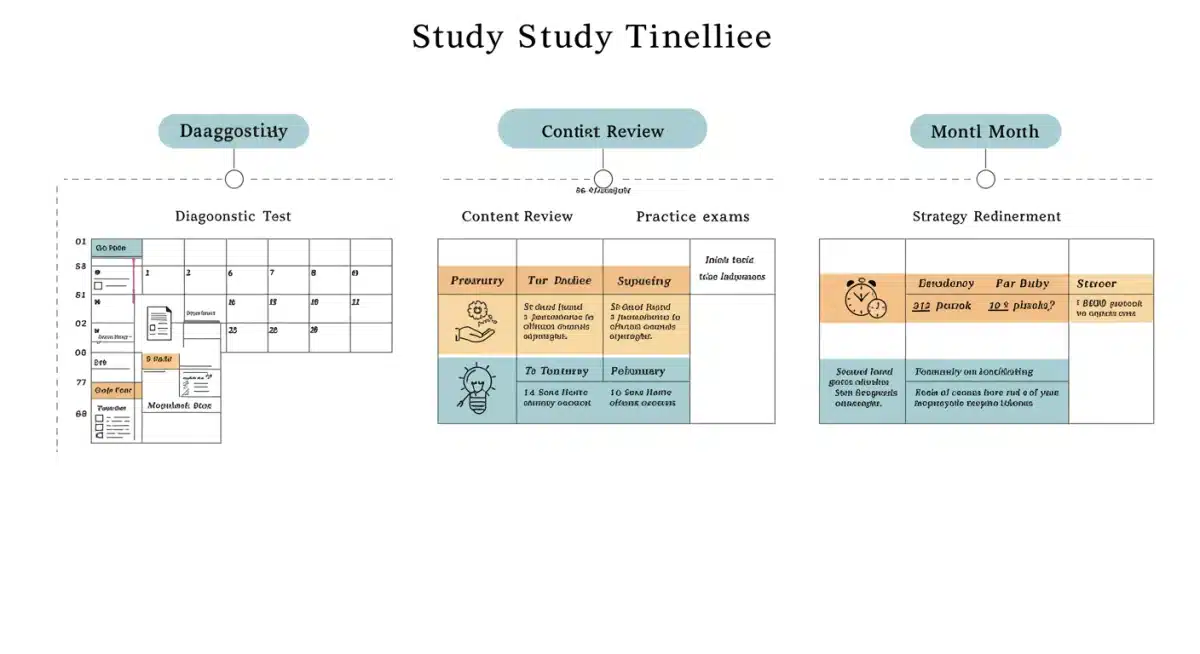
Integrating Full-Length Practice Tests
As you progress through Month 2, begin to integrate more full-length practice tests into your schedule. Aim for one every one to two weeks. These tests are crucial for building endurance, refining your timing, and simulating the complete exam experience. Each practice test should be followed by a thorough review.
The review process is arguably more important than the test itself. Analyze your mistakes, understand the underlying concepts, and identify any recurring patterns in your errors. This iterative process of testing, analyzing, and learning is what drives significant score improvement.
By the conclusion of Month 2, you should feel comfortable with the various question types, have a repertoire of effective test-taking strategies, and have a clear sense of your pacing and endurance for the full exam. This marks a significant step towards mastering the test.
Month 3: Refinement, Endurance, and Mental Preparation
The final month leading up to your 2025 standardized tests is dedicated to fine-tuning your skills, building mental fortitude, and ensuring you are physically and mentally ready for exam day. This is where all your hard work culminates.
This period is not about cramming new information, but rather about solidifying existing knowledge, refining strategies, and optimizing your approach to maximize your performance.
Advanced Strategy Refinement
Focus on advanced strategies that can give you an edge. This might include efficient time management techniques, strategic guessing, or specific approaches to complex problem types. Work on improving your speed without sacrificing accuracy, a balance that comes with extensive practice.
- Time Management: Practice allocating time effectively to each section and question.
- Strategic Guessing: Understand when and how to make educated guesses.
- Weakness Targeting: Dedicate extra practice to your most persistent challenge areas.
- Review Notes: Regularly revisit your summary notes and flashcards for quick recall.
Building Test-Taking Endurance
Standardized tests are often long and mentally taxing. Continue taking full-length practice tests under strict timed conditions to build your mental and physical endurance. This will help prevent fatigue on exam day and ensure you maintain focus throughout the entire test.
Beyond practice tests, incorporate healthy habits into your routine. Ensure you’re getting adequate sleep, eating nutritious meals, and engaging in light physical activity. A well-rested and nourished brain performs optimally under pressure.
As Month 3 draws to a close, you should feel confident in your abilities and prepared for the challenges of the exam. This final phase is about consolidating your efforts and ensuring you arrive on test day in peak condition.
Resource Selection and Effective Study Tools
Choosing the right resources is as important as the study plan itself. The market is flooded with preparation materials, but not all are created equal. Identifying high-quality, relevant tools can significantly enhance your study efficiency and effectiveness.
Prioritize official test prep materials, as these are developed by the test makers themselves and provide the most accurate representation of the exam’s content and format.
Official Guides and Practice Tests
Official study guides and practice tests are invaluable. They offer authentic questions, detailed explanations, and often insights into scoring. Make these your primary resources for practice and familiarization.
Supplement official materials with reputable third-party resources. Look for those with strong reviews, clear explanations, and practice questions that closely mimic the actual exam. Be wary of materials that promise shortcuts without solid content review.
Online Platforms and Tutoring
Many online platforms offer adaptive learning tools, video lessons, and extensive question banks. Websites like Khan Academy, Kaplan, Princeton Review, and Magoosh provide structured courses and practice. Consider these for personalized learning paths and additional practice.
For students needing more individualized support, a tutor can provide targeted guidance, help identify specific weaknesses, and offer tailored strategies. A good tutor can be particularly effective in breaking down complex concepts and building confidence.
Ultimately, the best resources are those that fit your learning style and address your specific needs. Don’t hesitate to explore different options and combine resources to create a comprehensive study ecosystem.
Maintaining Well-being and Avoiding Burnout
Intensive test preparation can be mentally and emotionally draining. While dedication is key, neglecting your well-being can lead to burnout, decreased performance, and increased anxiety. A balanced approach is essential for sustained success.
Prioritizing self-care throughout your 3-month plan ensures you remain focused, motivated, and healthy, allowing your brain to function at its best.
The Importance of Breaks and Rest
Regular breaks are not a luxury; they are a necessity. Schedule short breaks during study sessions and longer breaks throughout the week. Step away from your books, engage in a hobby, or spend time with loved ones. This helps prevent mental fatigue and improves information retention.
- Short Breaks: Every 50-60 minutes, take a 5-10 minute break.
- Longer Breaks: Dedicate at least one full day a week to non-study activities.
- Quality Sleep: Aim for 7-9 hours of sleep per night, especially in the weeks leading up to the exam.
- Healthy Diet: Fuel your brain with nutritious foods; avoid excessive sugar and caffeine.
Stress Management Techniques
Test anxiety is common, but it can be managed. Incorporate stress-reducing activities into your routine. Mindfulness exercises, meditation, deep breathing techniques, or light exercise can significantly reduce stress levels and improve focus.
Talk to friends, family, or a counselor if you’re feeling overwhelmed. Sharing your concerns can provide perspective and support. Remember, a calm and confident mindset is a powerful asset on exam day.
By consciously integrating self-care into your preparation, you not only protect your mental health but also optimize your learning and performance. A healthy student is a successful student, especially when facing high-stakes exams.
Exam Day Strategies and Post-Test Reflection
The culmination of your 3-month preparation is exam day. Having a clear strategy for this day, coupled with a plan for post-test reflection, ensures that all your hard work translates into the best possible outcome.
Effective execution on exam day involves more than just knowing the material; it requires strategic thinking, time management, and emotional regulation.
Before and During the Exam
The night before, ensure you get a full night’s sleep. Eat a balanced breakfast, arrive early at the test center, and bring all necessary materials (ID, pencils, calculator, etc.). During the exam, manage your time carefully, read instructions thoroughly, and don’t get stuck on one difficult question. Move on and return to it later if time permits.
Practice positive self-talk and take short mental breaks if you feel overwhelmed. Remember the strategies you’ve developed over the past three months and apply them confidently. Trust your preparation.
After the Test: Reflection and Next Steps
Once the exam is over, resist the urge to immediately dissect every question. Take a break and decompress. Later, regardless of the outcome, reflect on your experience. What went well? What could have been done differently?
This reflection is valuable for future academic endeavors, whether it’s preparing for another standardized test or simply improving your study habits. Celebrate your effort and the journey you’ve undertaken, knowing you gave it your best shot.
Approaching exam day with a clear mind and a strategic plan, followed by thoughtful reflection, completes the cycle of effective standardized test preparation. It’s a testament to your dedication and commitment to your academic goals.
| Key Preparation Stage | Brief Description |
|---|---|
| Month 1: Foundation | Diagnostic testing and comprehensive content review to identify and address knowledge gaps. |
| Month 2: Strategy | Targeted practice, mastering question types, and integrating full-length timed tests. |
| Month 3: Refinement | Advanced strategy refinement, building endurance, and mental preparation for exam day. |
| Well-being | Crucial for avoiding burnout; includes regular breaks, quality sleep, and stress management. |
Frequently Asked Questions About Standardized Test Preparation
A diagnostic test is critically important as it provides a baseline score and highlights specific areas of weakness and strength. This initial assessment allows you to tailor your 3-month study plan effectively, ensuring you focus your efforts where they will yield the most significant improvements.
Absolutely. Three months is an ideal timeframe for substantial score improvement. With consistent effort, a structured plan, and effective strategies, students can often see significant gains. The key is disciplined practice, thorough content review, and strategic application of test-taking techniques.
The best resources include official study guides and practice tests from the test creators (e.g., College Board for SAT, ACT for ACT). Supplement these with reputable third-party platforms like Khan Academy, Kaplan, or Princeton Review, which offer comprehensive courses and additional practice materials.
During Month 2 and 3, aim to take one full-length practice test every one to two weeks. This frequency helps build endurance, refine pacing, and identify areas needing further attention. Always follow up with a detailed review of your performance to maximize learning.
Managing test anxiety involves a combination of thorough preparation, stress-reduction techniques, and maintaining overall well-being. Practice mindfulness, deep breathing, ensure adequate sleep, and take regular breaks. Confidence from preparation is your best defense against anxiety.
Conclusion
Successfully navigating standardized test prep for the 2025 exams is a marathon, not a sprint. This 3-month plan provides a structured, actionable framework designed to empower you with the knowledge, skills, and confidence needed to achieve your target scores. By diligently following each phase—from foundational review and strategic practice to refinement and self-care—you are not just preparing for an exam; you are building a robust set of academic and life skills. Embrace the journey, trust the process, and approach your test day with the assurance that comes from dedicated and intelligent preparation. Your future academic success is within reach.