IRS Tax Code Changes 2026: Maximize Your Returns

The Latest IRS Tax Code Changes for 2026: What Every US Taxpayer Needs to Know to Maximize Returns
The landscape of taxation is in constant flux, and for US taxpayers, staying informed about impending changes is not just prudent—it’s essential for financial well-being. As we approach the 2026 tax year, significant adjustments to the IRS tax code are on the horizon, promising to impact individuals, families, and businesses across the nation. Understanding these IRS tax changes 2026 is paramount for strategic planning and, most importantly, for maximizing your tax returns.
This comprehensive guide delves deep into the anticipated modifications, offering a clear roadmap to navigate the complexities of the evolving tax environment. We’ll explore key areas such as individual income tax rates, deductions, credits, and potential shifts in business taxation, providing actionable insights to help you prepare and optimize your financial strategy. Whether you’re a seasoned investor, a small business owner, or an individual simply trying to make sense of your annual tax obligations, this article will equip you with the knowledge needed to make informed decisions and ensure you’re not leaving money on the table.
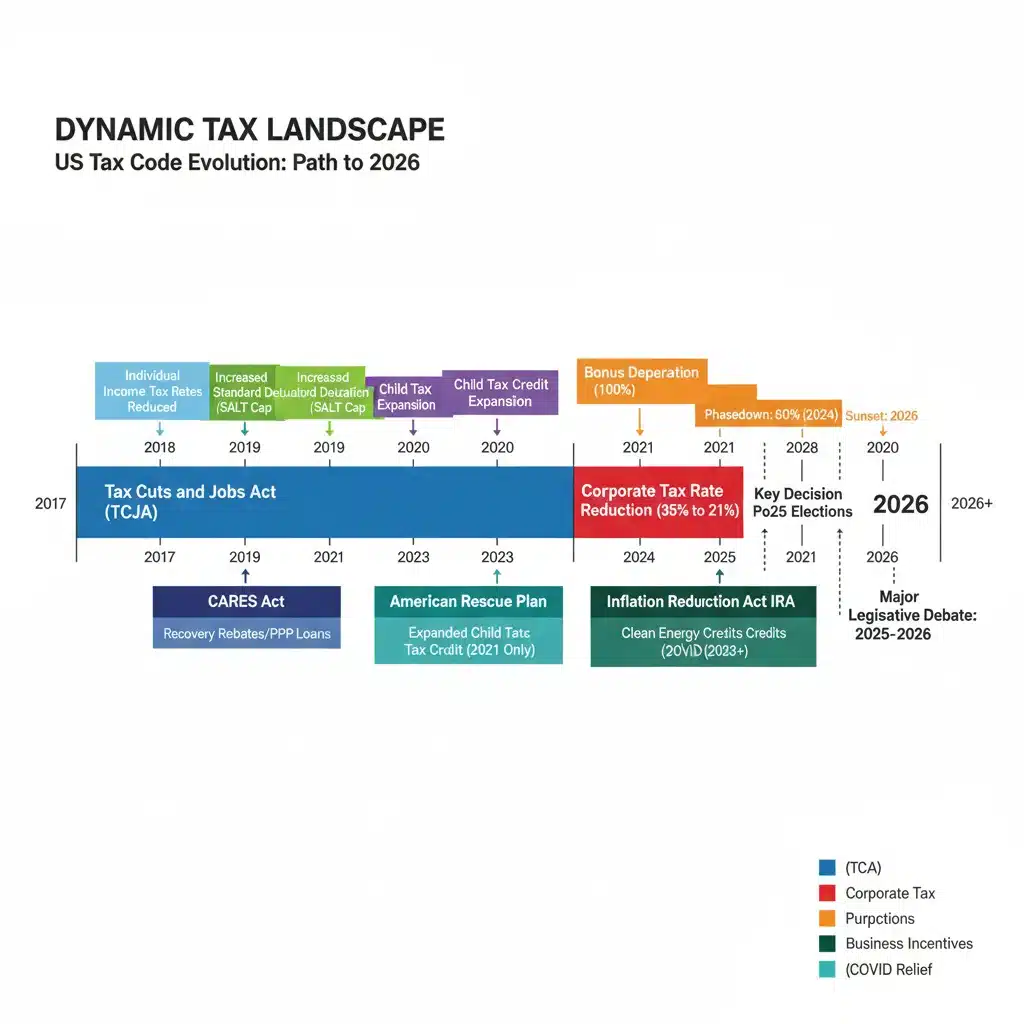
The primary driver behind many of the upcoming IRS tax changes 2026 is the expiration of key provisions from the Tax Cuts and Jobs Act (TCJA) of 2017. While some aspects of the TCJA were permanent, many individual income tax provisions were set to sunset at the end of 2025. This means that without new legislation, the tax code will revert to its pre-TCJA structure in many areas, creating a ripple effect across various income brackets and financial scenarios.
Preparing for these changes now can mean the difference between a hefty tax bill and a maximized refund. It involves more than just knowing the new rates; it requires a holistic approach to your financial planning, including investment strategies, retirement contributions, and even charitable giving. Let’s embark on this journey to decode the IRS tax changes 2026 and empower you to take control of your financial future.
Understanding the Sunset Provisions: A Core Driver of IRS Tax Changes 2026
The Tax Cuts and Jobs Act (TCJA) of 2017 represented a monumental overhaul of the US tax system. While it brought about significant reductions in corporate tax rates that were made permanent, many of its provisions affecting individual taxpayers were designed with an expiration date: December 31, 2025. This means that come January 1, 2026, unless Congress acts to extend them, these provisions will revert to their pre-TCJA forms. This ‘sunset’ phenomenon is the cornerstone of the anticipated IRS tax changes 2026.
What exactly does this mean for you? It implies a potential return to higher individual income tax rates, changes in standard deductions, modifications to personal exemptions, and adjustments to various itemized deductions and tax credits. For many, this could translate into a higher tax liability if proactive measures are not taken. Understanding which provisions are set to expire is the first critical step in preparing for the IRS tax changes 2026.
For instance, the individual income tax rates, which were lowered across most brackets under the TCJA, are slated to increase. The standard deduction, which was nearly doubled, is expected to decrease. The personal exemption, eliminated by the TCJA, could make a comeback. These are not minor tweaks; they represent fundamental shifts that will directly impact your take-home pay and overall financial planning. Businesses, particularly pass-through entities, will also need to re-evaluate their strategies as the qualified business income (QBI) deduction is also set to expire. The complexity of these changes necessitates a careful review of your current financial situation and a forward-looking approach to tax planning.
Individual Income Tax Rates: What to Expect in 2026
One of the most significant impacts of the sunset provisions will be on individual income tax rates. Under the TCJA, the seven marginal tax brackets were lowered, with the top rate decreasing from 39.6% to 37%. As these provisions expire, we can anticipate a return to the pre-TCJA rates, which generally means higher percentages for most income levels. For example, the 10%, 12%, 22%, 24%, 32%, 35%, and 37% rates are expected to revert to 10%, 15%, 25%, 28%, 33%, 35%, and 39.6%, respectively.
This shift will affect every taxpayer, though the extent of the impact will vary based on income level and filing status. Higher earners are likely to feel the most significant pinch, as the top marginal rate will jump by 2.6 percentage points. However, even those in lower and middle-income brackets will see their tax burden increase. This makes understanding the new bracket thresholds and how they apply to your specific income crucial for navigating the IRS tax changes 2026.
It’s important to remember that marginal tax rates mean only the portion of your income that falls within a certain bracket is taxed at that rate. So, while the highest rate might increase, not all of your income will be taxed at that level. Nonetheless, the overall effect will be a higher tax liability for many. Proactive strategies like maximizing pre-tax contributions to retirement accounts (401(k)s, IRAs) and utilizing tax-advantaged investment vehicles will become even more critical in mitigating the impact of these rate increases.
Standard Deduction vs. Itemized Deductions: A Rebalancing Act
The TCJA dramatically increased the standard deduction, leading many taxpayers who previously itemized to opt for the simplified standard deduction. For 2026, without legislative intervention, the standard deduction amounts are projected to revert to their pre-TCJA levels, adjusted for inflation. This means a significant decrease from the current elevated amounts.
For example, in 2023, the standard deduction was $27,700 for married couples filing jointly and $13,850 for single filers. Post-2025, these figures are expected to drop considerably, potentially by thousands of dollars, even with inflation adjustments. This change will compel many taxpayers to re-evaluate whether itemizing deductions once again becomes more advantageous than taking the standard deduction.
If you anticipate falling into a category where itemizing might be beneficial, now is the time to start meticulously tracking eligible expenses. This includes state and local taxes (SALT), mortgage interest, medical expenses (above a certain AGI threshold), and charitable contributions. The SALT deduction cap of $10,000, introduced by the TCJA, is also set to expire. If it does, and you live in a high-tax state, the ability to deduct more of your state and local taxes could significantly reduce your taxable income. These are critical considerations for optimizing your approach to the IRS tax changes 2026.
Personal Exemptions and Child Tax Credit: Key Adjustments
The TCJA eliminated personal exemptions, replacing them with an expanded Child Tax Credit (CTC) and the increased standard deduction. As the individual provisions sunset, personal exemptions are expected to return. Before the TCJA, taxpayers could claim a personal exemption for themselves, their spouse, and each dependent, which reduced their taxable income. The return of personal exemptions would be a welcome change for families with multiple dependents, potentially offsetting some of the impact of higher tax rates.
Concurrently, the enhanced Child Tax Credit introduced by the TCJA is also set to revert. The TCJA increased the maximum CTC from $1,000 to $2,000 per qualifying child and made up to $1,400 of it refundable. Without an extension, the CTC will likely return to its pre-TCJA amount of $1,000 per child, with stricter refundability rules. This will have a notable impact on families, particularly those in lower to middle-income brackets who relied on the expanded credit to reduce their tax liability or receive a larger refund.
Understanding the interplay between the return of personal exemptions and the potential reduction of the Child Tax Credit is vital for families planning for the IRS tax changes 2026. It requires a careful calculation of how these two factors will balance out for your specific household. For some, the return of personal exemptions might partially compensate for a reduced CTC, while for others, the net effect could still be a higher tax burden.
Impact on Businesses: The QBI Deduction and Beyond
While the corporate tax rate reduction under the TCJA was made permanent, one significant provision for small businesses and pass-through entities is slated to expire: the Qualified Business Income (QBI) deduction, also known as the Section 199A deduction. This deduction allows eligible self-employed individuals and owners of pass-through entities (S corporations, partnerships, and sole proprietorships) to deduct up to 20% of their qualified business income.
The expiration of the QBI deduction will significantly impact many small business owners and independent contractors. Without this deduction, a larger portion of their business income will be subject to individual income tax rates, which, as discussed, are also expected to rise. This double whammy could lead to a substantial increase in tax liability for countless small businesses across the country.
Business owners should begin strategizing now to mitigate the effects of this change. This could involve exploring alternative business structures, re-evaluating compensation strategies, or investing in tax-advantaged retirement plans. Consulting with a tax professional specializing in business taxation will be crucial for navigating these specific IRS tax changes 2026 and ensuring your business remains tax-efficient.
Estate and Gift Taxes: Potential Shifts
Another area significantly impacted by the TCJA was estate and gift taxes. The TCJA dramatically increased the estate and gift tax exemption amounts, allowing individuals to transfer a much larger amount of wealth tax-free. For 2023, this exemption stands at an impressive $12.92 million per individual, or $25.84 million for a married couple. However, these elevated exemption amounts are also subject to the sunset provisions.
Unless Congress intervenes, the estate and gift tax exemption is set to revert to its pre-TCJA level, adjusted for inflation. This could mean a reduction to approximately $6-$7 million per individual. For high-net-worth individuals and families, this change represents a critical consideration for estate planning. The window of opportunity to take advantage of the higher exemption amounts through gifting or other wealth transfer strategies will close at the end of 2025.
Those with substantial assets should consult with estate planning attorneys and tax advisors to review their current plans and consider strategies to utilize the higher exemption while it is still available. This could involve making significant gifts before the end of 2025 or adjusting trust structures. Ignoring these potential IRS tax changes 2026 in estate planning could lead to unexpected and substantial tax liabilities for heirs.
Other Notable Expiring Provisions and Their Implications
Beyond the major changes discussed, several other provisions from the TCJA are also set to expire, each with its own implications for specific taxpayer groups:
- Deduction for State and Local Taxes (SALT) Cap: As mentioned, the $10,000 cap on the deduction for state and local taxes is slated to expire. For residents of high-tax states, this could mean a significant increase in their itemized deductions, potentially offsetting some of the other tax increases.
- Miscellaneous Itemized Deductions: The TCJA eliminated miscellaneous itemized deductions subject to the 2% adjusted gross income (AGI) floor (e.g., unreimbursed employee expenses, tax preparation fees). These are not expected to return.
- Casualty and Theft Loss Deduction: Post-TCJA, this deduction was limited to losses incurred in federally declared disaster areas. This limitation is set to expire, potentially allowing for broader deductions for casualty and theft losses.
- Mortgage Interest Deduction Limits: The TCJA lowered the limit on deductible mortgage interest for new loans to $750,000. This limit is expected to revert to $1 million for new loans taken out after 2025.
- Alternative Minimum Tax (AMT) Adjustments: The TCJA significantly raised the AMT exemption amounts and phase-out thresholds, reducing the number of taxpayers subject to AMT. These amounts are expected to revert, potentially bringing more high-income earners back into the AMT net.
Each of these expiring provisions, while perhaps not as broadly impactful as income tax rates or the standard deduction, can have significant consequences for specific individuals or situations. A thorough review of your financial profile against these potential changes is crucial for comprehensive preparation for the IRS tax changes 2026.
Strategies to Maximize Returns Amidst the Changes
Given the breadth and depth of the anticipated IRS tax changes 2026, proactive tax planning is no longer optional—it’s imperative. Here are several strategies US taxpayers can employ to maximize their returns and minimize their tax liability:
- Accelerate Income or Defer Deductions (Tax Loss Harvesting): If you anticipate higher tax rates in 2026, consider accelerating income into 2025 where possible, or deferring deductions until 2026 when they might be more valuable. This could involve taking capital gains in 2025 or postponing large deductible expenses.
- Maximize Retirement Contributions: Contributing to tax-advantaged retirement accounts like 401(k)s, IRAs, and HSAs is always a smart move, but it becomes even more critical when facing higher tax rates. These contributions reduce your taxable income in the present year and allow your investments to grow tax-deferred or tax-free.
- Re-evaluate Itemizing vs. Standard Deduction: With the standard deduction likely to decrease and the SALT cap potentially expiring, meticulously track all eligible itemized deductions. This includes charitable contributions, medical expenses, and state and local taxes. You may find that itemizing becomes more beneficial again.
- Consider "Bunching" Deductions: If you’re on the cusp of itemizing, consider "bunching" deductions into a single year. For example, making two years’ worth of charitable contributions in one year to exceed the standard deduction threshold.
- Review Estate Plans: For high-net-worth individuals, the current elevated estate and gift tax exemption offers a unique opportunity. Consider making significant gifts before the end of 2025 to utilize the higher exemption amounts.
- Consult a Qualified Tax Professional: The complexity of these changes warrants professional advice. A tax advisor can provide personalized guidance based on your specific financial situation, helping you understand the nuances of the IRS tax changes 2026 and develop a tailored strategy.
- Stay Informed on Legislative Developments: The tax landscape is dynamic. While the sunset provisions are currently set to occur, Congress could still act to extend some or all of them. Staying updated on legislative discussions and potential new tax bills is crucial.
Implementing these strategies effectively requires careful planning and a thorough understanding of your personal financial situation. Don’t wait until the last minute; begin preparing for these changes now to ensure a smooth transition into the 2026 tax year.

The Role of Technology in Navigating Tax Changes
In an era of increasingly complex tax codes, technology plays an indispensable role in helping taxpayers and professionals navigate the changes efficiently. Tax preparation software, financial planning tools, and online resources are becoming more sophisticated, offering features that can simplify the process of understanding and adapting to the IRS tax changes 2026.
Modern tax software can project your tax liability under different scenarios, allowing you to compare the impact of various financial decisions. Many platforms now offer scenario planning tools that can simulate the effects of the expiring TCJA provisions, helping you visualize how your taxes might change in 2026. This foresight is invaluable for making informed choices about investments, retirement planning, and charitable giving.
Furthermore, cloud-based accounting solutions for businesses can help streamline expense tracking, income reporting, and payroll management, ensuring that all necessary data is readily available for tax preparation. As the QBI deduction potentially disappears, accurate and detailed record-keeping will be more important than ever for small business owners to justify other deductions and credits they may be eligible for.
Utilizing these technological tools can not only save time but also reduce the risk of errors, ensuring compliance while optimizing your tax position. While technology can’t replace the personalized advice of a human tax professional, it can certainly empower you with better data and insights to engage more effectively with your advisor and to understand the implications of the IRS tax changes 2026.
Conclusion: Proactive Planning is Your Best Defense
The impending IRS tax changes 2026, primarily driven by the sunset of key provisions from the Tax Cuts and Jobs Act, represent a significant shift in the US tax landscape. From potentially higher individual income tax rates and reduced standard deductions to changes in the Child Tax Credit and the expiration of the QBI deduction for businesses, these modifications will touch nearly every US taxpayer.
The key takeaway is clear: proactive planning is your best defense. Waiting until the end of 2025 or the beginning of 2026 to address these changes could lead to missed opportunities and increased tax liabilities. Now is the time to:
- Review your current financial situation and assess how the anticipated changes will specifically impact you.
- Consult with a qualified tax advisor or financial planner to develop a personalized strategy.
- Consider accelerating income or deferring deductions where advantageous.
- Maximize contributions to tax-advantaged retirement and health savings accounts.
- Re-evaluate your approach to itemized deductions versus the standard deduction.
- For high-net-worth individuals, act on estate planning opportunities before the estate and gift tax exemption reverts.
- Stay informed about any new legislative developments that could alter the current projections.
By understanding the nuances of the IRS tax changes 2026 and taking strategic action, you can navigate this evolving tax environment with confidence, ultimately maximizing your returns and securing your financial future. Don’t let these changes catch you off guard; empower yourself with knowledge and proactive planning.